
Downtown can’t rely on state workers for vitality. Will soccer stadium help? | Opinion
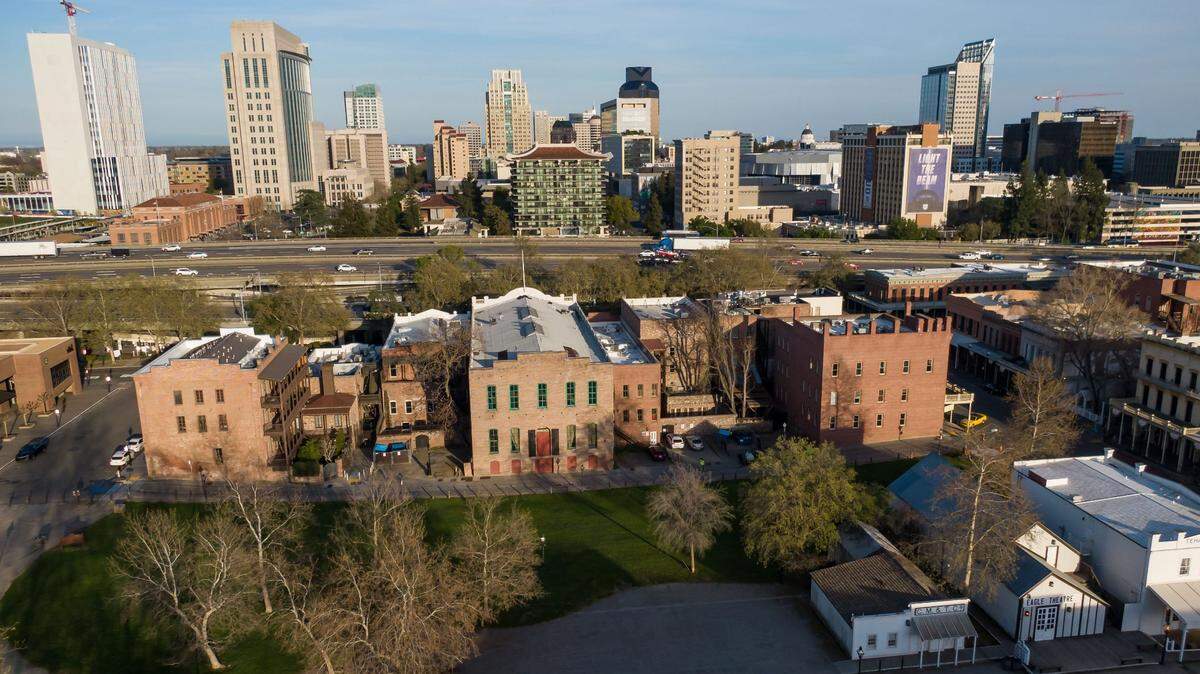
Imagine downtown Sacramento with fewer government workers and more residents, more students and more entertainment and eateries. Not a 9 to 5 downtown. A 24-hour hub of urban life.
After years of lamenting what COVID has done to downtown, local influencers have pivoted away from what used to make downtown an economic engine for the city. State workers are not coming back full-time to spend money at local restaurants and shops so now leaders are trying to reimagine what could make downtown successful in the future.
Reasons to hope for that future were previewed this week at the annual State of Downtown breakfast hosted by the Downtown Partnership, a consortium of business leaders in Sacamento’s urban core. To start with, three huge new developments could unfold before year’s end that would reshape The Railyards and the waterfront district in particular.
“There are endless opportunities for partnership,” Mayor Darrell Steinberg said in his final address as the city’s leader at this annual event. “We are already on our way to defining downtown in a much more exciting and dynamic way.”
But with more than half of the land of Sacramento’s 66-block downtown owned by the state, county and federal governments, the public sector will be an unusually large player in success or setbacks.
The administration of Gov. Gavin Newsom directed workers to return to their offices two days a week, though some state unions are pushing back and insisting that telework is getting the job done.
It could take years to settle the size and frequency of the state workforce in downtown offices, but what makes no sense is indefinitely maintaining a huge block of partially occupied offices in the heart of Sacramento.
The good news is that lines of communication seem established and functional between the city, downtown interests and the state. That is a good start, but Newsom and the state should own its oversized role in the fortunes of downtown Sacramento.
Newsom already has Steinberg on an assignment to reimagine San Quentin Prison. Why not task the Sacramento mayor with a similar brainstorming effort for our downtown?
“We need to rethink the value proposition of what downtown is, not what it was,” said Downtown Partnership Executive Director Michael Ault. “No one thinks of Atlanta, Boston, Nashville or Austin as government hubs first. They are vibrant centers for culture, innovation and hospitality. And yes, they also happen to be capital cities.”
Sacramento’s long-dormant Railyards, a size roughly equal to the existing downtown district at 244 acres, finally feels like it is on the verge of taking off.
Nearly a decade in the making, Kaiser Permanente’s plan to build a new hospital in the Railyards on 18 acres in its northwest corner will finally break ground later this year.
This represents a $1.4 billion investment in the Railyards that will generate hundreds of jobs at a facility where hundreds and patients and their families will be cared for by medical professionals. A healthcare complex is an ideal accelerant for complimentary retail and housing.
In a southeast corner of the Railyards, Steinberg had other news. “I believe I’m confident that before the end of the year, we will have a major investor to build a beautiful professional soccer stadium in the Railyards expandable for (Major League Soccer),” he said. There has long been chatter in the system of the Sacramento Republic team moving from Cal Expo to downtown. Words may soon be matched by deeds.
With federal grants and some hotel tax revenue, Steinberg hopes to rekindle plans to revitalize the waterfront/River District. The goal is “to connect the River District with the Railyards to the rest of the city,” Steinberg said.
As other “pillars” of the future downtown, Ault sees more housing, more arts and entertainment and offices filled with college students rather than state workers. These ideas were generated by a panel of experts from the Urban Land Institute which is still preparing a final report.
As for housing, most of the new households “will be singles and couples without kids,” said David Dixon, an “urban places fellow” for the Stantec engineering services company. “We have unprecedented demand from the housing market to live downtown, to live in mixed-use, walkable places.”
A word missing from the Downtown Partnership’s discussion - the homeless. A “safer and cleaner” downtown is a pillar of success, Ault did say. A downtown with more housing undoubtedly is part of that solution. And so is that spirit of public-private partnership that has to blossom.
There is no reason that Sacramento can’t win in the race to reinvent its downtown. Some important pieces may soon be coming into place. It is not far-fetched to think big and bold. It also happens to be the right thing to do. “Nothing contributes more to environmental responsibility,” said Dixon, “than growing in as opposed to out.”
BEHIND THE STORY
MOREWhat are editorials, and who writes them?
Editorials represent the collective opinion of The Sacramento Bee Editorial Board.
They do not reflect the individual opinions of board members or the views of Bee reporters in the news section. Bee reporters do not participate in editorial board deliberations or weigh in on board decisions. The same rules apply to our sister publications, The Modesto Bee, Fresno Bee, Merced Sun-Star and San Luis Obispo Tribune.
In Sacramento, our board includes Bee Executive Editor Colleen McCain Nelson, McClatchy California Opinion Editor Marcos Breton, opinion writers Robin Epley, Tom Philp, LeBron Antonio Hill and op-ed editor Hannah Holzer.
In Fresno and Merced, the board includes Central Valley Executive Editor Don Blount, Senior Editor Christopher Kirkpatrick, Opinion Editor Juan Esparza Loera, and opinion writer Tad Weber.
In Modesto, the board includes Senior Editor Carlos Virgen and in San Luis Obispo, it includes Opinion Editor Stephanie Finucane.
We base our opinions on reporting by our colleagues in the news section, and our own reporting and interviews. Our members attend public meetings, call people and follow-up on story ideas from readers just as news reporters do. Unlike objective reporters, we share our judgments and state clearly what we think should happen based on our knowledge.
Read more by clicking the arrow in the upper right.
Tell us what you think
You may or may not agree with our perspective. We believe disagreement is healthy and necessary for a functioning democracy. If you would like to share your own views on events important to the Sacramento region, you may write a letter to the editor (150 words or less) using this form, or email an op-ed (650-750 words) to opinion@sacbee.com. Due to a high volume of submissions, we are not able to publish everything we receive.
Support The Sacramento Bee
These conversations are important for our community. Keep the conversation going by supporting The Sacramento Bee. Subscribe here.