They criminalize homeless people where I’m from. California shouldn’t do the same | Opinion
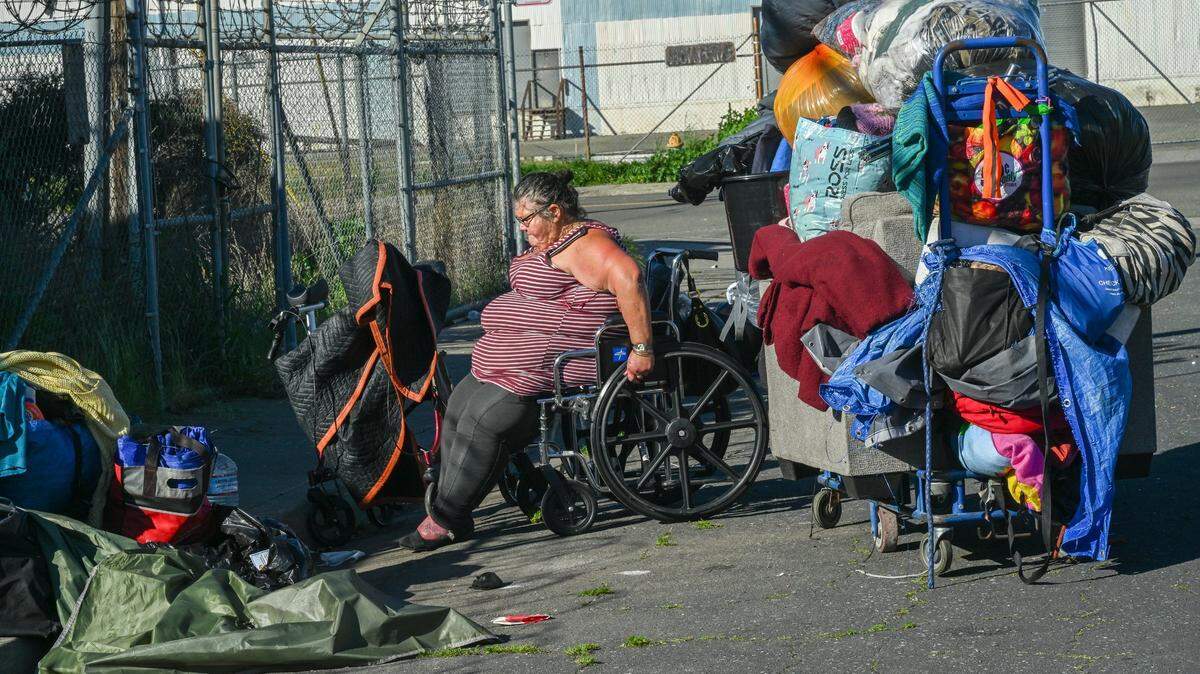
On a Sunday afternoon, I went for a stroll down Frazier Avenue in the heart of Chattanooga, Tennessee.
Making my way up the sidewalk, I noticed three police cars in front of the Walnut Street pedestrian bridge entrance. I guessed that there must’ve been a huge car accident or that someone was in danger.
Instead, I saw four police officers towering over a man sitting on the bridge with a blanket covering him. They talked to the man for several minutes and then escorted him off the bridge. The man was not given food or another form of support.
He was seen as a blight on this pedestrian bridge, a stain on the community and therefore he had to go.
This is unfortunately the reality of people experiencing homelessness where I am from.
The Supreme Court recently heard arguments about whether a city in Oregon can enforce a ban on camping and sleeping in public places. If the Supreme Court ultimately votes in favor of the ban, it could set a dangerous precedent for how city and local governments in California can address homelessness.
This state soon may be able to criminalize homelessness in ways that Tennessee can do today. Homeless management in California and eight other states is now restricted by an appellate court ruling that limits what local governments can do if they have inadequate shelter space. If the high court lifts that restriction, watch out.
In California, it seems that lawmakers are becoming more open with the idea to criminalize homelessness. Recently a bipartisan bill was introduced that would ban a person from the ability to stay or camp on a street or sidewalk within 500 feet of a school, park or transit stop. On April 16, it was voted down in the Senate Public Safety Committee.
The homeless issue is a major cause for concern and must be met with action, but not a sweeping law that takes humanity out of the problem.
In Tennessee that’s the case and it’s an unfortunate one.
A draconian law
In 2022, Tennessee became the first state in the nation to criminalize homelessness by passing a law that bans camping on the shoulder, right-of-way, bridge, overpass or underpass of a state or interstate highway. Perpetrators could also face a misdemeanor offense and a $50 fine or mandated community service. The bill also makes it a felony to camp on all public property.
Just to get a sense of the leadership behind this harsh law, during a debate about the then-bill, Tennessee senator Frank Nicely, thought that it was wise to use Adolf Hitler as an example of someone who has “succeeded” after experiencing homelessness.
“In 1910, Hitler decided to live on the streets for a while,” said Nicely, who voted for the bill. “So for two years, Hitler lived on the streets and practiced his oratory and his body language and how to connect with the masses, and then went on to lead a life that’s got him into history books.”
In the two years since it became law, homelessness is still prevalent in Tennessee. In my time in Chattanooga, I lived close to a homeless support organization, the Chatt Foundation. It was the base for the homeless outreach in the city. People experiencing homelessness would camp right next to the foundation, a clear signal that the law passed in 2022 was not as effective as lawmakers hoped.
With that realization, a bill was introduced last year that would let local governments set up homeless camps and order mental health treatment. It unfortunately failed in the Property and Planning Subcommittee of the Local Government Committee.
In California, it appears that the problem with solving homelessness is more about monitoring where the money is going and how it’s helping people.
While California lawmakers are looking for answers to solve homelessness, they should steer clear of making laws that send a message of division but instead seek to be solution-focused.
Dealing in absolutes
Tennessee chose to go the route that lets the law decide whether or not someone should have shelter, making it black and white, right or wrong. That’s a poor approach.
Homelessness is a nuanced issue. Some teens are currently experiencing homelessness, entire families, and people who’ve been homeless for the majority of their lives.
The issue at hand is delicate so therefore so should the response. Creating laws against whether a person can survive only makes the answers to this issue harder to reach.
Shelter is a basic need, a human right. Encampments give people experiencing homelessness a sense of security, stability and most importantly home.
If we take someone’s only home away, what would that say about our humanity?
This story was originally published May 4, 2024 at 4:00 AM.