
Fewer homeless people in Sacramento is welcome news. Here’s what needs to happen now | Opinion
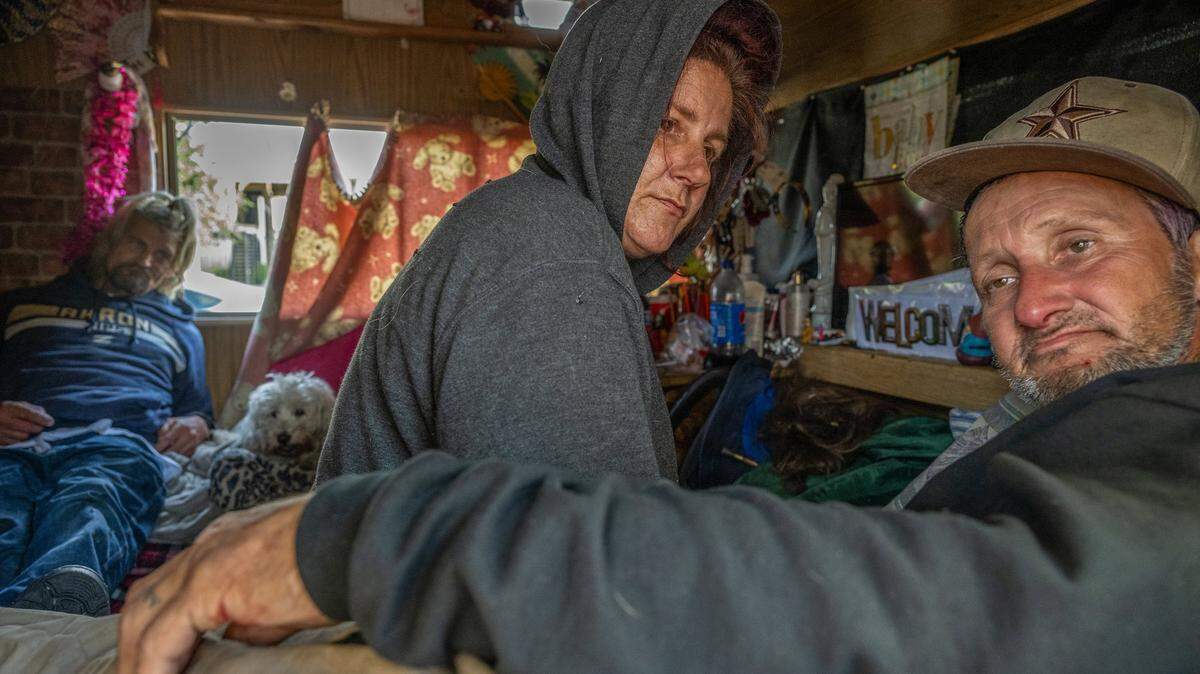
The return of Sacramento County’s homeless population to pre-pandemic levels is a tenuous team victory by layers of government and Sacramento’s nonprofit community. It is going to take continued funding and partnership to move thousands who are still homeless from the streets, with Sacramento County playing a decisive role in further progress.
The findings come from the county’s biannual effort of government workers and volunteers searching for the homeless and totaling their findings. The so-called Point in Time Count, which occurred this January, found 3,944 homeless living on the streets and another 2,671 in various shelters. The number of unsheltered homeless dropped by 41% since the 2022 count. Overall, those in homelessness in this count dropped by 29% countywide.
This official count confirms some anecdotal evidence that the crushing numbers of homeless in recent years have eased somewhat even if homelessness is still readily apparent in our everyday lives.
The number of shelter and transitional housing beds is up 84% since 2020. That is directly a function of assistance from Gov. Gavin Newsom and the California Legislature. There has been a lot of talk about where the state funds have gone toward homelessness, and this is a success story. So is the increase of permanent housing by more than 1,000 units. Most of those are in the city of Sacramento, where the overwhelming majority of our city’s homeless reside.
Sacramento Mayor Darrell Steinberg deserves credit for staying the course on homelessness and never governing out of anger.
Against the advice of some associates, Steinberg chose to be the region’s political face of homelessness and tirelessly pushed for more funding and a more coordinated response with the social service providers managed by the county.
Steinberg has been wrongly blamed for the global epidemic of homelessness by misguided critics like Sacramento County District Attorney, Thien Ho, whose useless lawsuit against the city belongs in the dustbin of history. This crisis is not solved in the courts; it is solved on the streets, one desperate Sacramentan at a time.
It’s too common and too easy to dismiss Sacramento’s homeless population as an outsider group, but the new Point in Time Count debunks that myth, showing that nearly two-thirds of those surveyed — 62% — say they are either from Sacramento County or have been lifelong residents. A full 90% say they’ve lived in Sacramento for more than six months. It’s important to remember that homeless people in the state capital are Sacramentans; to label them as infiltrators belies the realities of how homelessness happens, and makes it harder to secure assistance.
Moreover, 68% of those surveyed said they had been homeless for more than two years — since the last PIT Count — and half said they were experiencing homelessness for the first time. It bears repeating: A few thousand Sacramentans fell into homelessness for the first time in the last two years, and have yet to receive the assistance they need to get out.
This is no time to let up. And there are reasons to worry that the next increments of progress may be hard.
Newsom is showing clear fatigue at throwing money at local governments, especially now that he faces budget problems. Legislative Democrats want to continue the pace of that spending but if the governor were to follow through and veto homeless spending, more than 3,000 shelter beds would go away and all that progress would disappear.
Not only is the remaining homeless population largely a chronic one, but 83% of those with serious mental illness are living somewhere in the community and not in shelters. Newsom is excited about his potential solution to this: the rapid investment of billions of dollars that voters approved this March via Proposition 1 for more treatment facilities and housing. He plans to make Prop. 1 money available as soon as this year for counties that want to and can expand their mental health systems.
That brings us to Sacramento County and our all-but-absent Board of Supervisors. It falls to them to get those who are both mentally ill and homeless off the streets, and into the care that they desperately need.
Sacramento County must apply for the Prop. 1 money. They have to build the treatment and housing facilities. They have to take an aggressive approach.
But will they? Steinberg has taken political bullets for homelessness. But if we don’t get homeless into addiction and mental illness treatment, the blame will be squarely on the county. It won’t be for lack of money. It will be a lack of desire and competence. Five people — Phil Serna, Patrick Kennedy, Rich Desmond, Sue Frost and Pat Hume — are now squarely in the homeless hot seat. They need to deliver on Prop. 1, and it will be readily apparent if they don’t.
That the ranks of the homeless are down is reason enough for hope and give credit to some hard work. Here’s to more progress, and getting back to work — together.
BEHIND THE STORY
MOREWhat are editorials, and who writes them?
Editorials represent the collective opinion of The Sacramento Bee Editorial Board.
They do not reflect the individual opinions of board members or the views of Bee reporters in the news section. Bee reporters do not participate in editorial board deliberations or weigh in on board decisions. The same rules apply to our sister publications, The Modesto Bee, Fresno Bee, Merced Sun-Star and San Luis Obispo Tribune.
In Sacramento, our board includes Bee Executive Editor Colleen McCain Nelson, McClatchy California Opinion Editor Marcos Breton, opinion writers Robin Epley, Tom Philp, LeBron Antonio Hill and op-ed editor Hannah Holzer.
In Fresno and Merced, the board includes Central Valley Executive Editor Don Blount, Senior Editor Christopher Kirkpatrick, Opinion Editor Juan Esparza Loera, and opinion writer Tad Weber.
In Modesto, the board includes Senior Editor Carlos Virgen and in San Luis Obispo, it includes Opinion Editor Stephanie Finucane.
We base our opinions on reporting by our colleagues in the news section, and our own reporting and interviews. Our members attend public meetings, call people and follow-up on story ideas from readers just as news reporters do. Unlike objective reporters, we share our judgments and state clearly what we think should happen based on our knowledge.
Read more by clicking the arrow in the upper right.
Tell us what you think
You may or may not agree with our perspective. We believe disagreement is healthy and necessary for a functioning democracy. If you would like to share your own views on events important to the Sacramento region, you may write a letter to the editor (150 words or less) using this form, or email an op-ed (650-750 words) to opinion@sacbee.com. Due to a high volume of submissions, we are not able to publish everything we receive.
Support The Sacramento Bee
These conversations are important for our community. Keep the conversation going by supporting The Sacramento Bee. Subscribe here.