
Sacramento now has the tools to do more to address homelessness in the Central City | Opinion
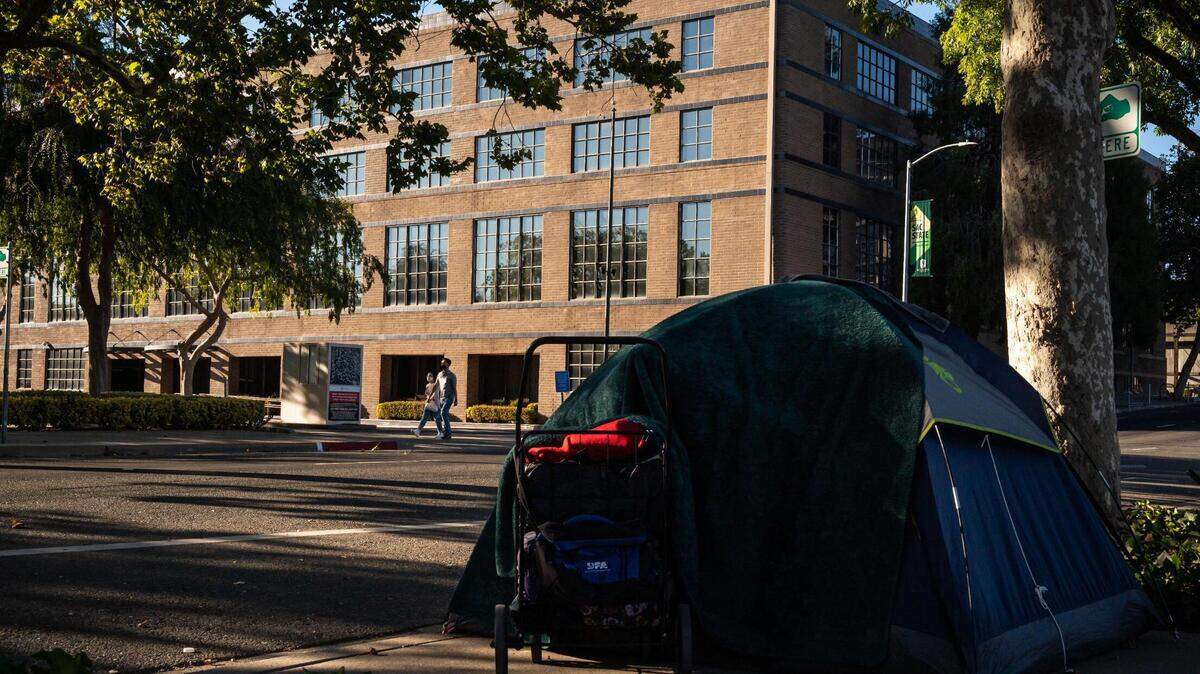
There is encouraging news that could potentially change the underlying dynamics to help Sacramento address homelessness.
In June, the U.S. Supreme Court handed down a monumental decision that gives local governments wider latitude in determining how to regulate homelessness than what was not possible under a previous federal court ruling. Under that six-year-old court decision, local governments could not cite or arrest people experiencing homelessness for unlawful camping on public property unless shelter beds were first made available.
Another promising development arose when Gov. Gavin Newsom issued an executive order directing state agencies to adopt humane and dignified policies to sweep encampments on state property and urged local governments to do the same, where unsheltered individuals living in them are subject to extreme weather and predatory and criminal activity, and which also threaten the safety and viability of nearby businesses and neighborhoods.
Along with Mike Testa, president and CEO of Visit Sacramento, we agree with Gov. Newsom that every jurisdiction must do more to address encampments. This is especially true for Sacramento’s Central City, where 84,000 employees work, 242,000 annual convention delegates gather, 31,000 residents live, and 2,600 small businesses try to survive and prosper.
There are hundreds of homeless people who live in tents or vehicles in Sacramento’s Central City. There is no silver bullet to this problem. Be that as may, even though tens of millions of dollars have been spent to address this issue, the city has fallen woefully short in meeting its goals to create new housing options for unsheltered individuals and families, such as tiny homes. As a result, our city streets and storefronts have become the de facto shelters.
The Central City traditionally generates quadruple sales tax per square mile compared to the entire city, 65% of the city’s entertainment venues are located in the Central City, and eight million visitors generate more than $100 million in annual sales and hotel taxes for the city. To maintain this massive economic impact, we must have clear, clean, and safe streets.
The governor’s directive is essentially a call to action for our city leaders to partner with state agencies to take proactive steps to remove homeless encampments that have heretofore been stymied by lawsuits and injunctions. Our local government leaders now have the tools and guidance needed to address the homeless crisis on our sidewalks and streets. As stated in the governor’s Executive Order, “with the threat of these types of injunctions removed, there is no longer any barrier to local governments utilizing the substantial resources provided by the State, in tandem with federal and local resources.”
Even though the decision gives cities and counties the authority to criminalize people for sleeping in public, even when available shelter isn’t available to offer, we are not advocating that criminal prosecutions should be the basis for the kinds of sweeping injunctions that were used in the Oregon city of Grants Pass that the Supreme Court upheld. Indeed, we do not think that excessive civil fines and penalties should be imposed or that the due process rights of unsheltered people should be violated.
But we do think the time for action is now. More housing options for unsheltered individuals and families and wrap-around services must be matched with enforcement actions.