Megafires are California’s future, as we learn to live with climate change | Opinion
Northern California is no stranger to explosive fires. Butte County’s recent history in particular, with the 2018 Camp Fire, remains one of the state’s most destructive and deadliest wildfires to date, killing 85 people and causing more than $16.5 billion in damage.
At its height, the Camp Fire moved at a clip of about 80 football fields per minute, burning more than 153,000 acres overall.
But within mere days, 2024’s Park Fire — blazing through roughly the same geographical area — has blown past the Camp Fire’s records and become the state’s fourth-largest wildfire in recorded history and the largest-ever allegedly caused by arson.
The Park Fire reached a record 350,000 acres in less than 72 hours, and is only 24% contained as of this writing. It has burned nearly 400,000 acres – an area more than twice as large as New York City. Evacuation orders now span across four counties: Butte, Plumas, Shasta and Tehama. According to Cal Fire and the Chico Enterprise-Record, nearly 600 buildings so far have been damaged or destroyed, including historic buildings.
And it’s not over yet.
As Northern California heads into the second straight week of the blaze, firefighters will battle high temperatures, low humidity and strong winds over the weekend. And a chance of thunderstorms in the area that may cause “erratic” fire behavior, Cal Fire reported, in a situation that has already grown unpredictable, large and historic.
We can — and must — do better, or soon there will be little of California left to save.
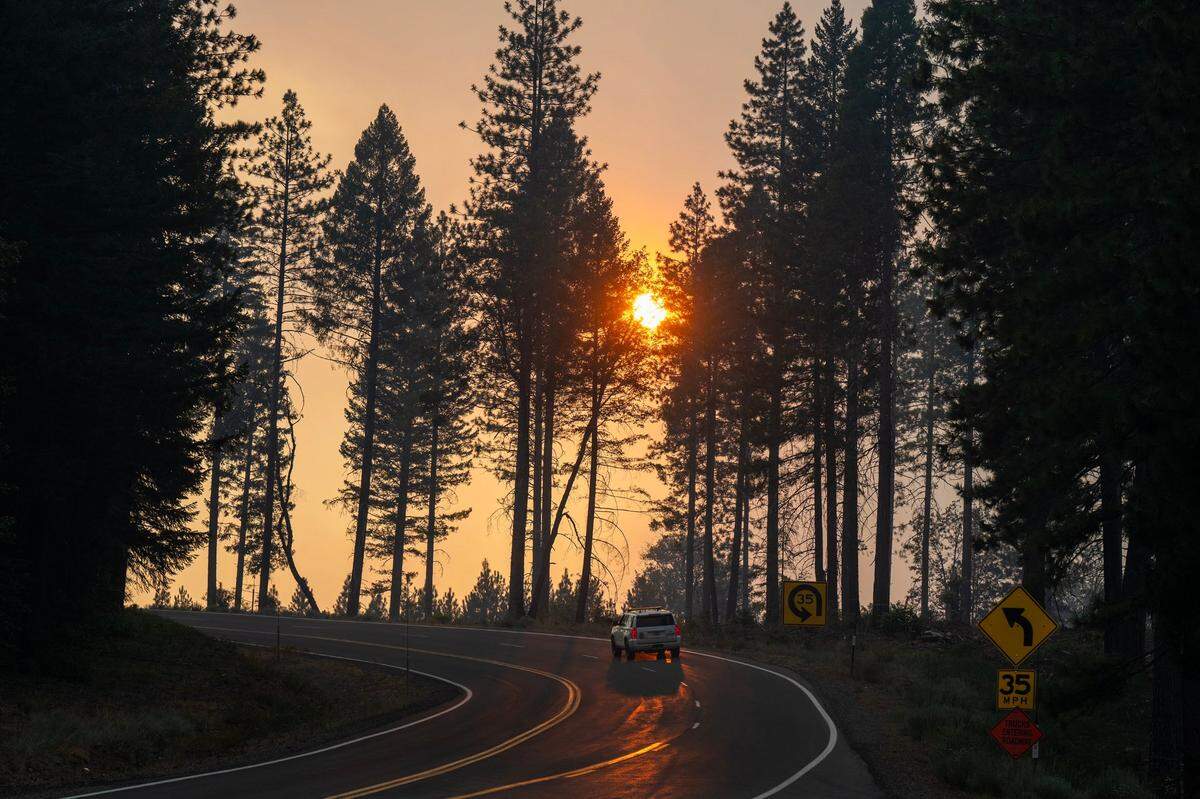
A perfect (fire) storm
The conditions were perfect.
California was dealing with record heat waves before the Park Fire was ignited on July 24; the city of Redding, just to the northwest of the current burn scar, clocked a record-high temperature of 92 degrees at the start of July. Here in Sacramento, residents suffered through nearly two weeks of triple-digit temps, while heat records were set across the state.
Climate change has continued to have an outsized impact on California summers: Nine of the 10 hottest summers in the state’s history have all occurred since 2006. The heat dries grasses and brush, and low humidity creates the perfect circumstances for a fast-growing and fast-moving wildfire.
“Once a fire starts — (and) more than 80 percent of U.S. wildfires are caused by people — warmer temperatures and drier conditions can help fires spread and make them harder to put out,” reports the Center for Climate and Energy Solutions. “Warmer, drier conditions also contribute to the spread of the mountain pine beetle and other insects that can weaken or kill trees, building up the fuels in a forest.”
So when Chico resident Ronnie Dean Stout allegedly pushed his on-fire car into a ditch in Upper Bidwell Park on the outskirts of Chico, the natural landscape was primed to alight.
In fact, Bee reporting found Chico city authorities had a plan for a prescribed burn in a 50-acre patch of extremely dry, invasive yellow-star thistle just north of the ravine Stout’s car would wind up in. Local authorities already knew it was dangerously flammable.
The prescribed burn never happened though — mainly due to lack of resources, city authorities told The Bee.
“It’s a freak of nature chance that this fire happened right next to where we had a project planned,” said Zeke Lunder, founder of Deer Creek Resources, the company that helped the city plan the burn. “If we would have burned this spring, there’s good odds it would have slowed this fire down and allowed us to catch it.”
In the past, cooler temperatures at night helped firefighters gain control over fires that threatened to spin out of control, but climate change has made the nights warmer while creating wetter winters that lead to overgrowth and longer, hotter summers that dry the vegetation out.
In addition to the heat, wind has also been a factor in the fire’s rapid spread. While light winds have minorly exacerbated the Park Fire, Cal Fire officials have confirmed it’s mainly been a “plume-dominated fire,” a natural phenomenon defined by the national Weather Services as “a fire whose behavior is governed primarily by the local wind circulation produced in response to the strong convection above the fire, rather than by the general wind.”
In short: The heat and intensity of the fire create its own convection columns with strong wind intake, spreading embers and ash and creating spot fires that divide firefighting efforts. It’s a “firenado,” some say.
It’s easy to say, with hindsight, that the planned, prescribed burn could have helped kneecap the Park Fire at the start, but “there’s no magic to this,” said Chico Fire Department Chief Steve Standridge.
“We’re not omnipresent,” Standridge said. “We don’t know whether or not the mitigation work we’re doing is going to be a benefit.”
California’s future in flames
It’s a horrifying realization to know that your love for something cannot stop its destruction.
I went to college and worked in Chico and Butte County for much of my 20s, and so I have a special love for its brushy-rough landscape, where the Sierra Nevada, the Cascades and the Sacramento Valley intersect. The Camp Fire was hard enough to endure, but watching the Park Fire rip through the same land has felt horrifyingly familiar.
Often, it feels hopeless to believe the craggy hills of Northern California that I grew up in will ever again be safe from fire. The smoke that fills our skies every summer is a traumatic reminder of death and destruction that we only have the illusion of control over.
The Park Fire is “near the top of the list in terms of the extraordinary, record-breaking, paradigm-shifting fire characteristics that we saw,” UCLA climate scientist Daniel Swain said in a recent Cal Fire briefing.
And yet, the City of Chico has not a single mention of climate change in its Community Wildfire Protection Plan. It’s true that it’s impossible to know what a prescribed burn may or may not have done to halt the Park Fire, but ignoring such clear signs of exacerbation now that nearly 400,000 acres have been destroyed is not only foolhardy, it’s deadly.
Make no mistake: This fire may have been started by a possible act of arson, but it has grown near-uncontrollable because of climate change. The Park Fire — and massive fires like it — are not just in California’s future, they are California’s future.
California is now seeing the impact of the revolving door of drought and wildfire, with deadly consequences. The Park Fire has been exacerbated by human choices and decades of poor forestry management that was guided more by capitalistic gain than wisdom. We are now paying the price for our hubris.
This story was originally published August 3, 2024 at 5:00 AM.