
Will Sacramento County Supervisors ever do more than sweep homeless folks into the city? | Opinion
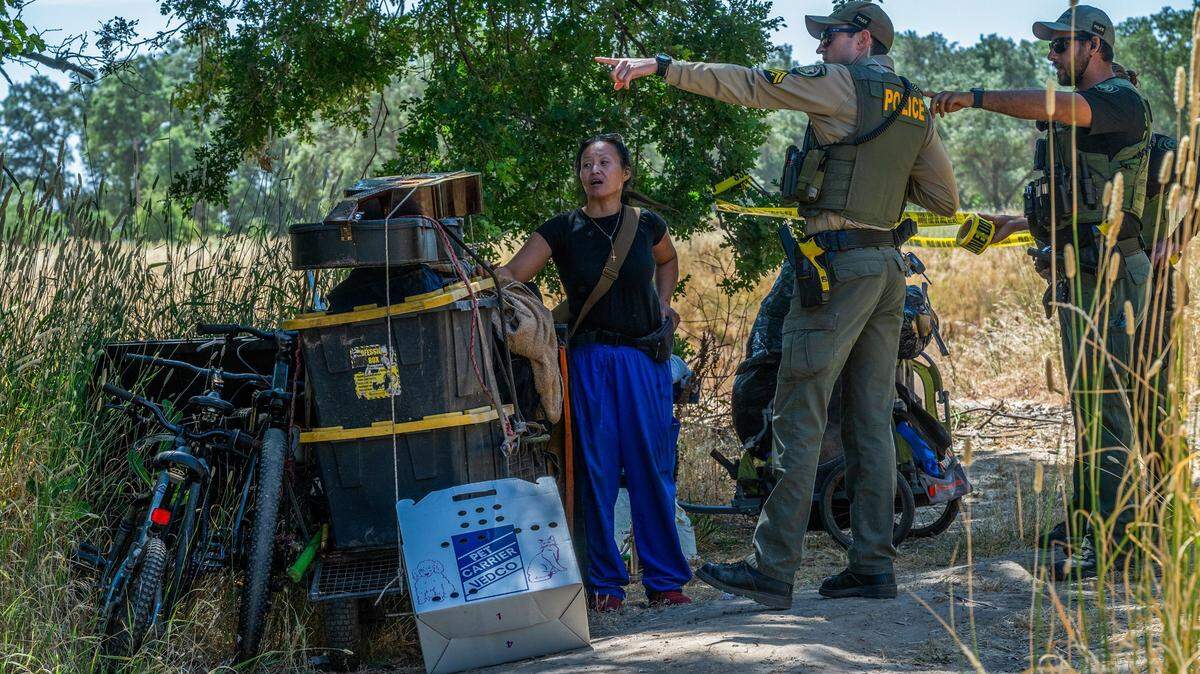
Sacramento County has essentially criminalized homelessness with a new ordinance that bans encampments on public property, empowered by a recent Supreme Court decision that is shifting government responses throughout California.
Two very different homeless trends have been playing out in Sacramento. Overall, the estimated population is down. But the remaining population has been concentrating in the city of Sacramento as the homeless count in the unincorporated county is plummeting. And that isn’t happening because the county is suddenly better at ending homelessness.
The homeless are congregating in the city of Sacramento due to different patterns of local law enforcement. Swept from other places like the unincorporated county, the homeless are ending up in the urban core.
Yet regardless of where they sleep at night, it is the responsibility of the county, and not the city, to provide the necessary mental health and substance abuse services. A recent report finds that even when county outreach workers reach those who are homeless in Sacramento, precious few are getting the services they need.
With the encouragement of business leaders, county supervisors unanimously adopted the new ordinance.
“We have to have good tools for enforcement,” said Supervisor Rich Desmond, who helped craft the ordinance along with Supervisor Pat Hume. “We have to remain committed to help people.”
A county attorney described the ordinance as a “sweeping prohibition.” The ordinance makes camping on public property in the county a misdemeanor.
Mike Ziegler, undersheriff of the Sacramento County Sheriff’s Department, predicted no change in enforcement because of the county’s new anti-camping ordinance. “In the unincorporated area, the homeless….has gotten a lot better,” he said.
The city of Sacramento has had a similar ordinance on the books for years. Yet enforcement was suspended after an appellate court decision in 2018 prohibited moving homeless people in most circumstances if the same local government did not have a shelter as an alternative. With the U.S. Supreme Court overruling that decision this summer in a different case, local governments have wide latitude in how to enact and enforce camping prohibitions.
City Councilwoman Katie Valenzuela, representing downtown and midtown neighborhoods that have borne the brunt of the homeless crisis in recent years, predicts an even greater concentration of homeless within the city of Sacramento as a result. “The natural outcome…will be to relocate unhoused people to incorporated cities within the county,” she said. “People don’t disappear when people don’t want them to be somewhere. They have to go somewhere else. This is incredibly frustrating.”
In a biannual survey of the county’s homeless population completed this winter, the so-called Point In Time count found only 561 unhoused residents in the unincorporated county. That tally was down 57% in just two years.
The city of Sacramento’s share of the county’s overall unsheltered homeless population, meanwhile, went up significantly during the same period, from 67% to 77%. Overall, the actual number of unsheltered homeless went down by 41%.
But there is an undeniable shift happening. The homeless problem is being pushed into the city of Sacramento. And now the question is whether the county can do a better job getting the homeless the services they need, now that they know where to find most of them.
Outgoing Sacramento Mayor Darrell Steinberg is hopeful that the downward trend in the county’s homeless numbers will continue, yet that won’t happen without the county providing the necessary drug treatment and mental health services.
“You have a recipe for a much better trajectory,” he said. “The trend will continue to be good if our approach is a balanced one.”
Providing the necessary services to those who live on the streets remains the weak link in the county’s homeless response. In a September City Council meeting, county officials reviewed the latest statistics on homeless services, and one problem stood out. Of those unsheltered homeless that county outreach workers managed to reach, a small percentage of them ended up getting enrolled in any kind of social service program.
Behind this statistic is an unanswered question — why?
The 2024 homeless survey, as an example, found 2,788 homeless with severe mental illness, with 83% of them sleeping outdoors. Some in this population may simply be beyond the persuasion of outreach. It may require the county to petition a court to direct some homeless people into inpatient care. But this so-called “Care Court” system doesn’t even exist yet in Sacramento County. Thanks to legislation championed by Gov. Gavin Newsom and funding for more treatment facilities passed by voters in March via Proposition 1, it is soon within the county’s reach to better address this challenge.
Newsom last year slammed the county for a slow start. If hundreds of mentally ill and unsheltered homeless people do not find their way into treatment going forward, there will be only Sacramento County supervisors and management to blame. Arresting a mentally ill homeless person for sleeping on county property, as this new ordinance would allow, would solve nothing.
Supervisors did the popular and expedient thing by getting tougher on homeless people. But what about better cooperation with the city of Sacramento to get more people the services they need to get off the street? What about having the courage to build more mental health treatment capacity?
Do county supervisors have the guts to do the hard and sometimes unpopular work that would help Sacramento turn the corner on the toughest part of this problem?
There’s reason to hope. It’s also evident who to hold accountable if the supervisors don’t dare to do beyond what is easy and popular.
This story was originally published October 23, 2024 at 5:00 AM.