
Republicans trashing Cornyn bid for Senate leader didn’t just bash him. They hurt Texas | Opinion
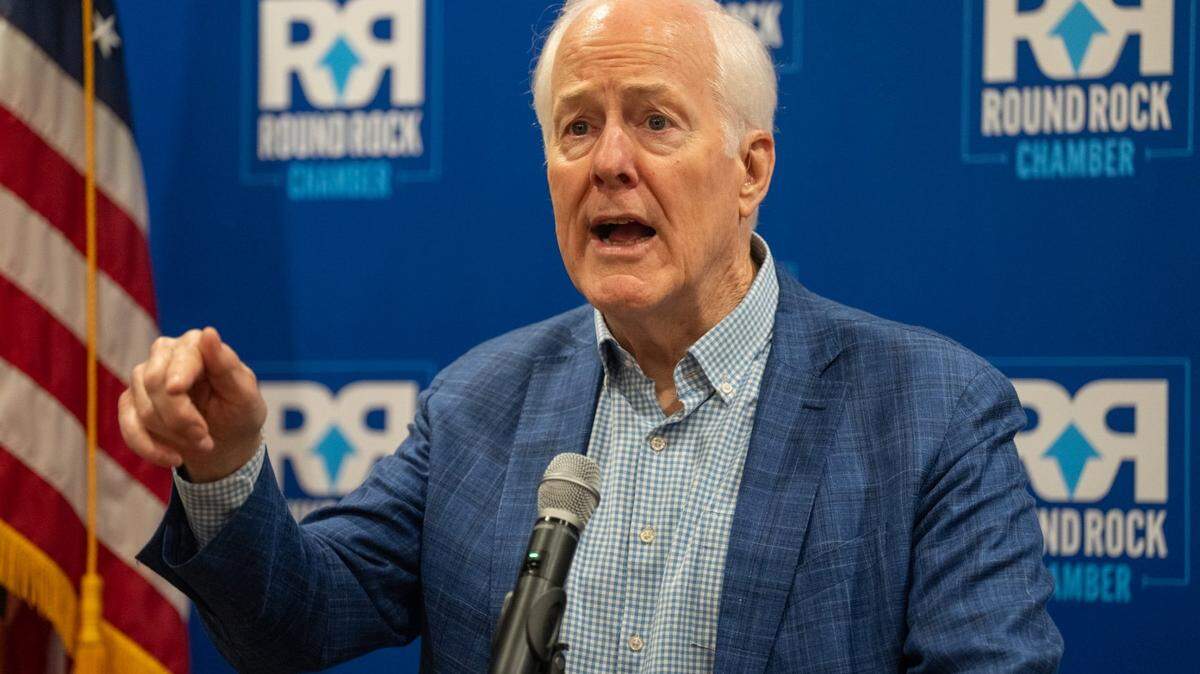
The top job in the Senate ultimately wasn’t in the cards for Texan John Cornyn.
But his run for majority leader helped reveal who’s truly got the state’s interests at heart — and certain Republicans failed the test.
Any Republican who cares what’s best for Texas should be thrilled to see the party’s most senior lawmaker in Washington ascend to significant power. Texas has had its share of House speakers, but the state hasn’t had someone in charge of the Senate since Lyndon Johnson in the 1950s. As majority leader, Cornyn could have protected priorities for the state and the party — including border security and immigration reform, defense spending and preventing federal interference on matters such as education and social policy.
Some on the far-right are so blinkered about Cornyn, so reflexively “anti-establishment,” that they loudly opposed his bid without really articulating what he had supposedly done wrong.
It’s not that everyone has to love him. Like any lawmaker with a record longer than two decades, he’s made plenty of votes, compromises and comments that some don’t like. Fair game.
But the rhetoric quickly became ridiculous, and the criticism would be laughable if such a sizable minority didn’t believe it. Tucker Carlson, the noxious provocateur who was once an MSNBC host, called Cornyn an “angry liberal.” It’s as if Carlson took it as a personal challenge to find the two words that least describe the Texas senator.
The True Texas Project fired off a typical email calling Cornyn “the worst kind of ugly ... ugly on the inside, full of corruption, ego, deception, and selfishness.” Those would be serious charges if they included any actual substance. It accused him, citing nothing other than likeminded, closed-loop talk online, of having plans to thwart Donald Trump’s second term. But then, given the group’s affinity for white supremacists and other cretins, perhaps Cornyn should wear this as a badge of honor.
Local county Republican parties — you know, the organizations that literally exist to get Republicans elected — passed resolutions urging senators to reject Cornyn, some preferring Florida Sen. Rick Scott. The Tarrant County GOP’s version accused Cornyn of joining Democrats to “pass omnibus bills that do not benefit Americans.”
That probably refers to votes to keep government functioning despite the constant brinkmanship imposed by a Congress that refuses to write the federal budget through the typical legislative process. Cornyn, in his pitch to fellow Republican senators, promised ample opportunity for input rather than last-minute, take-it-or-leave-it spending bills.
The larger complaint was the vague suggestion that Cornyn and the ultimate winner, Sen. John Thune of South Dakota, had occasionally criticized Trump and raised questions about his fitness as a candidate. That should have been points in their favor.
Even Trump’s biggest fans must acknowledge that his impulsiveness and crassness can lead to bad ideas. Senators, and for that matter elected officials in other offices, have a duty to oppose any president’s worst proposals. They are governing partners, not a rubber-stamp. That can occur even while giving Trump the vast majority of what he wants.
Complaints against Cornyn have built in his years in office. But they’re not based on much. After the 2022 Uvalde school shooting, he dared to promote modest gun legislation that increased mental-health funding and provided incentives for states that choose to implement “red-flag” laws. Scott, as Florida governor after the Parkland school shooting, ushered into law a red-flag provision that allows police to seize guns from people deemed dangerous. Whatever you think of the issue, it’s a much more sweeping measure than what passed Congress.
Also, records kept by fivethirtyeight.com indicate that while both Cornyn and Scott were loyal to Trump during his first term, the Texan was closer, voting with the president 92.2% of the time, compared to Scott’s 84.1%. Thune was at 91.4%.
But somehow, Scott is the more conservative choice? Only with the portion of the MAGA crowd that focuses more on words than deeds.
The job of majority leader is largely cat-herding. Senators have egos and political priorities of their own. Relationships, not ideology, will get the work done — including the very Trump agenda the right is clamoring for.
In the end, Scott was eliminated in the first round of voting among Republican senators. For all the noise, he’s reportedly not very popular with his colleagues or considered an effective leader. In the second round, Thune topped Cornyn, 29-24.
Texas’ other GOP senator, the freshly reelected Ted Cruz, announced his support for Scott before the vote. He hasn’t said how he voted in round two. Perhaps Cornyn granted Cruz political cover, knowing how the first round would go. But we hope Cruz will tell Texans his ultimate choice and, if he declined to support the fellow Texan who did so much to help him win another term, why.
The far-right animosity to Cornyn will surely resurface if he decides to seek a fifth term in 2026. Cornyn has won statewide election handily every time he’s been on the ballot, and he’s never faced a serious primary challenge. But Attorney General Ken Paxton has made no secret that he’s interested in taking on Cornyn, which probably explains why some Republicans took this opportunity to swipe at the senior senator.
In so doing, they once again proved that their loyalty to a narrow brand of politics rather than what’s best for the state — and what’s worked for the Texas Republican Party for more than a generation.
BEHIND THE STORY
MOREHey, who writes these editorials?
Editorials are the positions of the Editorial Board, which serves as the Fort Worth Star-Telegram’s institutional voice. The members of the board are: Cynthia M. Allen, columnist; Steve Coffman, editor and president; Bradford William Davis, columnist and editorial writer; Bud Kennedy, columnist; and Ryan J. Rusak, opinion editor. Most editorials are written by Rusak or Davis. Editorials are unsigned because they represent the board’s consensus positions, not necessarily the views of individual writers.
Read more by clicking the arrow in the upper right.
How are topics and positions chosen?
The Editorial Board meets regularly to discuss issues in the news and what points should be made in editorials. We strive to build a consensus to produce the strongest editorials possible, but when we differ, we put matters to a vote.
The board aims to be consistent with stances it has taken in the past but usually engages in a fresh discussion based on new developments and different perspectives.
We focus on local and state news, though we will also weigh in on national issues with an eye toward their impact on Texas or the Dallas-Fort Worth area.
How are these different from news articles or signed columns?
News reporters strive to keep their opinions out of what they write. They have no input on the Editorial Board’s stances. The board consults their reporting and expertise but does its own research for editorials.
Signed columns by writers such as Allen, Kennedy and Rusak contain the writer’s personal opinions.
How can I respond to an editorial, suggest a topic or ask a question?
We invite readers to write letters to be considered for publication. The preferred method is an email to letters@star-telegram.com. To suggest a topic or ask a question, please email Rusak directly at rrusak@star-telegram.com.
This story was originally published November 15, 2024 at 7:24 AM with the headline "Republicans trashing Cornyn bid for Senate leader didn’t just bash him. They hurt Texas | Opinion."