
Fair is not equal: Set rules for student-athletes’ name, image and likeness money | Opinion
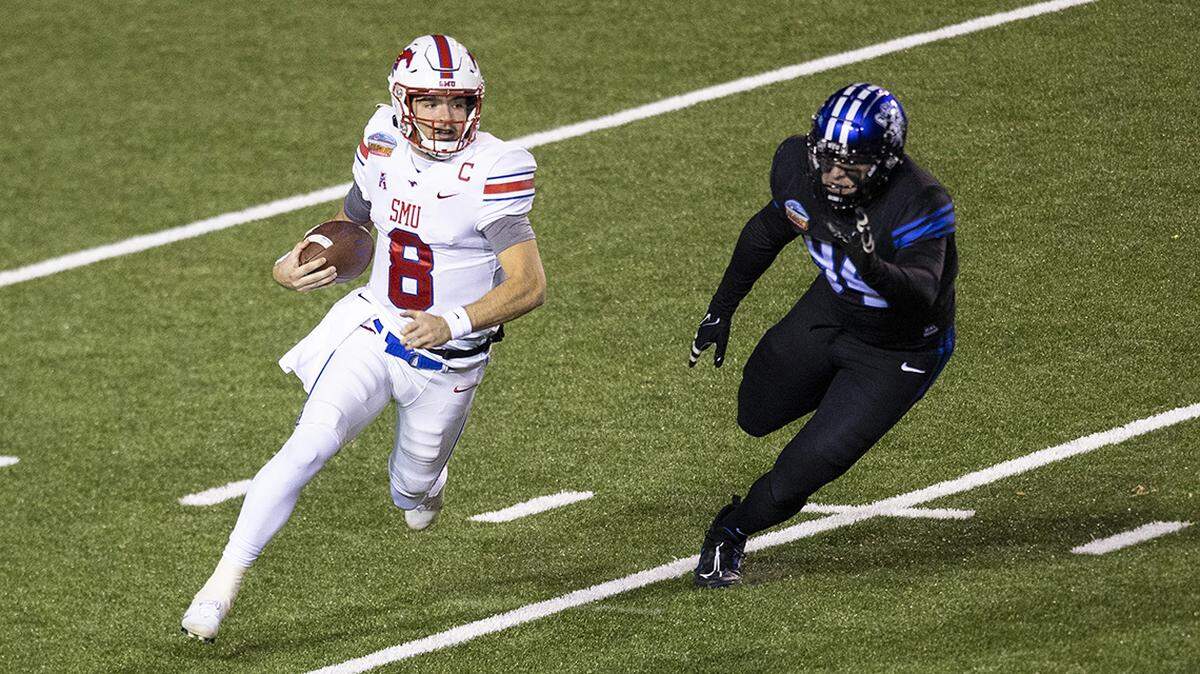
It is not hard to imagine where Southern Methodist University’s football program might be today if the era of name, image and likeness and revenue sharing had arrived on time.
If you are still on the fence about whether student-athletes should receive NIL compensation, check out ESPN’s “30 for 30: Pony Excess” on Netflix. It tells the story of SMU receiving the “death penalty” from the NCAA in 1987 (the only time in the history of college sports this had happened) because its football program was paying players and had a payroll. Many other teams were doing the same thing.
Many alumnus donors do not have an issue with student-athletes being on a payroll. Money is neither good nor evil; it is how it is purposed that determines its usefulness. Sharing compensation with those who generate revenue from their labor in the industry of sports entertainment is not acting without integrity. The question now is how to distribute this revenue as compensation.
One concern is how to do so within the framework of Title IX. Another is how donor dollars may be stressed in fundraising to meet new financial demands. The question becomes whether revenue sharing in this instance violates legal boundaries of price fixing since student-athletes are not represented at a bargaining table, and a greater divide might occur between the power conferences and their counterparts.
The Women’s Sports Foundation tells us: “Title IX does not require equal expenditure of funds on male and female athletes. The only dollar for dollar expenditure requirement is in the athletic financial assistance area, where schools are required to spend dollars proportional to participation rates.” The House v. NCAA settlement requires the NCAA and the Power Conferences to pay $2.78 billion in damages for student-athletes dating back to 2016. However, it is not anticipated that this will be an equal distribution with 75% going to football players, 20% to men’s and women’s basketball players and 5% to remaining student-athletes.
House v. NCAA also allows institutions the option to share up to $22 million in annual revenue with student-athletes, which establishes an institutional salary cap, and is anticipated to grow to nearly $33 million annually under the 10-year agreement. Scholarship limits have also been removed, but scholarship expenditures are capped at $2.5 million within the overall $22 million salary cap.
With these changes, it would also make sense to establish a certain amount (a cap) to be distributed by team roster based on revenue produced. For example, if football creates 50% of an athletics department’s revenue and men’s basketball creates 20%, then 50% of the $22 million in annual revenue share distribution should go to a football roster cap, 20% to men’s basketball and so forth. In this scenario, it would then be up to coaches and their general managers to determine whether expending a couple of million dollars on a quarterback or point guard to seek a competitive advantage will significantly impact their team’s success thus aligning with a pro sports model.
Since scholarship expenditure is also considered compensation as a part of the cap equaling approximately 11% of the total, roster space could be allocated by professional and amateur competitors allowing student-athletes to determine how they want to enter the space of intercollegiate sports entertainment. Student-athletes competing as collegiate professionals would receive a share of the revenue produced from their labor and traditional grant-in-aid would be reserved for student-athletes competing as amateurs, most likely in a non-revenue producing sport.
In other words, fair is not equal and as professional contracts move closer to the first billion-dollar deal and NIL deals approach eight figures, roster demarcation is needed.
This story was originally published December 17, 2024 at 4:07 AM with the headline "Fair is not equal: Set rules for student-athletes’ name, image and likeness money | Opinion."