
California tries to take the buzz out of hemp. But are we too into getting stoned? | Opinion
It is quite clear how California adults are supposed to get stoned.
In 2016, state voters legalized marijuana, also known as cannabis, but under some important conditions. We agreed to tax the hell out of it. And we empowered local governments to regulate its cultivation, distribution and sale.
But in recent years, California’s intoxicant policy began to get a little hazy. A botanical cousin of cannabis, hemp, began appearing on store shelves for anyone to buy. Gummies and other delivery methods have been readily for sale once confined to cannabis products that are restricted to certified dispensaries.
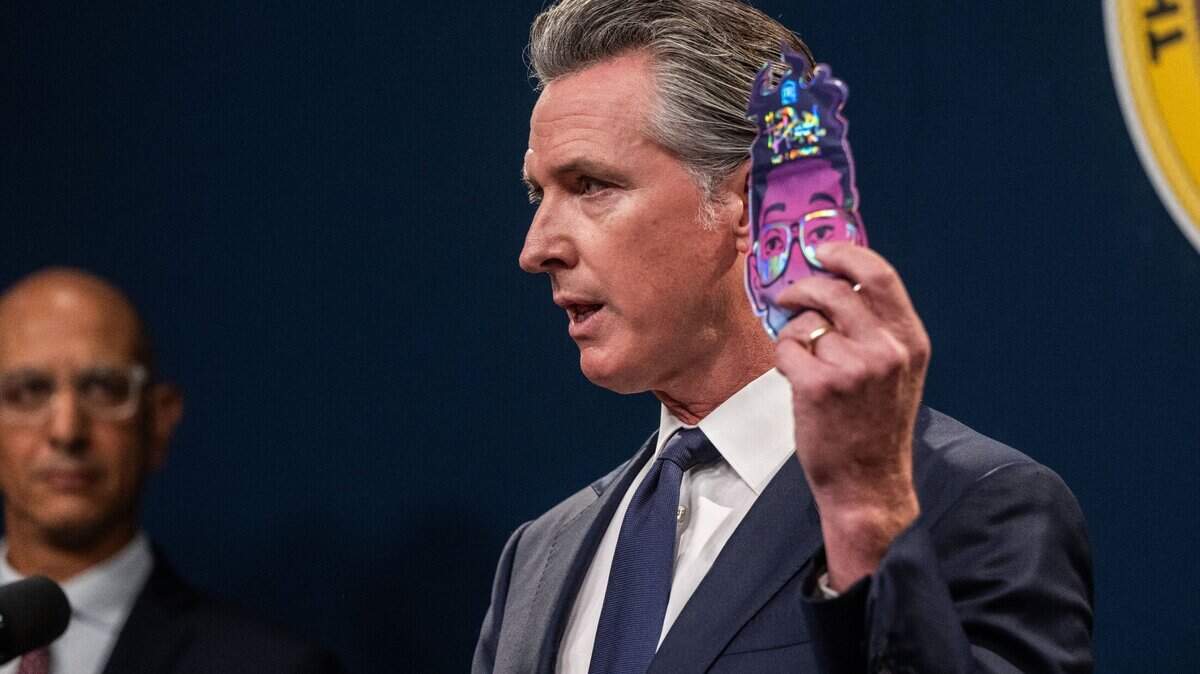
Getting a buzz in California had become a free-for-all. And to his great credit, Gov. Gavin Newsom has stepped into the breach.
State and local agencies - some more aggressively here in the Sacramento region than others - are trying to restore order to California’s cannabis-centric approach to intoxication. Newsom has implemented emergency regulations via the California Department of Health to ban intoxicating hemp products outside of dispensaries. The department is working with other state agencies to spread the word and crack down on haze-inducing hemp products. Locally, Sacramento County has increased penalties for their sales in the unincorporated communities under their direct control.
How well enforcement is working is anyone’s guess.
“We don’t have any systematic analyses yet of how much it has gotten the products out of the stores,” said Dr. Lynn Silver, an opponent of intoxicating hemp products in her activist work at the Berkeley-based Public Health Institute.
Cannabis has been a partially-managed chaos in California for a generation. It began in 1996 when voters approved cannabis for allegedly medical reasons, with scant guidance on how to grow it or prescribe it. It was a mess.
California’s solution 20 years later was to pass Proposition 64 in 2016. Contrary to federal law, Prop. 64 legalized the possession of an ounce of pot for adults and imposed a 15% excise tax on all sales. It legalized its use only in homes (not outdoors or in apartments) and delegated to local governments whether to authorize its cultivation, distribution and sale.
Sacramento is the only major city in the county where cannabis is legally grown and sold, leading to arguably the largest municipal economic expansion of the past decade. Yet another tax (the local one is 4%) contributes far more money to the city treasury than parking. The tax collections indicate that cannabis in Sacramento is a quarter-billion annual industry employing more locals than the federal government.
Yet legalizing cannabis has not eliminated its illicit sale. Nor has it thwarted other actors seeking a piece of the action, namely the hemp industry.
Buoyed by 2018 federal farming legislation that legalized the production of hemp products, the industry has sought to add some kick to its products. The intoxicating ingredient in both hemp and cannabis is known by short-hand as THC, long-hand as tetrahydrocannabinol. Congress seemingly limited its presence in any product to what was seemingly a tiny fraction, 0.3% by weight. But Silver has pointed out that it can only take a matter of grams in a gummy to get a Californian quite stoned.
The Democratically-controlled California Legislature thought it was tightening the regulation of intoxicating hemp in 2021 when it passed a bill that authorized the products while giving state public health officials the ability to go further with new regulations. But for three years, state health officials did nothing while intoxicating hemp products proliferated on the market.
This year, the Democrats were hopelessly deadlocked on legislation to crack down on intoxicating hemp products, members either in the respective camps of the cannabis industry, the hemp industry or both. That prompted Newsom, who has had full ability to solve this problem for three years, to declare hemp an emergency and for health officials to step up and finally confine THC-containing hemp products to cannabis dispensaries (products containing solely CBD (cannabidiol) remain widely for sale in the state.
“The enforcement of California’s industrial hemp regulations has been a statewide and multi-agency effort,” the department said in a prepared statement last week. “CDPH continues to take enforcement actions associated with hemp products containing THC and intoxicating cannabinoids; and continues to work to ensure compliance in California.”
But are Californians complying? Silver found intoxicating hemp products still for sale outside of dispensaries in Berkeley. I went to a tobacco store in West Sacramento and found intoxicating green hemp gummies still for sale.
Sacramento remains a relatively safe haven for hemp products. Sacramento city staff earlier this year basically shot down the effort to create an ordinance that penalizes stores that sell buzz-causing hemp products.
Credit Sacramento County Supervisor Rich Desmond, on the other hand, for working to get an ordinance passed in November with stiffer penalties. This should also be the law of the land in the capital city as well to protect its authorized cannabis businesses.
Given how the Democrats in the Legislature are deadlocked on the matter, this feels destined to be settled one of two ways. Either state and local officials enforce the law and confine intoxicating products to cannabis dispensaries. Or state voters, yet again, will once again pass something with more holes in it than Swiss cheese.
In California, one half-baked idea about pot seems to generate another.