
The fatal flaw in Donald Trump’s order to send more water to fire-ravaged Los Angeles | Opinion
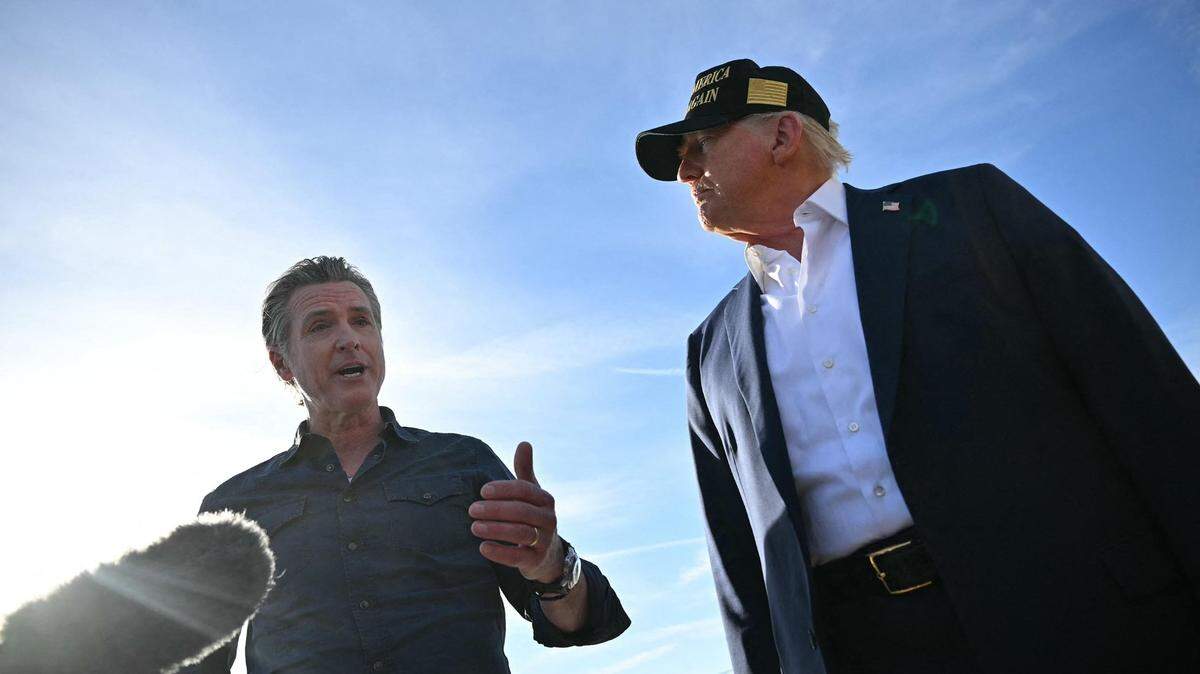
In the guise of helping Los Angeles from the devastation of its fires, President Trump’s latest executive order seeks to increase water supplies from a Northern California project that doesn’t even serve the city.
While Trump may now rule Washington in new and unprecedented ways, he cannot get around water power vested in Sacramento so easily. Water legislation is largely the domain of the 50 states.
There’s only so much that Trump can do and there are signs that he is giving Los Angeles a green light to the disaster relief it needs, despite hinting otherwise in recent days to the contrary.
Dubbed “Emergency measures to provide water resources in California and improve disaster response in certain areas,” Trump called on federal officials last week to “immediately take actions to override existing activities that unduly burden efforts to maximize water deliveries.”
He focused on the Central Valley Project, the federal network of Northern California reservoirs and canals stretching from Shasta County to the north to Kern County in the south. He directed his Secretary of Interior (he is not yet confirmed) to “deliver more water and produce additional hydropower…”
The Central Valley Project (CVP) is a part of daily life in Sacramento. It operates Folsom Dam, whose job is to protect the region from flooding every winter, and then provide by summer reliable water. Managed by the federal Bureau of Reclamation, the CVP operates the state’s largest reservoir, Shasta Dam.
The federal government stepped in to build these projects because California, in the throes of the Great Depression, didn’t have the money to build the water infrastructure the growing state needed. So for nearly a century, federal and state water facilities have jointly operated every day in an awkward marriage under different contracts and laws.
The Northern California project that actually serves Southern California is the State Water Project. Approved by California voters in 1960 in one of the closest water elections in state history under Gov. Pat Brown, the SWP built the largest earthen dam in the world on the Feather River above Oroville. It built the California Aqueduct, which moves water over the Tehachapi Mountains with massive pumps that lift water higher in a single push than anywhere on the planet. The SWP provides roughly 30% of all water in Southern California.
Any president’s control over California water facilities like the SWP only goes so far. The SWP has to operate under two primary laws, the U.S. Endangered Species Act signed into law under President Richard Nixon and the California Endangered Species Act, confirmed by then-governor Ronald Reagan.
Trump cannot change how the California Endangered Species Act is implemented at any state water facility by some executive order. So on Sunday, he didn’t even try.
Instead, Trump focused on the CVP. As a federal facility, the CVP only has to follow federal laws for day-to-day operations. It doesn’t come anywhere close to serving Los Angeles or anywhere that experienced the horrific recent fires. But he can try to boss it around.
The president’s latest executive order hinted at re-operating the CVP with rules adopted under his first administration, in 2019. But as reported by the Bee earlier, those rules at times provide even less water than under pumping regimes approved by former President Joe Biden. Besides, there is no fire emergency facing any community served by the CVP.
Gov. Gavin Newsom and state Attorney General Rob Bonta, both experienced in challenging dubious Trump actions in California, are sure to challenge this one.
Reading the latest Trump tea leaves, the most important thing in this latest executive order is what is missing.
Ever since Trump came to California Friday and saw the horror of massive urban fires fueled by hurricane-force winds with his own eyes, he has yet to talk again about conditioning disaster relief to changes in water policy. He is talking about narrower actions that may never happen because there is no emergency to re-operate with the Central Valley Project.
Helping Los Angeles rebuild is what really matters. Threats by Trump to over-complicate disaster relief have been replaced by a silence on the subject that is both deafening and welcome.