Rebuilding LA will take longer than Newsom can promise, if history is any indication | Opinion
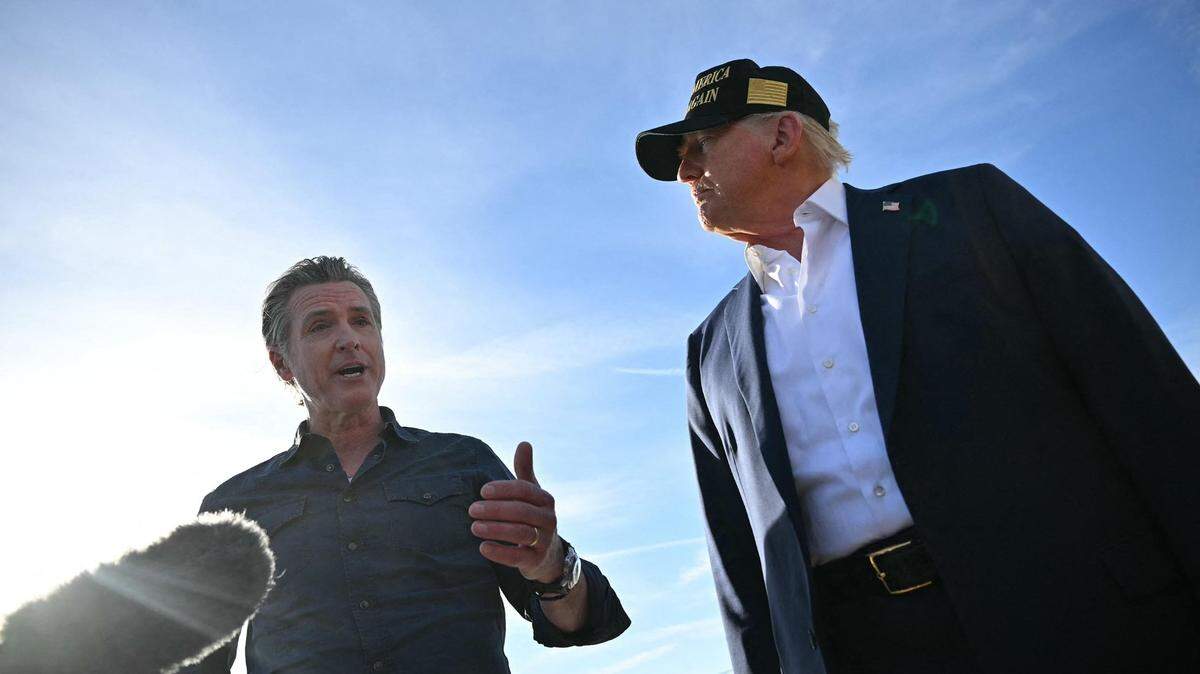
California Gov. Gavin Newsom made headlines this week by signing an executive order he hopes will help Los Angeles rebuild faster after wildfires destroyed 16,000 structures in one of the worst disasters in state history.
But if the recent history of painfully slow wildfire recoveries within wiped-out Northern California communities is any judge, Newsom’s executive order will be long forgotten by the time people can actually rebuild.
More than six years after the Camp Fire almost destroyed almost 14,000 homes near and around the Butte County community of Paradise in 2018, only 2,600 homes have been rebuilt. I stood with families in disposable biohazard suits, sifting through the ashy, white remains of their homes after the Camp Fire. Many of those homes were never rebuilt, and many empty lots remain for sale.
But Los Angeles has something that rural Northern California communities do not: Money and influence — and a looming Olympic Games in 2028 for which the tale of a wildfire mere years before will be a compelling storyline.
Los Angeles will benefit from the hard-won lessons that California has learned in the past near-decade of wildfire. Yet that knowledge and speed have come at the expense of thousands of wildfire victims living in rural California.
“Newsom’s saying they’re going to make all this happen; I don’t know how they’re going to do that,” said Steve “Woody” Culleton, vice mayor of Paradise.
Rebuilding takes years
In his order, Newsom said there was a need to “cut through red tape” that he said would impede rebuilding efforts after recent wildfires destroyed thousands of homes in the Los Angeles area. The order was in response to a recent statement by the Coastal Commission that suggested some rebuilding projects affected by wildfires may be subject to local permitting rules.
Newsom said the commission’s “legally erroneous guidance threatened to create confusion and delay in rebuilding efforts for impacted communities.” The executive order waives the CEQA and Coastal Act requirements and directs the Coastal Commission to stop issuing guidance or attempting to enforce permitting requirements, and the governor also sought to streamline the building of accessory dwelling units to assist in creating more temporary housing.
The Coastal Commission has come under bipartisan fire in recent years, as conservatives and liberal lawmakers see it as an example of government overreach, but have largely been reticent to challenge the commission’s authority.
There is, perhaps, another side to this story though.
Is Newsom merely appeasing Trump?
Newsom’s executive order came barely 48 hours after President Donald Trump visited Los Angeles to observe the destruction and recovery efforts. The notoriously filter-less leader of the free world has been vocally critical of the Coastal Commission and CEQA, the California Environmental Quality Act, which often hampers developers and cities in the name of preventing environmental damage.
“I’ve dealt with the Coastal Commission,” Trump said at a meeting that included LA mayor, Karen Bass, according to NBC News. “They are considered the most difficult in the entire country and we cannot have them play their games and wait 10 years to give somebody a permit.”
That’s hyperbolic but not so terribly far from the truth: It does take years to rebuild after a wildfire and the state government can certainly help residents cut through red tape to move faster. But the problem with heaping blame on CEQA and the Coastal Commission is that it’s not solely their fault. Rebuilding is often delayed after a wildfire.
There are a myriad of hoops to jump through, so much so that some survivors have called rebuilding their home after a fire akin to a full-time job. Getting to ignore CEQA regulations and the Coastal Commission is a drop in the bucket toward their problems right now.
Paradise still recovering
“In Paradise, it took an entire year for them to clean up,” David Little, Executive Vice President of the North Valley Community Foundation, told me. The NVCF raised more than $70 million in donations after the Camp Fire and created grant programs for the Bear/North Complex Fire, the Dixie Fire and other disasters.
“The Park Fire that happened last summer? They’re just now cutting trees this week. You can’t get started (rebuilding) until that infrastructure is in place,” Little said. “They’re going to do their best to do in weeks what it took years to do up in Paradise, just because I think, obviously there’s more pressure on the governor to do something when it affects millions of people, rather than hundreds or thousands.”
“I think it’s natural for people in rural California to feel kind of slighted by state government, like they don’t count because their numbers are small,” he said. “There’s no arguing with that fact: Our numbers are small… (But) it does make you wish our recovery had been fast-tracked.”
“I’m glad it’s been easier for somebody,” Little said. “It certainly hasn’t been easy up here.”