Sacramento Sheriff Jim Cooper takes a risky stand. Will firefighters pay the price? | Opinion
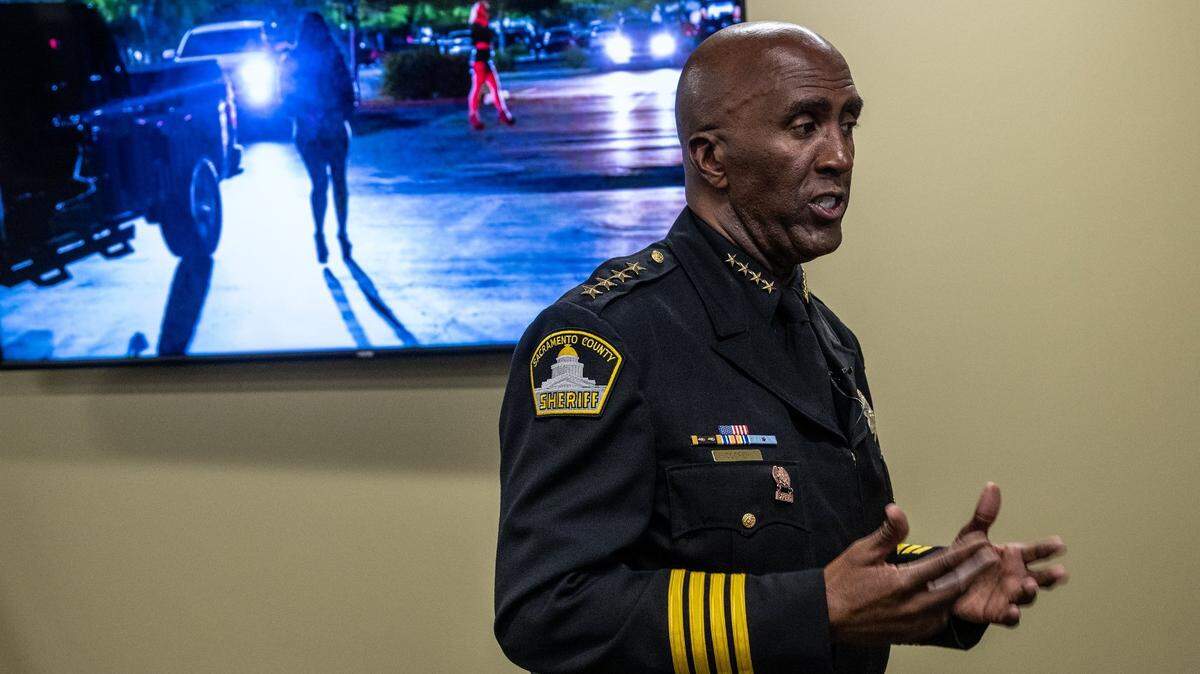
Sacramento County Sheriff Jim Cooper said Tuesday that his deputies will only respond to calls if a crime is being committed, has been committed, or if there is a request for service in which an individual life is at risk of imminent danger.
There will be nothing in between. They won’t respond if someone is simply behaving erratically. Don’t call Sacramento deputies if, for example, the Metropolitan Fire District of Sacramento faces a dicey situation of providing aid to a person barricaded in a room, and the person is not thought to be armed or not committing or about to commit a crime. Deputies won’t come.
“This is going to create discussion,” Cooper said to me on Tuesday at a press conference he called. “I can take the hit. I’m OK with that. But this is going to start discussions.”
It already has. When reached by phone, Battalion Chief Parker Wilbourn of Sacramento Metro Fire said: “Both agencies, (Sacramento Sheriff’s and Sacramento Metro Fire) swore an oath to protect and defend. We’re going to do that without law enforcement.”
Wilbourn said there are many calls firefighters answer that go sideways. Many calls reveal a person in distress turning dangerous and if there is no law enforcement around, the firefighters could face serious injury or death. Firefighters often have to take weapons away from people they treat, he said.
What’s the answer? There isn’t one.
Cooper is reacting to a federal appeals court ruling from last year that denied immunity to Las Vegas Police officers in an excessive force case. The Vegas officers were responding to a 911 call of a 65-year-old man named Roy Anthony Scott, who was holding a metal pipe and had a steak knife in his possession when the police encountered him, according to the Associated Press.
One officer drew his gun on Scott, who panicked as police were trying to pat him down. He died in their custody, and his family sued.
“Our case law makes clear that any reasonable officer should have known that body weight force on the back of a prone, unarmed person who is not suspected of a crime is constitutionally excessive,” U.S. Circuit Judge Roopali Desai wrote in May of 2024.
“Because Scott was mentally ill, was not suspected of a crime, and did not present a risk to officers or others, the government’s interest in applying force was limited.”
Boom. Officers involved in that tragic 2019 incident could be forced to pay compensation for their actions. Cooper has been contemplating what he should do since the Scott v Smith ruling was filed by the 9th Circuit Court of Appeals on July 30 of last year.
“Advocates are always telling me we shouldn’t go on these calls,” Cooper said. “But now that we’re not going on these calls, some folks are angry. It’s really a tough position.”
It’s also a demonstration of the limitations of government to care for distressed people on our streets. Cooper is drawing a line in the sand. He’s saying that when his officers respond to an incident, they “own it” and follow their training to keep the people involved and themselves safe.
But since the 9th Circuit ruling, the law enforcement community has been coming to terms with its meaning.
“Going forward, officers receiving direction from a paramedic to apply force and pressure to a prone person’s upper torso should be very cautious and hesitant to implement the request,” wrote Mike Callahan, last summer in Police 1, a law enforcement industry publication.
“Following the direction of a paramedic to apply pressure in the described manner may result in a finding of unconstitutional conduct and a denial of qualified immunity if the subject is injured or dies as a result. “
There are no easy answers here. If we learned anything at all from the past decade or more of homeless and mentally ill people living and dying on our streets is that cities and counties have spent fortunes of public money while failing to provide enough care for everyone afflicted. Cops and firefighters become our front lines of defense, the first responders to desperate people in crisis.
When somebody dies, the courts apply dollar figures to tragedies. As Cooper himself said, all it takes is one incident for a terrible outcome. The same could be said for Cooper’s decision to avoid calls they used to make when the immunity of officers was secured.
What if a firefighter dies because a situation goes bad and there is no deputy around to help?
The Sheriff acknowledges he can take controversial positions because he is a duly elected law enforcement leader. He doesn’t have to answer to a City Manager or a city council, as Sacramento Police Chief Kathy Lester would.
“If I’m doing a bad job, vote me out,” he said.
This story was originally published February 5, 2025 at 5:00 AM.