Sacramento wants truth from fire, police — but City Hall won’t work with OPSA | Opinion
The city of Sacramento created what would eventually be the Office of Public Safety and Accountability — also known as OPSA — in 1999, to monitor the investigation of community complaints against the Sacramento Police Department. In 2004, that was extended to include the Sacramento Fire Department. OPSA operates entirely apart from the city’s police and fire departments to ensure that internally-led investigations are fair and thorough.
OPSA’s current leader, Dr. LaTesha Watson, came to the job with decades of experience as a sworn officer and police chief. Her position is, organizationally, on the same operational level as the City Manager. But for all it does to ensure accountability, OPSA often flies under the radar of most Sacramentans. And though it can recommend improvements to the SPD and SFD, OPSA cannot recommend discipline or insist on changes. Those are internal privileges that the police and fire departments have kept.
Now, with the ignominious departure of former City Manager Howard Chan, and — finally — a much-needed increase of staff at OPSA, Bee Opinion Editor Marcos Breton and Bee Opinion writers Tom Philp and Robin Epley discuss the future of OPSA at City Hall.
Read our conversation below to learn how OPSA operates, and what the new Sacramento City Council must do to ensure real accountability.
‘One of those mysteries of City Hall’
Tom Philp: OPSA is one of those mysteries of City Hall. Allegedly, the City Council members want a professional, independent watchdog of police that reports directly to them. But public meetings on police oversight are few and far between.
Marcos Breton: Unfortunately, the Sacramento Police Department has spent years resisting the slightest hint of oversight. In 2017, I wrote this: “Gradually, over the last few years, the Sacramento Police Department lost its way. It’s become insular and defensive…It’s been too long since the chief of police in Sacramento has spoken for the department in a strong, clear voice.” Eight years later, I would argue that not much has changed.
Robin Epley: I was able to sit down with Dr. Watson recently to learn more about OPSA. I was surprised to hear that the department has no jurisdiction over the discipline of incompetent officers or firefighters — only oversight on internal investigations. A public complaint cannot be closed out without OPSA’s agreement, and any time the police or the fire department is involved in a death, OPSA investigators respond to the scene to make sure the investigation is conducted properly.
Philp: Watson, on paper, is on par with the city manager in the organizational structure. Both report directly to the council. But the council in the Howard Chan era, as he grew in political power in town, was far too beholden to the City Manager. And as a result, OPSA’s ability to do its job has suffered.
Epley: The story I got from Watson sounded like a lot of ire between the two camps, especially between her and Lester, but also between Watson and Chan. They simply did not want oversight. It’s been a struggle for Watson and her investigators to do their jobs properly because neither the police nor the fire department are fully transparent with any outsiders, an obfuscation that clearly includes the city of Sacramento, too.
City gives the illusion of oversight
Breton: The problem in Sacramento begins with the elected leaders. There are the diehard boosters for the police, while others campaign on holding the department accountable, but seem to forget about it the moment they are sworn in. So the council creates systems and processes that provide the illusion of oversight.
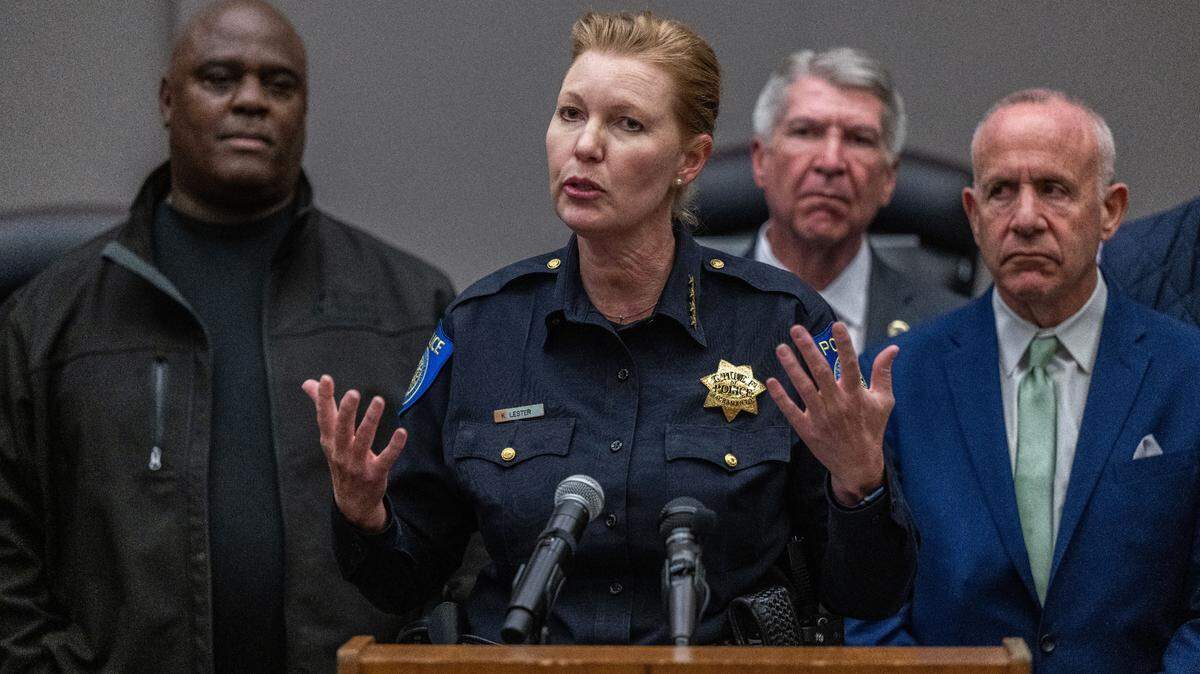
Philp: In the public council meetings with Watson and Sacramento Chief of Police Kathy Lester in the chambers, the tension between the two is palpable. There inevitably is going to be friction between police and an independent monitor, but this felt way different than healthy tension. It felt dysfunctional. Chan did not want anybody overlooking anything that he did. The City Council couldn’t help but detect OPSA’s challenge to his authority, and none of them took that problem on.
Epley: Former City Councilwoman Katie Valenzuela did. She rarely voted for city budgets that included repeated, unchecked raises to the police department without some kind of accountability. And Valenzuela got raked over the coals for it. I would even argue she was eventually ousted for that.
Philp: I think Kevin McCarty is the perfect new mayor to take OPSA to another level. He has the credentials. As an assemblyman, for example, he passed legislation requiring the state Attorney General to conduct an independent review of any fatal police shootings of unarmed individuals. He’s also been chair of the Assembly’s Public Safety Committee. But it would take an activist mayor and a new city manager who truly embraces OPSA’s mission and police accountability for real change to actually happen. It may take some time to see just how serious McCarty and this council is about OPSA.
Epley: McCarty is hardly an activist mayor. That’s why OPSA should have the power to not just investigate the police and fire departments, but to recommend discipline to them, too. The former City Council seemed uninterested in listening to Watson or her staff when they gave their audit reports. I suspect this council won’t be much different. Even the interim City Manager, Leyne Milstein is a protege of Chan. How much can we really expect to change there?
Sacramento needs honest conversations about police, fire
Philp: In some respects, OPSA has existed on paper more than in reality for years because the City Council never gave it enough staff. But Watson and her staff can’t do proper oversight strictly under their own powers and authority. It needs police and city management to provide all the information it needs on a timely basis. And the only way that is sure to happen is if the City Council shows some leadership.
Breton: Sacramento city cops and their supporters don’t want to have honest conversations about how their department runs. As long as this is the case, nothing is ever going to change.
Philp: Professional oversight can lead to a more professional force, the very best police practices and greater community trust over time. Until the body language changes in the council chambers whenever OPSA is on the agenda, I’ll know that the legacy of the Howard Chan era is not over yet.