Sacramento assemblyman wants more accountability from state on homelessness | Opinion
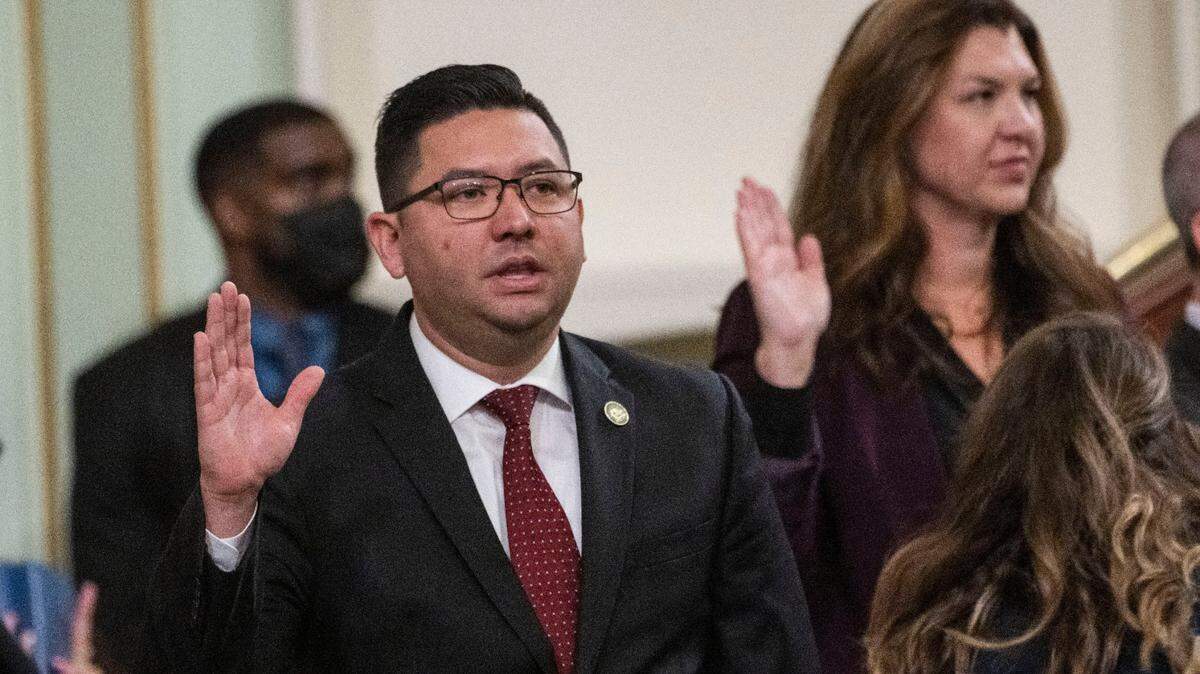
Ending homelessness must first start with a safe place to live. That has long been the state’s official strategy, but Californians have no idea how well local governments have spent $24 billion in recent years toward addressing homelessness because the state hasn’t adequately tracked how its money is being spent.
Local Republican Assemblyman Josh Hoover, of Folsom, has been on the front line pushing for greater accountability, which is a good thing. But he’s taken a wrong turn with a bill that would allow local governments to lower housing for homeless as a priority. Hoover calls this “flexibility.”
But how can we possibly reduce homelessness without a focus on housing?
The number of Californians falling into homelessness due to a single adverse financial event stands only to rise from an already staggering 180,000 people, as of 2024.
California needs to stop the number of its homeless community from rising even higher. But we can’t do that until we figure out exactly where all of the billions of dollars already poured into the problem have been going.
But that task is proving harder to accomplish than it should.
Housing First
Since 2016 and the adoption of Senate Bill 1380, the California State Legislature has been focused on a Housing First model, defined by the California Department of Housing and Community Development as “an approach … that recognizes a homeless person must first be able to access a decent, safe place to live, that does not limit length of stay… before stabilizing, improving health, reducing harmful behaviors or increasing income.”
While the number of homeless has proliferated in the past decade, that’s not entirely the fault of the Housing First initiative. Rather, it’s due to a complex soup of macro- and microeconomics for which no one has a perfect solution — but in the game of intersectional whack-a-mole that is homelessness, Housing First policies gives California the largest mallet.
Since 2019, California has spent about $24 billion on homelessness, while homelessness increased by about 30,000, to more than 181,000 people. That means the state has spent the equivalent of about $160,000 per person, according to the Hoover Institution, a public policy think tank established in 1919 at Stanford University.
The California State Auditor’s Office released a report last year that found one of the main problems was “a significant lack of oversight and information about homelessness spending.”
“The State lacks current information on the ongoing costs and outcomes of its homelessness programs, because (it) has not consistently tracked and evaluated the State’s efforts to prevent and end homelessness,” wrote State Auditor Grant Parks, in a letter to the governor.
Additionally, the state “has also not aligned its action plan to end homelessness with its statutory goals to collect financial information and ensure accountability and results. Thus, it lacks assurance that the actions it takes will effectively enable it to achieve those goals.”
The HART Act
Hoover recently introduced Assembly Bill 1432, the Homelessness, Accountability, Recovery, and Treatment Act — the HART Act — a bill that would “bring more sunlight and accountability and transparency to how we’re tracking homelessness spending in California.” AB 1432 is the product of the bipartisan audit of homelessness spending Hoover called for in 2023, and was completed in 2024.
Despite receiving unanimous bipartisan support, Newsom vetoed a similar bill from Hoover last year, AB 2903, writing in his veto message that “similar measures are already in place.” He specifically named AB 799, which established the Homeless Data Integration System, which tracks the housing and services provided by California’s county-led Continuum of Care programs.
So Hoover’s back this year with new legislation that he hopes will force a full accounting. Except, this time, the legislation would allow a state agency to use up to 40 percent of appropriated funds on recovery housing that does not meet the core components of Housing First — a reversal of SB 1380 and effectively crushing the Housing First program.
“(AB 1432) requires accountability for any nonprofits that are receiving dollars from the state or local governments just to report back on some of the key metrics that they’re finding from their programs,” the assemblyman said. “But then, beyond that, it actually extends flexibility to local governments to spend state dollars on programs that are not just housing programs.”
Hoover is absolutely right that a full accounting of where the money is going needs to be done and fully implemented. But Housing First is the right approach overall, and that’s where local governments need to be focusing.
But while Hoover says his bill is not a condemnation of Housing First, it’s hard to see how taking money away from this crucial component of solving the housing crisis is anything but.
Services First?
Hoover said his bill “would extend flexibility to local governments to spend state dollars on programs that are not just housing programs,” but quickly added that he didn’t write the bill to criticize the Housing First model: “I think my main criticism of the kind of the approach that we’re taking in California is that Housing First doesn’t work for every individual,” he said.
“There’s some bipartisan conversations going on right now that we need to move beyond a one-size-fits-all approach to homelessness,” Hoover said, suggesting that programs like Sacramento’s St. John’s Program For Real Change, Folsom’s Powerhouse Ministries or Sacramento City of Refuge could get a bigger slice of state funding.
And while those programs are certainly worthy of funding — and they are already being funded by numerous sources, including through the state — there’s a reason they don’t qualify for Housing First funding: They don’t supply permanent housing, and that’s what the Housing First program is all about.
Housing First is not a “one-size-fits-all” approach, it’s just simple math: We have to fix the state’s severely undersupplied housing market if we ever hope to house nearly 200,000 people, and getting people off the street is the single most important marker of whether or not someone is homeless. California needs an estimated 1.2 million new affordable homes by 2030 to meet the housing needs of the state’s low-income population, according to the Cal Budget Center.
And, “because affordable housing is in such short supply in California, many renters with low incomes must pay much more than they can afford for housing” — now pay attention everyone, this is the important part — “so that even a minor financial emergency can cause them to be unable to cover the rent and face the risk of eviction and homelessness.”
The threat of homelessness is not an impossibility for anyone, no matter how safe you currently feel. Temporary housing and social services are important, but so is building permanent housing, and it’s right and good that the state should focus on it.
Permanent housing has to come first, and then social support should follow. (And not even everyone who is fully housed is sober or in treatment, so California really shouldn’t make that a condition of eligibility for assisted housing.)
A bleak future
Billions of dollars have been thrown at the state’s homelessness problem with very little to show for it. Full and complete transparency from state leadership is the answer, and I don’t just mean a single database for Continuum of Care funding — local networks that plan and coordinate state funding for services and housing, encompassing a total of 44 networks that cover the breadth of the state.
The governor was wrong to veto Hoover’s bill last year, but he should veto this new one, if it even gets that far: AB 1432 is awaiting its first floor vote in the Assembly, and could get killed in committee as early as today before it ever gets there. But it should be shot down not because more accountability is bad, but because California cannot allow Housing First programs to take the financial hit when it is now more important than ever to keep building.
This story was originally published May 2, 2025 at 5:00 AM.