Sex trafficking is covered in California. More laws are not the answer | Opinion
In this era of culture war politics, the importance of law has diminished significantly. Instead of being crafted to create balance for our society, laws are being used as ammo for political games.
I’ve thought a lot about this issue since reading a book by Supreme Court Justice Neil Gorsuch, “Over Ruled: The Human Toll of Too Much Law.” In it, Gorsuch explains how, in the last generation, America has become a law-obsessed nation, to the detriment of everyday Americans.
“Some law is essential to our lives and our freedoms,” the book tells us. “But too much law can place those very same freedoms at risk and even undermine respect for law itself. And often those who feel the cost most acutely are those without wealth, power and status.”
Gorsuch, and his collaborator, Janie Nitzie, tell us that there are 60,000 pages of American law, which amounts to 3 million words.
They rightly ask: Have we gone too far?
I thought of that for the last two weeks, as Sacramento was consumed by Assembly Bill 375, which sought to toughen penalties for the crime of solicitation of minors and support survivors of abuse.
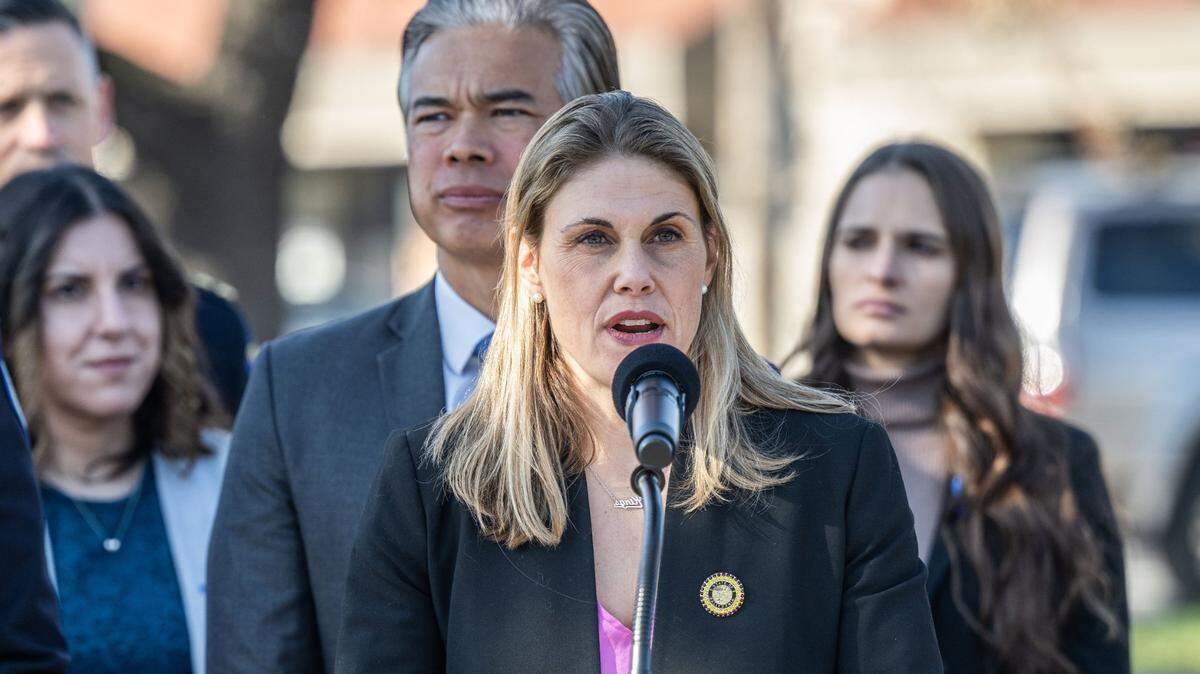
Written by Sacramento-area Assemblymember Maggy Krell, AB 379 gives the impression of filling a void in California by creating more laws to punish those who solicit underage people.
But the California Penal Code is full of laws to crack down on sex trafficking and prostitution. Specifically, CPC 288.3 gives judges the discretion to sentence someone to jail who is charged with attempting to communicate with a minor.
It also states that the person could be charged for indirect or direct communication with he victim, something that Krell’s bill seeks to address.
Just last year, Gov. Gavin Newsom signed four laws to address human trafficking. They covered increasing penalties for traffickers to giving hospitals tools to identify victims.
So, with the presence of laws on the books to confront human trafficking, why do we need more laws? Why do we need AB 375?
How do we reconcile if a bill does harm?
In his book, Gorsuch documents the consequences people have experienced because of the American obsession with creating too many laws. One situation that stood out to me was a fisherman who had federal agents inspect his boat and the fish he caught.
The man was arrested initially for catching undersized fish in the Gulf of Mexico, and later on, charged with fraud under the Sarbanes-Oxley Act, a 2002 federal law that penalizes record-keeping and reporting. The commercial fisherman was allegedly playing fast and loose with the size of his catch. He was convicted, but that decision was later reversed by the U.S. Supreme Court.
To make matters worse, after spending thousands of dollars on lawyers to fight his jail time, the federal government ultimately changed the law, which would’ve allowed him to go free.
Frankly, America doesn’t know how to reconcile with its past, especially when it comes to law.
Let’s say AB 379 passes. What if it led to people being wrongfully convicted and put into jail because of this law? California could write an apology and reform the law, but that wouldn’t do anything for the lives of people negatively affected.
I don’t know Krell, but it seems she put her fellow Democrats in a bad place. They wanted to move slowly, to have a hearing this autumn to make sure AB 379 would not result in a felony conviction for someone who was not trafficking a 16- or 17-year-old, but was convicted anyway.
Krell is not some sinister politician. She is a career prosecutor using her expertise for what she believes is the right solution to human trafficking.
But in the current climate of government, there is an obsession to create more laws to protect more people while forgetting that more laws also hurt more people.
Krell wants to believe that AB 379 would only have consequences for the worst in us. She should have listened to her colleagues who worried about the unintended consequences of her bill if it were applied too broadly. She refused and created a situation where her party got trashed by the lawmaking obsession that Gorsuch wrote about.
What was wrong with the laws already in place?