The Sacramento political drama over sex trafficking punishments explained | Opinion
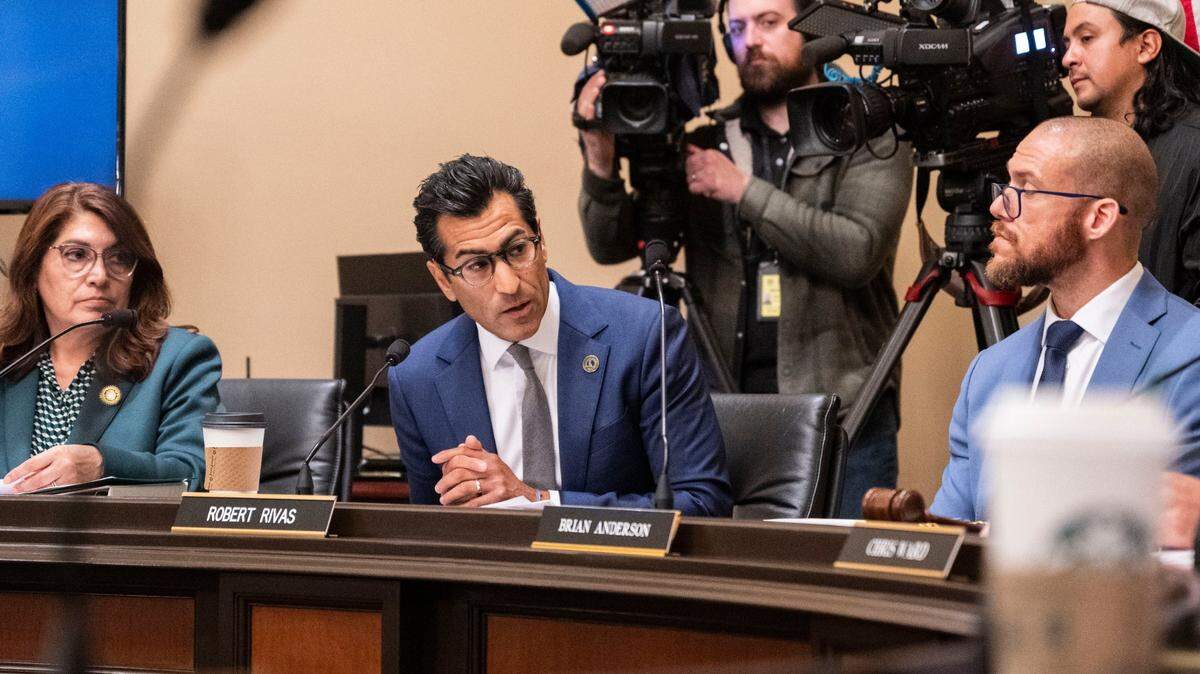
The Capitol has been consumed with teenage prostitution, and the severity of the crime for adults who solicit minors. After an ugly showdown on the floor of the California Assembly on Thursday, it appears that the Democrats have come to a compromise and that the uproar will soon be behind them.
This whole situation was a lot of political theater that only resulted in minor changes to a bill that triggered the biggest controversy Sacramento has seen in a while. In the meantime, Assembly Democrats — including Speaker Robert Rivas — were painted as pedophile supporters who were soft on child trafficking.
On The Sacramento Bee Editorial Board, California Opinion Writer Marcos Breton and opinion writers Tom Philp and Robin Epley try to unpack what happened.
Breton: First of all, a two-part question: What was the major dispute in Assembly Bill 379, authored by Sacramento Democrat Maggy Krell? And what changed in the bill that led to a compromise?
Philp: The way things stand now, soliciting a 16- or 17-year-old is a misdemeanor unless the teen is a victim of sex trafficking and the prosecutor can prove that in court. In those limited cases, the same prosecutor can charge the offender as an adult. Now, under AB 379, any adult can potentially face a felony charge for solicitation so long as the adult is at least three years older than the minor. Krell did not have this three-year differential in her bill. And that was the difference.
Epley: People are out there celebrating a “win” over the evil pedophiles, when in reality, no one here was out to hurt kids. No one seems to realize that the only part of the bill that changed from yesterday to today is the age limit between parties to qualify for a felony: From five to three years. Republicans didn’t win here, the Democrats just made a deal.
Assembly Speaker Rivas lost control
Breton: Where did Speaker Rivas go wrong here? Why didn’t he do as his predecessors once did and lead his caucus to a comprise? And why does he seemingly want to do everything in secret?
Philp: The Democrats with their super-majority now superscript every hearing on bills. They want all the changes to be agreed-upon in advance. And they want the hearing to be purely performative and not substantive whatsoever. There’s nothing wrong with letting Krell make her case in a hearing and see if she gets the votes. When legislators fall short, they tend to make compromises. The messiness of real democracy is far better for the Democrats than how Rivas chose to strip Krell of her bill.
Breton: Did AB 379 author Maggy Krell do the right thing by fighting her leadership? Or did her inexperience contribute to this mess?
Philp: Krell didn’t play by the unwritten party rules. She didn’t want to take amendments. She wanted solicitations of any minor by any adult to qualify as a potential felony. By all outward appearances, she was stubborn. She has accepted a very minor amendment, and that makes this whole kerfuffle seem so needless.
Epley: It was entirely needless, and Krell has deeply damaged her reputation in the state party. She’s not going to be asked to carry or co-sign on important bills by her colleagues because she’s proven she can’t take edits or amendments. Moreover, she left the gate open for the CA GOP to harass and lie about the Democrats in leadership — their favorite pastime.
Breton: What does this fiasco say about legislative Democrats? It seems as if they don’t want to fully say why they held the line here. I mean, clearly they don’t want young people to become felons for being in relationships with 16- and 17-year-olds. But doesn’t it seem like the Democrats are afraid to engage on this?
Philp: On this issue, there was never a huge chasm of differences among Democrats. There was a strong interest to qualify as felonies more solicitations by adults to 16- and 17-year-olds. The differences were nuanced. But there was blood in the water. Republicans were making the Democratic majority look soft on crime yet again. And the Democrats didn’t know how to resolve their differences.
Breton: As a follow-up, I noticed that Sen. Scott Wiener, D-San Francisco, was targeted on X for giving voice to why Democrats wanted to go slow on the issue of how to prosecute people accused of soliciting older minors. Is it that this issue is too complex for our sound bite Sacramento culture?
Philp: This issue is super simple compared to reforms to water, insurance, energy or health care. What happened here is that the dueling Democrats struggled to articulate their minor differences, and that’s because what was really happening was an intramural power struggle. So it got conflated into something that it never was, a faux far-left sanctioning of sex trafficking and prostitution.
Epley: Sex work should be legalized, but that’s an argument for another day. Honestly, I think the answer to your question is “Yes.” It’s incredibly complicated and it has a lot of intricacies for people to understand. Boiling it down to “You’re either for child sex trafficking or against it” is an oversimplification with an obvious answer — and that’s how Republicans won here.
Republicans: Instigators or clever opportunists?
Breton: How would you describe the role of state Sen. Shannon Grove, R-Bakersfield, and California Republicans here?
Epley: Grove has been the instigator behind this issue for the last three years running, and every time she has lied her way into absolutely curbstomping the Democrats in the court of public opinion. The CA GOP is willfully lying to their constituencies about what this bill would actually do. James Gallagher, Assembly Minority Leader, said in a statement that the Democrats “decided the predators don’t deserve real consequences” and that “Grown adults are buying children. (Democrats) responded by making it easier for them to get away with it.” Absolutely none of that was true, but those are the messy political games the Republicans are playing — and people believe them. It’s dirty politics and dangerous rhetoric that could get people seriously hurt.
Philp: I have mixed views here. The Republicans have on repeated occasions advanced crime and sentencing reforms that most Californians support. But they made a mountain out of a molehill on this score. Great politics, but based mostly on fiction.
Breton: We’ve been critical of Gavin Newsom and Sacramento County Sheriff Jim Cooper, both Democrats, for taking the side of Republicans. Isn’t it safer politics to do so?
Epley: Much safer. And that’s exactly why you see them entering the fray now: Cooper and Newsom have always done what’s easy instead of what’s right. Frankly, I’m not convinced either one of them understands what this bill would actually do. It’s incredibly complicated. Cooper, in particular, represents law enforcement’s silent support of AB 379 — police don’t want loitering laws because they hinder them from profiling suspects. That’s the part of Krell’s bill no one is talking about.
Philp: No Democrat in a higher office should have grandstanded here. The differences were small and they were going to get worked out, eventually. This wasn’t a moment to take a principled stand. Newsom made his own legislative leadership look bad. His standing inside the Capitol in his own party has just reached a new low. I’m not sure how that helps him going forward.
This story was originally published May 7, 2025 at 5:00 AM.