
‘Rhetorical excess’: Trumpian exaggeration and hyperbole leads to absurdity | Opinion
Enough with the hyperbole and exaggeration. Modesty and moderation are important in language and in life. Things don’t have to be great to be good, and much of what makes life worth living is ordinary, not awesome or amazing, but pleasant, decent and nonetheless delightful.
The Trump era will be remembered as a time of rhetorical excess. The language of our time is tainted by exclamatory superlatives. Call this “superlativism” — a tendency to traffic in hype and overstatement.
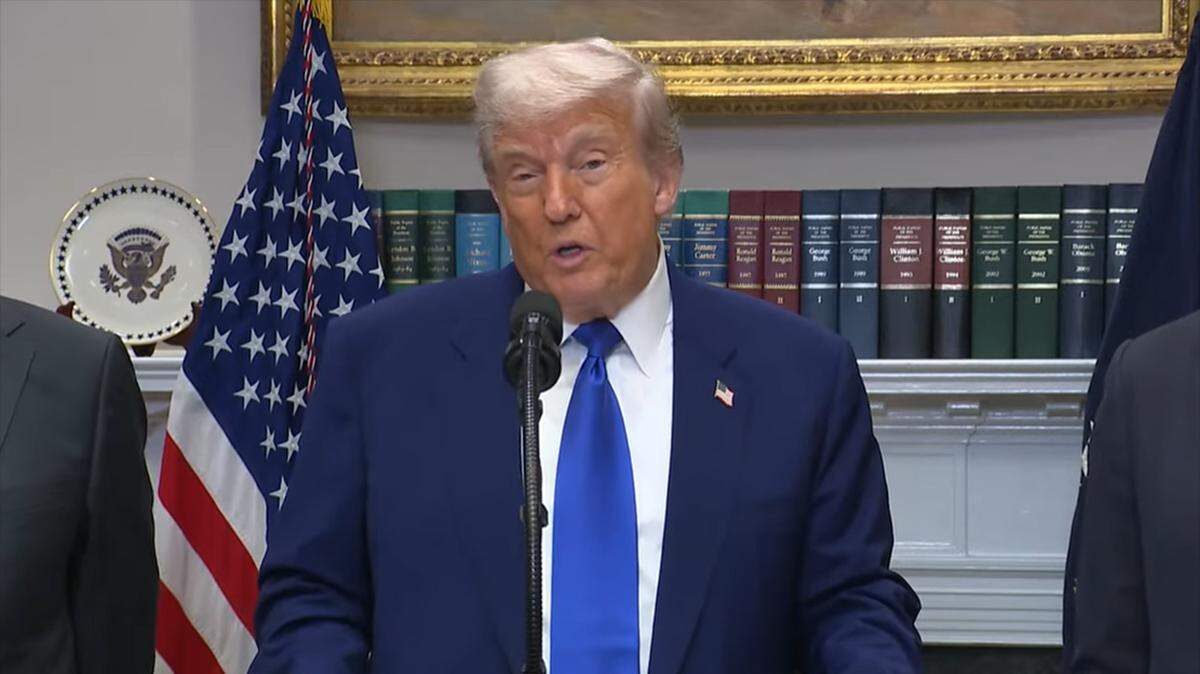
Our superlativist-in-chief is President Donald Trump, who loves exclamatory, all-caps writing. When Trump defended his tariffs in April, he posted, “I AM THE GREATEST FRIEND THAT AMERICAN CAPITALISM HAS EVER HAD.” The domestic budget bill in the headlines lately is brazenly named the “One Big Beautiful Bill.” Trump recently explained, “our GREAT, BIG, BEAUTIFUL BILL just got much BIGGER and BETTER. The Golden Age of America will soon be upon us. MAKE AMERICA GREAT AGAIN!”
Trumpian superlativism can also go negative. When Trump recently criticized Russian President Vladimir Putin, he said, “He has gone absolutely CRAZY!” In a recent post attacking singer Bruce Springsteen, Trump called him a “pushy, obnoxious JERK,” and he also called former President Joe Biden, “a mentally incompetent FOOL, and our WORST EVER President, who came close to destroying our Country.”
Superlativism is also used by Trump’s critics. Elon Musk, of all people, described the Big Beautiful Bill as a “disgusting abomination.” (It’s not enough for Musk to disagree, his disagreement must employ apocalyptical language.)
Outside of politics, we are also quick to overstate and exclaim. Instead of saying, “Yes,” or “No,” Americans often say “Absolutely!” or “Absolutely not!” When asked, “How are you doing?” folks reply, “Excellent!” or “Awesome!” When the waiter asks about the food, diners say, “Fantastic!” or “Amazing!”
Sometimes these superlatives are piled up in phrases like “Absolutely excellent” or “Amazingly awesome.” Such silly hyperbole shows up on social media and in reviews of films, books and restaurants. This kind of overstatement is obviously absurd. Is any book or bowl of noodles “Absolutely excellent”? Most of the time things are adequate, good or fine. They don’t need to be the best in order to be good.
Very few things are actually excellent or outstanding. This is true by definition: To be excellent or outstanding is to go beyond the ordinary. But life is mostly normal, familiar and routine. The goods of everyday life are enjoyable, without being extra-ordinary. Indeed, extra-ordinary stuff can be exhausting and exasperating.
Likewise, few things (and people) are evil, awful or “Absolutely crazy.” Ordinary people, and ordinary experiences, may be irritating, uncomfortable or yucky, but very few things sink to the level of being the “Worst ever.”
Moderation and precision in language is a sign of wisdom. Obnoxious boors quickly leap to the superlative, perhaps aiming to be noticed. But this leads to absurdity and overkill. Wise people keep their superlatives in reserve and use them honestly and infrequently.
Superlativism is the rhetoric of advertising and marketing. It is not useful in science, where precision matters. Nor does it help in pursuit of virtue, where humility is appropriate.
The wisdom of modest and precise speech is well-known. A Biblical proverb says, “A gentle tongue is a tree of life, but perverse speech crushes the spirit.” The ancient Roman sage Seneca warned against puffed up, loose and wanton language. He suggested that speech was a mirror of the soul, quoting the ancient Greek proverb that “A man’s speech is just like his life.”
Seneca explained that honorable, reasonable, and careful people speak moderately. But a “degenerate style of speech” reflects a degenerate character. Seneca went so far as to suggest that outrageous speech is typical of “tyrants” who are “prey to uncontrolled emotion,” and who are overindulgent and focused on self-gratification.
Wisdom requires honesty and moderation. It is often easy to know when something is good or bad — and we should say so. But it is nearly impossible to know that something is the greatest or the worst. Self-conscious humility should prevent hyperbolic exclamation. And insight into the immoderate absurdity of the superlative can help us think critically about the loose language that assails us.
This story was originally published June 7, 2025 at 6:00 AM with the headline "‘Rhetorical excess’: Trumpian exaggeration and hyperbole leads to absurdity | Opinion."