Caught in the crossfire: Israel’s offensive in Iran does not promise liberty | Opinion
AI-generated summary reviewed by our newsroom.
- Israeli airstrikes in Iran resonate with those who used to live there.
- Diaspora voices express fear that civilians, not regimes, bear the brunt of conflict.
- Western media coverage focuses on nuclear tensions, sidelining Iranian civilians.
I was 8 years old in 2011 when my great-grandmother passed away in Tehran, the capital of Iran, and a current target of Israel in a war between the two nations. The sun was scorching on the day of my great-grandmother’s funeral, but all the women of my family dressed in somber black cloaks to say farewell to the matriarch of my family.
My mother boarded the bus to the service, leaving me with the housekeeper. I remember asking, “Why can’t I come with you?” I was there when my mother had received the phone call, and I had been at my great grandmother’s bedside hours before she took her last breath. I was even attending the wake.
“It’s too hot today, azizam,” she told me. “And you don’t want to see everyone mourning, it can be overwhelming.”
I only saw photos later of the weeping, people crowded around the grave on their hands and knees. In one photo my aunt fell into the grave pit with the coffin, her chest heaving with sobs.
It struck me as bizarre, how they were so lost in their grief. The only other kinds of funerals I had seen were in American movies, and no one ever got on their knees, turning their palms up to the sky in lament.
My family immigrated to the United States a year later.
In the years since, I have witnessed tragedy after tragedy befall my home country from thousands of miles away, in a succession of photographs from funerals I can’t attend. This felt especially true in 2022 during the Mahsa Amini protests, and again last week when Israel launched missiles into Iran.
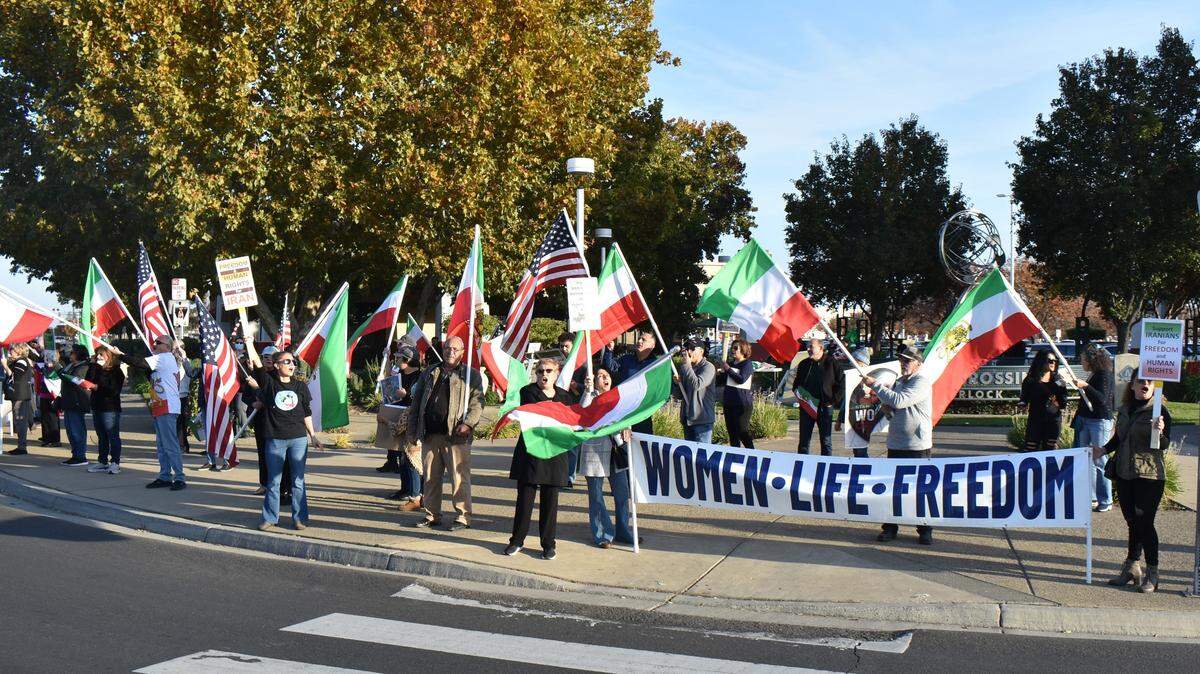
In the fall of 2022, the Iranian police detained a young Kurdish woman Mahsa Amini for wearing “improper hijab.” Per Iranian law enforcement procedure, Amini was boarded onto a bus with other detained women and taken into custody, where she was beaten by Guidance Patrol officers and later succumbed to her injuries. This atrocity sparked a protest movement that nearly toppled the long reigning Islamic Republic.
Israeli missiles struck Iran Thursday afternoon, targeting the heart of the country’s nuclear and military facilities. But Israeli missiles also hit the residential neighborhoods of Iran’s military and political leadership.
The attack occurred ahead of the renewed discussions of an Iran-U.S. nuclear deal.
Israeli Prime Minister Benjamin Netanyahu said the attack was “pre-emptive,” not meant to target civilians.
“This is a clear and present danger to Israel’s very survival,” he said, and U.S. President Donald Trump was briefed on the operation before it happened.
The news headlines I see are only concerned with Iran’s nuclear operations — and how the conflict will affect gas prices for Americans: “Israel expands strikes on Iran’s nuclear facilities”; “Iran and Israel crisis: what does it mean for the price of oil?”; “Was Iran developing nuclear weapons?”
Meanwhile, I see videos of destroyed residential buildings in Tehran, smoke billowing from the Kermanshah airport. I see photos of dead bodies littering the streets. The same streets where my grandfather drove me to school, backdropped by the misty, beautiful mountains of Tehran.
Iranian civilians face enemies on all fronts. The Islamic Republic is a dictatorial regime that has subjugated its citizens for 46 years, but Israel’s airstrikes threaten to destroy the country before a domestic political movement can topple the regime.
Although the Trump administration might view Israel’s attack as an opportunity to make Iran’s unpredictable, nuclear-armed regime come to heel, few would agree bombarding the country with missiles is in the Iranian people’s best interest.
Risks of a prolonged war
Many in the Iranian diaspora believe the Israeli offensive, along with Trump’s stiff upper-lip approach, might lead to the Islamic Republic’s demise.
Essentially, they believe the ends justify the means.
These are people who endured childhoods under the iron fist of the regime and hid in bomb shelters while their homes were pounded by Iraq’s bombs. This kind of mindset speaks to the irreparable damage the regime has done to its citizens and the kind of trauma that numbs a person to violence.
“There’s definitely a camp of Iranians who feel like anything to shake the boat and introduce any sort of opportunity for the regime to fall,” said Nikki Ghaemi, an Iranian-American and my childhood friend. “Civilians are constantly just pawns in a big, giant, massive game that they did not sign up for.”
To Persis Karim, professor and outgoing director of the Center for Iranian Diaspora Studies (which is being closed at San Francisco State University on June 30 due to a loss of funding), the Israeli offensive is a callback to the aftermath of the 1979 Revolution and ensuing Iran-Iraq war.
“So people’s reaction today, many in the Iranian diaspora, is one of fear, terror and concern because of their loved ones,” Karim said.
“The actions of Israel and the endorsement by the U.S. suggest that they have an agenda which is to bring Iran to its knees, and they don’t care about civilians being caught up in the crosshairs of Israel’s actions.”
A graveyard, dust and dirt
Iran’s portrayal in the media landscape is often confined to the government’s nuclear program or acts of violence; the Iranian people’s humanity is lost in the mire.
“Who gets caught up in this mess is, you know, it’s basically the recycled narrative of the last 45 years, that Iran is our enemy, and it makes no distinction between the government of Iran and the people of Iran,” Karim said.
Should Israel’s actions lead to a prolonged war, there will be so many more photos of Iranians at funerals: A graveyard, dust and dirt staining their cloaks, a symphony of cries. Falling into the grave, cradling their loved ones for the last time.
It’s such a stark contrast to the West, where funerals tend to be subdued, restrained. Where everyone remains silent, afraid of rousing the dead.
In Iran, they aren’t afraid to touch death, to hover inches above its face. And they let their grief pierce the eternal silence.