American attacks on Iran are affecting Middle Eastern Americans at home | Opinion
Every phone call with my mom for the past two weeks has ended with the same question: Are our family and friends in Iran OK?
In the past two decades, the U.S. has been involved in two major wars in the Middle East; the war in Afghanistan and the war in Iraq have dominated the headlines for nearly my entire lifetime until 2021.
But on June 21, just four years later, American warplanes bombed three of Iran’s nuclear facilities, joining in Israel’s offensive against the Islamic Republic and inching the U.S. ever closer to a third war in the region.
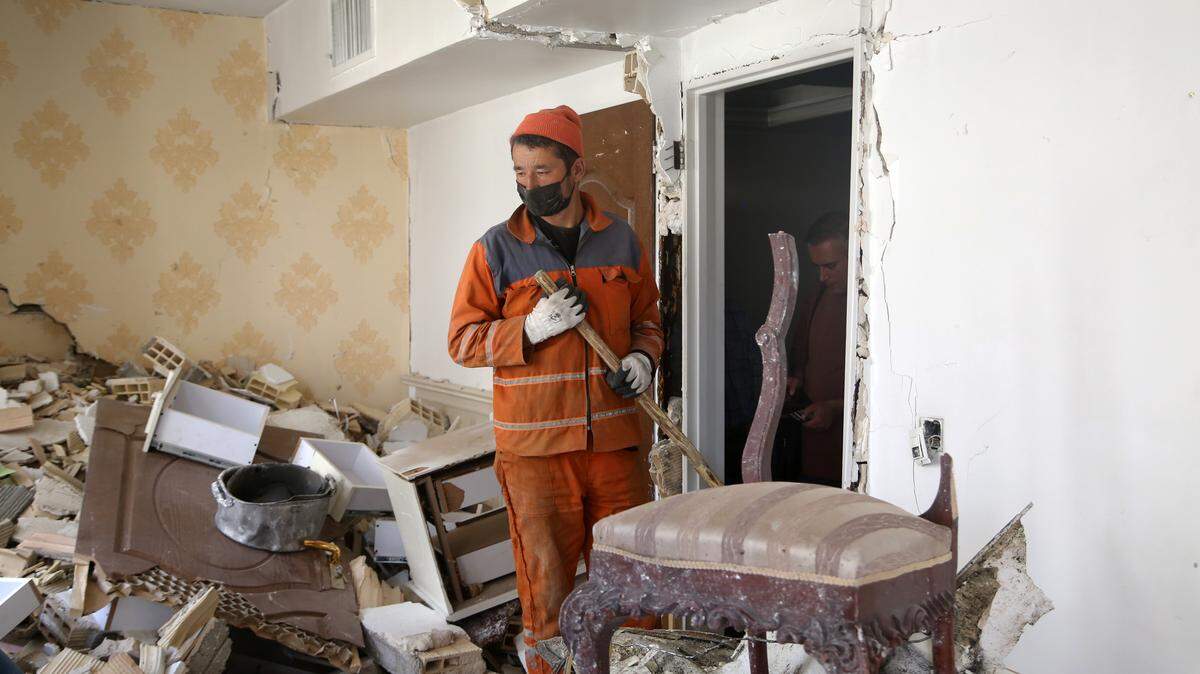
The war in Iran is just headlines and anxiety for most Americans. But for me, and many other Iranian-Americans, it’s dealing with long periods of silence thanks to Internet blackouts, videos of destroyed buildings that look terrifyingly familiar and anxiously wondering if friends and family have safely made it to the border of nearby Turkey or Azerbaijan.
Last Friday, June 20, The Sacramento Bee Editorial Board sat down with Congresswoman Doris Matsui, who represents California’s 7th congressional district, including the city of Sacramento
Sitting around the conference room table, my colleagues and I took turns asking Matsui questions; I asked about her stance on U.S. involvement in the Israel-Iran war.
“This rush to solve a problem, dropping a bomb,” She said, “We’ve been through these challenges before, and we know that it’s always the day after, what happens next, that determines whether it’s successful or not.”
To listen to a civil servant and a California representative talk about bombing the Middle East so casually — in terms of “successful” or “unsuccessful” — was incredibly difficult.
I tried to impress upon the Congresswoman that this is an issue affecting Americans — that whenever the U.S. gets militarily involved in the Middle East, there are Americans from Iran, Afghanistan, Iraq, who suffer the consequences.
“I think it’s important to maintain that there are people in California — Sacramento — who are being affected by Israel’s actions,” I said.
When the congresswoman found out I was born in Iran, her response was a disappointing, “Oh yeah?”
Unfortunately, I’ve grown used to American politicians discussing war in the Middle East the way one might a tooth extraction — with no consideration for the lives that are at stake.
What American politicians and civil servants need to remember is that Middle Easterners are Americans too, and they have a responsibility to act in our interest.
They don’t hear us
The day before the interview, I was driving around Arden, enjoying time off with the Bee summer interns. We stopped by the thrift store St. Vincent Dupaul. As we pulled off the street and into the parking lot, the sight of Persian lettering on a store-front caught my eye. “Parcheh Forooshi,” it read in Farsi — fabric store.
I’m new to Sacramento, so I’m not very familiar with the ethnic makeup of its immigrant population. A colleague informed me that, in light of the U.S. withdrawal from Afghanistan, Sacramento is now home to the biggest population of Afghan refugees in the United States — roughly 20,000 people.
Sure enough, as I browsed the aisles of the thrift store, looking through a rainbow array of vintage tank-tops, two veiled women discussed the merits of an old teapot in accented Farsi. As we drove from the thrift store to the Sunrise Mall we passed another shop with a Persian sign.
I began noticing Afghans everywhere — couples walking hand-in-hand in the mall, families sitting together in restaurants, elderly men crossing the street.
Meddling in the Middle East
It isn’t an exaggeration to say the U.S.’s involvement and handling of Afghanistan was an utter failure for the Afghan-Americans who had family in the country.
For the Afghan translators and federal workers assisting the American occupation, the military exit was nothing short of a death sentence at the Taliban’s hands.
According to NPR, there are 200,000 Afghan refugees in the U.S. The Afghan population in Sacramento have faced homelessness, poverty and crime. Sacramento Bee photographer Renée C. Byer has documented the lives of Afghan refugees in the area. Many were placed in insect-infested apartments and neighborhoods riddled with crime by relocation agencies.
Byer’s photographs reveal a people whose country was meddled with irresponsibly, who were forced to uproot their lives and flee to America as a consequence. In one photo, a man who served as an interpreter for U.S. troops sits in a chair, dabbing a tissue at his bleeding eye with his left hand, an iPhone with the American flag clutched in his right. He was shot with a flare-gun, trying to stop a robbery. In another photo, a young boy looks at his mother, his cheeks covered with insect bites.
In February of this year, President Donald Trump signed an executive order suspending the U.S. Refugee Admissions Program. He also withdrew funding for agencies that help newly arrived refugees settle here.
America is home to over 1 million Iranian immigrants. Now, as the U.S. teeters on the edge of war with Iran, little consideration is being paid to how it affects Iranian-Americans and their families in the country.
Along with conducting the poorly-conceived bombing campaign, Trump has included Iran on the newest iteration of his travel ban, effectively barricading Iranians in the country to be killed in the crossfire of the war he’s funding.
If America escalates the war, there will be more civilian deaths. If they withdraw and abandon Iranians’ fight against their government, civilians will be left at the mercy of the Islamic Republic as they execute civilians to hide their humiliation — much like what happened in Afghanistan.
On June 17, a bipartisan resolution was introduced to prohibit U.S. involvement in Iran. However, no action has been taken beyond the resolution.
War with Iran isn’t a game. But as the President goes hot and cold on the U.S.’s involvement, Iranians hold their breath.
This story was originally published June 26, 2025 at 5:00 AM.