So, Americans like immigrants now? What ‘Superman,’ new poll tell us | Opinion

AI-generated summary reviewed by our newsroom.
- A Gallup poll shows 79% of Americans now view immigration as a 'good thing.'
- The New 'Superman' film draws parallels between xenophobia and immigration debates.
- Biden and Trump differ in tone, but both faced criticism over border policies.
An American-allied Middle Eastern nation with a powerful military repeatedly raids a weaker neighbor, while a vindictive and envious plutocrat scores lucrative defense contracts toward a nefarious end. Israel-Palestine? Peter Thiel’s Palantir? Nah, just fictional story arcs in the latest “Superman” movie.
While these plot points may feel ripped from the headlines, the Superman story is anchored by its retelling of the immigrant experience. Holding aside Clark Kent’s super strength and heat vision, Kal-El is a foreigner seeking refuge and opportunity in a distant land.
In the latest retelling, arch-villain Lex Luthor’s propaganda machine portrays Superman as a latent threat to our security. Luthor successfully provokes America to revert from heroic reverence to an outright revolt, with bystanders attacking Superman in the streets and demanding his indefinite detainment. Anything to secure our borders.
Isn’t it uncanny how an origin story conceived in the 1930s is still a durable allegory for unceasing debates about the kind of country America wants to be?
Also uncanny is the timing of a film about an alien who never got his papers. Gallup released a poll July 11 — coincidentally, also the “Superman” release date — that found American support for immigrants has literally never been higher. Roughly 4 out of 5 respondents said immigration was a “good thing,” a 15-point boost from last year and a stunning reversal of a four year trend of rising anti-immigration sentiment.
Last October, knowing I’d soon be writing for a Texas newspaper, I leapt at an opportunity to see the fruits of those growing hostilities and their bipartisan response. Through the Aspen Institute Religion & Society program, I traveled to Houston and McAllen to explore diverse religious, ethnic and cultural makeup of Texas, including organizations such as Practice Mercy and Team Brownsville compassionately addressing the influx of migrants along the border. I even saw the wall. Really, walls: plural.
To my right, 30-foot steel and concrete beams long prophesied by the then-former but soon-to-be reelected president and feverishly desired by his fans. To my left: also a border wall, about half the height, constructed by the Biden administration.
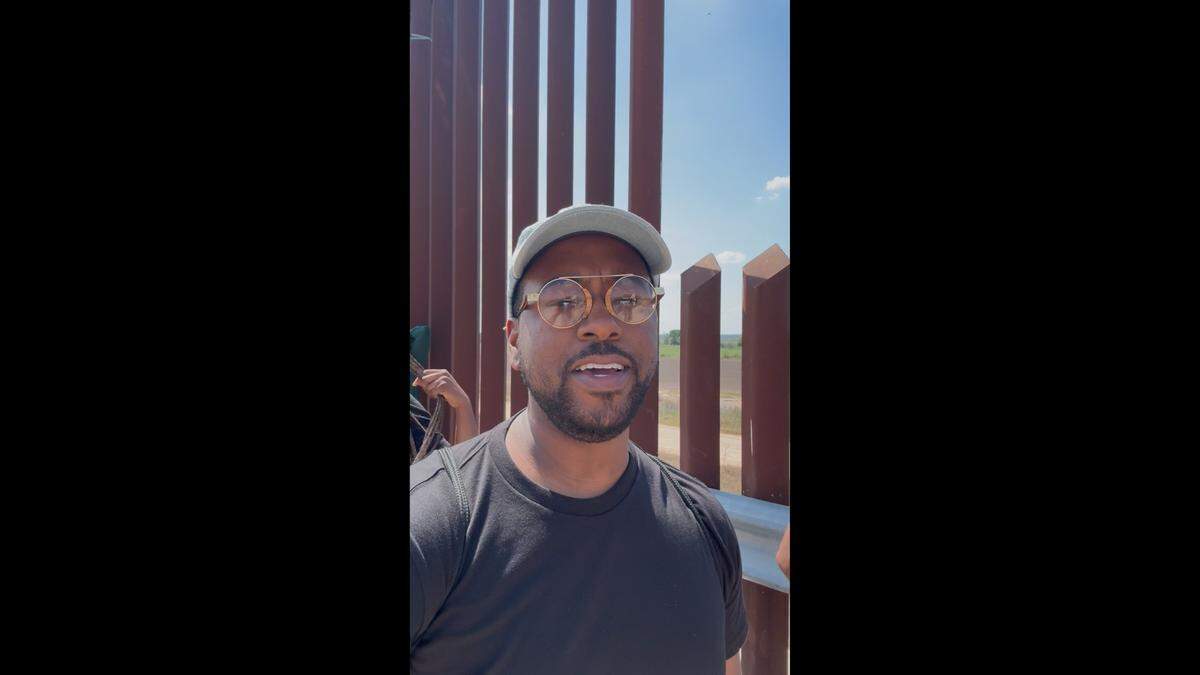
Biden administration’s own border wall
The newer wall was smaller and built with a “movable” design that border agents could use to direct traffic. However, Biden’s wall was unintentionally representative of his presidency by leaving nobody satisfied. Border security hardliners judged it inferior to Trump’s wall (despite specious evidence that any wall actually fulfilled its supposed intent of keeping immigrants out). Locals and scientists raised the potential for an ecological disaster for wildlife and decried suspension of environmental protection laws such as the Clean Air Act to expedite its construction.
The Christian ministries involved in direct aid and resettlement for asylum seekers who spoke to our cohort were further disturbed by the Biden administration’s bureaucratic queuing of border crossers through its CBP One mobile app. They shared stories of helping Ukrainian and Russian (read: white) migrants expedited in their quest for the relative safety of the United States. Mexicans, Guatemalans and Haitians who also fled persecution were forced to wait months, if not years, in dangerous border cities such as Reynosa, dominated by the same powerful drug cartels they were trying to escape, the aid workers said.
It is true that America saw an influx of migrants during the early years of the Biden administration, a demand likely increased by the desperation caused by the COVID-19 pandemic and an onslaught of hurricanes in the fall of 2020. And just as Trump did before him, Biden continued blocking asylum-seekers by using Title 42, a legal provision that permits the Centers for Disease Control and Prevention to halt border travel for public health reasons despite no evidence that asylum seekers were spreading COVID at high rates.
Many Republicans (and some Democrats) charged that the Biden administration maintained an “open border” policy. Savvy and effective as the rhetoric was, the claim was always false. For some, it was an outright lie. I have seen with my own eyes and heard with my own ears how asylum-seekers have been treated with the suspicion of aliens before Trump successfully retook the presidency.
The workers I spoke with told me they would greatly prefer to struggle with a theoretical Kamala Harris administration than be chased by a Trump government. Here in North Texas, Catholic Charities of Dallas laid off 63 workers after President Donald Trump shut down the U.S. Refugee Admissions Program. The Trump administration ordered Immigration and Customs Enforcement officers to arrest 3,000 a day — more than a million a year. My friend Job Garcia, a citizen, got caught in that dragnet and now says he’s suing the feds for $1 million.
Biden and Trump may be two sides of the same coin, but heads and tails are far from twins. I suspect Trump’s plummeting polling on immigration issues exhibits why the notion of “securing the border” is more pleasant than watching your neighbors getting snatched off the street.
My hope is not that we lessen the distinctions, but rather that we remember all the contours of the story we’re telling ourselves. We like immigrants now, we claim. We liked them a lot less eight months ago. Maybe releasing “Superman” in 2025 wasn’t so timely? America has long needed one of our favorite legends to disabuse it of its myths.
This story was originally published July 22, 2025 at 8:48 AM with the headline "So, Americans like immigrants now? What ‘Superman,’ new poll tell us | Opinion."