‘Coldplay couple’ is a warning against internet surveillance | Opinion
AI-generated summary reviewed by our newsroom.
- A viral clip exposed an office affair, ending two careers.
- Social media transformed private mistakes into mass entertainment and judgment.
- Digital surveillance culture blurs lines between accountability and public shaming.
Let it be known: if you’re having an affair, stay away from Coldplay concerts.
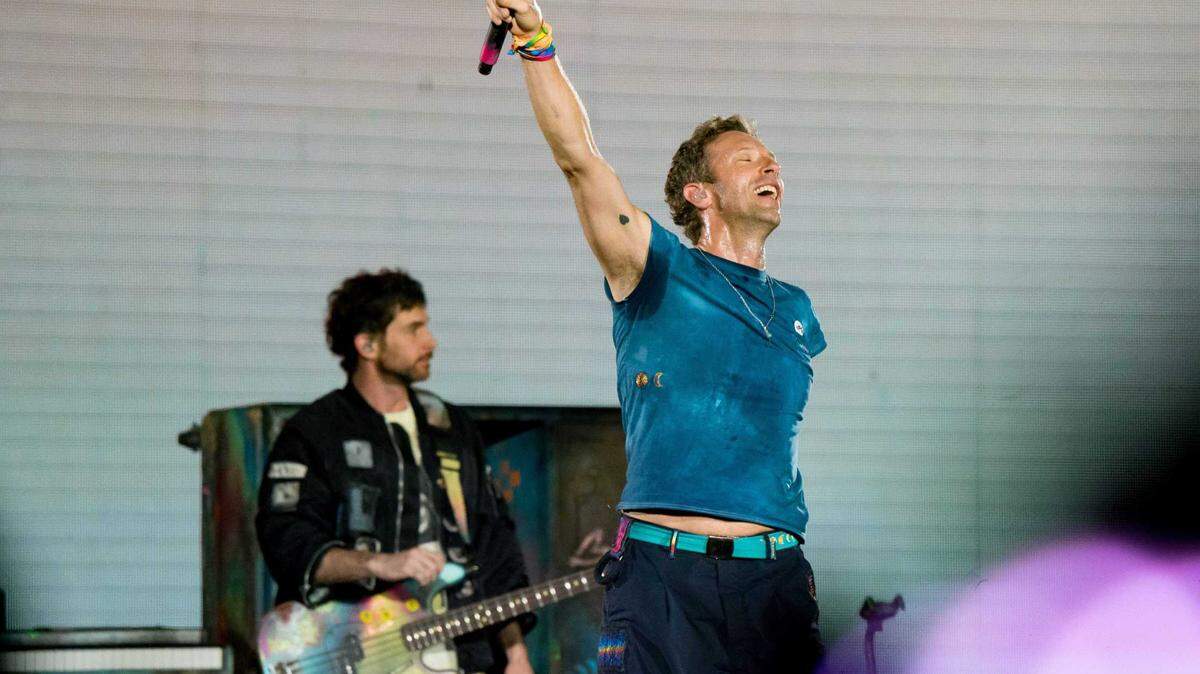
By now, everyone knows the story of Astronomer CEO Andy Byron and Kristin Cabot, the head of human resources at Byron’s company. Their affair was outed in real time at a Coldplay concert on July 16, when the two were caught romantically embracing on a “Kiss Cam.”
“Either they’re having an affair or they’re just very shy,” Coldplay singer Chris Martin joked on stage.
Byron and Cabot’s duck-and-cover spelled the end of their dignity and their careers.
Tracking viewing metrics from afar is hard, but the video appears to have had an even more comprehensive world tour than Coldplay, with one TikTok video of the moment drawing 10 million likes.
When the internet was first conceived in the Utopian communes of the ’60s, it was hypothesized as the great equalizer: A democratizing force, granting everyone a platform to have their say. But what the internet became was the world’s digitalis of public shaming.
What Byron and Cabot did was certainly wrong. But is publicly humiliating them and ending their careers truly warranted?
We all make mistakes every day. We talk behind one another’s backs, we lie and we say things that can be offensive or misconstrued. It is human nature to be flawed.
But what the internet has wrought is a world in which anyone could be held morally liable for human error.
A survey of ‘cancel culture’
We have been contending with cancel culture for eight years now, with the term surging in popularity around 2017.
In an interview with The New York Times, University of Michigan Professor Lisa Nakamura defined cancel culture as an “agreement not to amplify, signal boost, or give money to.”
“People talk about the attention economy — when you deprive someone of your attention, you’re depriving them of a livelihood,” Nakamura wrote.
The Nielsen Norman Group defined the attention economy as “a system where human interaction is a scarce resource and economic value is derived from capturing and holding that attention.”
The phenomenon of policing others’ behavior as it pertains to their public personas, political beliefs and personal lives is nothing new.
Public shaming is as old as time immemorial. Think: the Salem witch trials, the Monica Lewinsky scandal and “The Scarlet Letter.” It has most often been the weak who are scapegoated to uphold the status quo or used to tear down the powerful.
Some believe public shaming helps us hold powerful people accountable for their actions. Recently “canceled” people include the likes of rapper Ye (formerly known as Kanye West) for flagrant racism and antisemitism and actor Armie Hammer for sexual harassment.
But people like West and Hammer have clawed their way into public-consciousness despite being boycotted. Both have harvested a following in the alt-right manosphere and continue to mine the attention economy for profit. That should dispel any kind of romantic notions of the internet being the mighty sword of democracy, bringing those in power to heel.
Instead, the internet has created a surveillance state.
Fundamental human error
A particularly haunting episode of “Black Mirror,” a sci-fi show with a modern commentary on technology, warns about the dangers of a society under constant surveillance.
The episode, entitled “Nosedive,” takes place in a future in which people share their daily activities and social interactions. All users rate their interactions with one another from a scale of one to five stars. This rating cumulatively affects everyone’s socioeconomic status.
The story follows a woman who, through a series of disastrous social interactions, completely loses all of her status points. She has angry outbursts, is rude to her friends and has a meltdown at a friend’s wedding — which ends up lowering her score to one. Much of what affects her mood are factors like weather and flight cancellations, all forces that are out of her control.
“Nosedive” illustrates the horrifying prospect of being constantly watched and rated based on one’s behavior — especially when one’s livelihood completely hinges on likability.
In the digital age, anything can be recorded for posterity. Our reality is starting to resemble fiction.
As a person in their 20s — and as someone who has the self-proclaimed world record for the highest number of awkward encounters in a 24-hour period — I can’t imagine having every daily social interaction be recorded and thrown back in my face for the rest of my life.
I yearn for a world where we’re free to make mistakes in private, and where we can learn and grow outside the voyeuristic gaze of a bloodthirsty public. Particularly as young people, we’re prone to mistakes — like puppies nipping at each other’s tails.
But in a rapidly technologizing society, we have no safe spaces to make mistakes .
As for the Coldplay couple, they will answer to their families and loved ones. There will be tears and hand-wringing. But it’s none of our business.
This story was originally published July 25, 2025 at 10:28 AM.