How controversial AI tech ShotSpotter claims to trace gunfire in Sacramento | Opinion
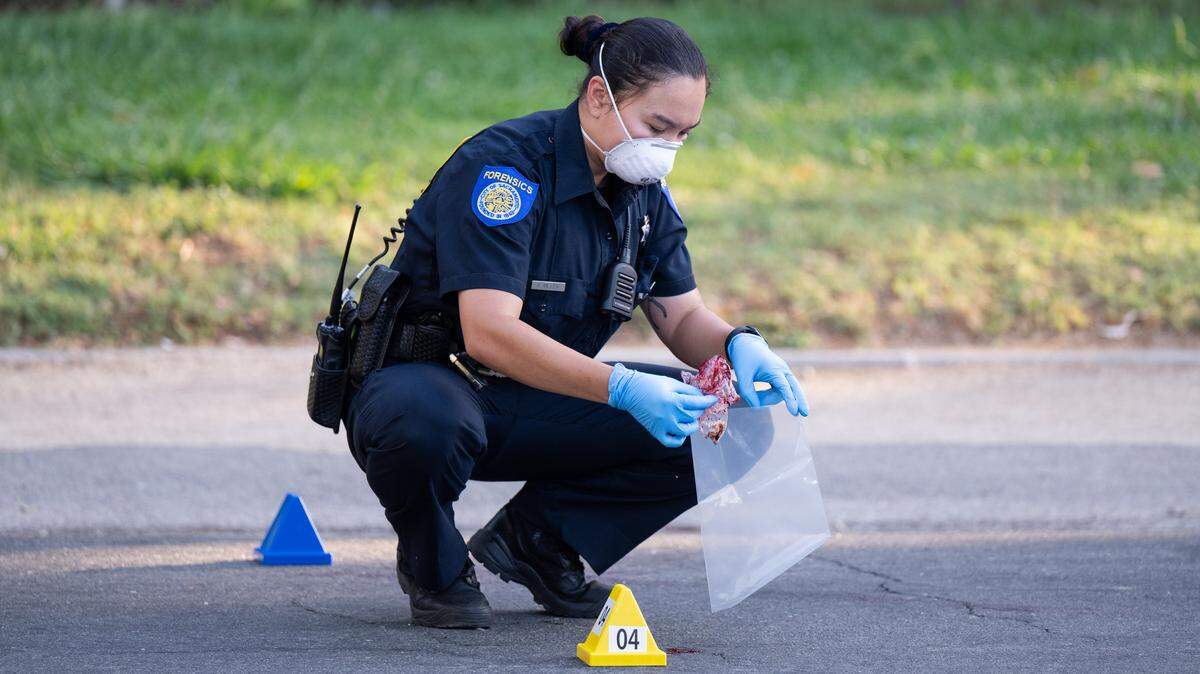
In a fast-track vote on Sept. 9, the city of Sacramento agreed to spend another $2.6 million to renew its contract with a controversial gunfire detection technology called ShotSpotter rejected by other cities, in part because the Sacramento City Council typically defers to the Sacramento Police Department's wish list. SPD strongly urged city councilors to keep the technology as part of an overall strategy it says will keep down the rate of violent crimes. But what exactly is ShotSpotter? Why do critics say the AI-driven technology is unreliable, can lead to over policing and relies on racial profiling?
Ralph Clark, who is Black and the CEO of SoundThinking, the company that produces ShotSpotter, defended the technology that Chicago, Baton Rouge, Atlanta, Seattle and Houston rejected, but Sacramento agreed to continue using.
The following interview has been edited for length and clarity.
The Bee Editorial Board: How does ShotSpotter work?
Ralph Clark: It’s a survey of 20 to 30 sensors per square mile. These sensors are about the size of a two-slice toaster. A sensor is a computer with some microphones. So imagine, you’ve got 25 sensors spread over a square mile. When a gun is fired, it’ll hit multiple sensors and they’ll timestamp it. We’re able to use the time of arrival difference from at least three or more sensors to do a mathematical calculation to figure out where that pop, boom or bang came from. We have trained experts looking at these events in real time, and they make the final determination of passing that alert on as gunfire or not.
The Bee: Isn’t one of the main criticisms of ShotSpotter that it has a lot of false positives?
Clark: No system is perfect. But the people who say we have a lot of false positives don’t know what they’re talking about. If we start publishing sounds that are not gunfire, it creates a resource problem, and we’re going to hear about it from the agency.
The Bee: Do you worry that your technology is used for over policing?
Clark: What we own 100% without any direction or influence from the customer is that they own the coverage area, and we own where we place the sensors. With respect to over-policing, I don’t buy that we increase the number of police. Why is responding to criminal gunfire more important? Well, because, there might be a victim.
The Bee: Has there been any independent research commissioned for the ShotSpotter technology?
Clark: Academically, I would say the closest thing to that would be the audit that was performed by a company that we engaged — a separate audit to look at all the information that we’re collecting from our customers to determine if the technology lived up to its contractual purpose of detecting and alerting on unsuppressed gunfire. It was determined we were 97% accurate.
The Bee: Is that the Edgeworth Analytics survey?
Clark: Yes, that’s correct.
The Bee: What’s your opinion of the Brookings Institution report, which said the estimates of ShotSpotter’s efficacy were based on individual perceptions, not an analysis of actual data?
Clark: Well, I would push back on that fairly aggressively.
The data that they were collecting was that every time we produce an alert, we ask customers to tell us if we’ve missed something or if we misclassified something, and when they do that, we collect all that data. We made that data available to Edgeworth to actually determine, for every 100 alerts, what the percentage is that we’re getting right, as reported by our customers.
The Bee: Doesn’t the Sacramento Police Department contract state that they’re under no obligation to document or report data and send it back to SoundThinking?
Clark: That’s correct, but they’re incentivized to do so.
We encourage customers to give us that feedback, because if we’re not delivering on our contractual obligation, as defined in the contract, which is, by the way, 97% of all unsuppressed gunfire, that is .25 caliber and above and is outdoor — we are going to detect it accurately.
If, for some reason, we fall below our service level agreement standard, then we owe customers money, and that’s why they’re incented to tell us when we get it wrong.
The Bee: What do you say about the MacArthur Justice Center’s lawsuit against the city of Chicago, settled by the city just last month, concerning how ShotSpotter was deployed there?
Clark: Completely fictional. Their data only comes from the Office of the Inspector General report.
MacArthur Justice Center has a political agenda. They’ve weaponized the OIG report, they’ve distorted those numbers that you’re talking about. I say, so what?
It is completely dishonorable in my mind to make this a racial case about ShotSpotter deployed in Black and brown communities. It’s completely disingenuous.
The Bee: Didn’t the Chicago District Attorney drop a high-profile case where ShotSpotter technology was part of their evidence?
Clark: If we’re talking about the Michael Williams case, I’m glad you brought that up, because ShotSpotter had nothing to do with Mr. Williams’ arrest. There was no debate that the victim in his car was shot and killed by gunfire. There’s no debate about that. All we said was we detected and alerted on gunfire.
The Bee: Can you tell us how much money SoundThinking has spent lobbying elected officials in Sacramento and California?
Clark: I’m not going to answer that.
A previous version of this column contained a typo that altered a quote from SoundThinking CEO Ralph Clark. The correct quote is, “No system is perfect.”
This story was originally published September 10, 2025 at 11:31 AM.