
California salmon die in a place most don’t know exists. That’s a problem | Opinion
AI-generated summary reviewed by our newsroom.
- Delta marsh loss converts juvenile salmon refuge into a seasonally lethal zone
- Dams, levees and species introductions fragment habitat and amplify predation
- Public ignorance and fractured politics stall Delta reform and water fixes for salmon
Editor’s note: This is another in an ongoing series by Sacramento Bee opinion writer Tom Philp examining the precipitous decline of California’s wild salmon and what can be done to head off extinction of the iconic fish.
In California’s dry years, it’s common for most young salmon to die in a place that few of us know exists.
This is a vast region roughly the size of Rhode Island. It is where the rivers of the western Sierra Nevada merge in the heart of the state before heading to San Francisco Bay. It was once a safe haven for salmon, nature’s perfect rest stop. Its marshlands offered endless places to hide and feast.
Now it’s too often a death trap.
Reconfigured to be almost unrecognizable from its original form, the Sacramento-San Joaquin Delta is now a channeled landscape devoid of nearly all its marshes. Now, salmon can get eaten by larger non-native fish that don’t belong there, or are drawn toward massive pumping facilities, or face starvation or rising spring water temperatures thanks to climate change.
Two-thirds of California residents depend on the Delta for water. Yet one survey found that 78 percent didn’t know that the Delta even exists.
The public ignorance has created a political one. This region is the linchpin for resolving conflicts between the water supplies that feed the state economy and a struggling estuary of hemispheric importance. Yet rare is the legislator who tries to reform the Delta, leaving salmon among the many losers.
“It’s hard to talk about or explain simply,” said Darrell Steinberg, former mayor of Sacramento and leader of the California State Senate. Steinberg was the last legislator to really try to advance habitat restoration, improve governance and stabilize water supplies for the state. He ended up passing a Sacramento compromise that expanded Delta governance and improved water conservation statewide.
That was 16 years ago.
The false simplicity of ‘farms versus fish’
Today’s lawmakers, with temporary stays in Sacramento due to term limits, largely avoid dealing with the Delta. Who can blame them? Delta stakeholders are akin to California politics’ version of the Hatfields and McCoys, warring factions hard-wired to deny consensus.
A common coining of the conflict in the Delta is “farms versus fish.” The narrative seems perfect because it highlights water supplies taken from the Delta via its two giant pumping facilities, the Central Valley Project and the State Water Project, to grow about half the nation’s fruits and vegetables. On the other hand, it takes freshwater flows through the Delta, released by CVP and SWP dams, to help migrate young salmon to the Pacific.
If only it were that simple.
Why pumping is only 1% of the problem
The giant pumps feeding federal and state projects can suck as much as 100,000 gallons a second at full throttle. And it’s the one thing that can be regulated differently in the Delta on any given day. Yet the pumps, based on scrupulous accounting, are a relatively modest killer of salmon. For the endangered winter run, the direct lethal effects of pumping have been limited to 1% of the estimated population.
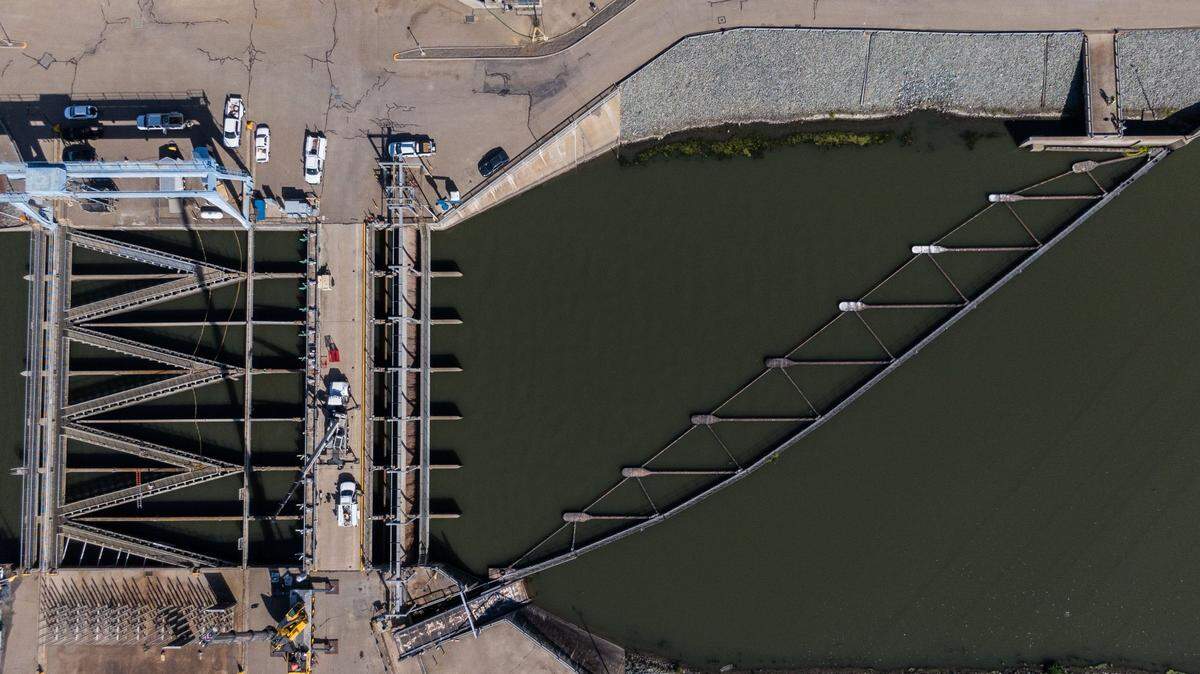
As a disclaimer, I used to work for an agency that was a beneficiary of this pumping, the Metropolitan Water Districts of Southern California. Yes, pumping kills. But what really kills, and nobody can quantify, is how the dams on the salmon rivers block about 95% of the places to spawn, all the cool upstream mountain waters.
Don’t blame the fish who eat salmon either
Before the Gold Rush, a young salmon swimming downstream had to be on the lookout for a single fish that could eat them, a dreaded native Californian known as the pikeminnow. Then we added newcomers to the Delta, either by accident or intentionally so we could fish them. The result is today’s salmon have five more adversaries — three species of bass and two catfish.
When the weather turns dry, and the flows into the Delta run low and clear, salmon have nowhere to hide. In a 2016 study of acoustically tagged juvenile salmon that could be tracked by scientists, predation was the overwhelming reason why more than 90% died.
Yet again, the impulse to pinpoint that lone culprit behind the salmon crisis misses the mark.
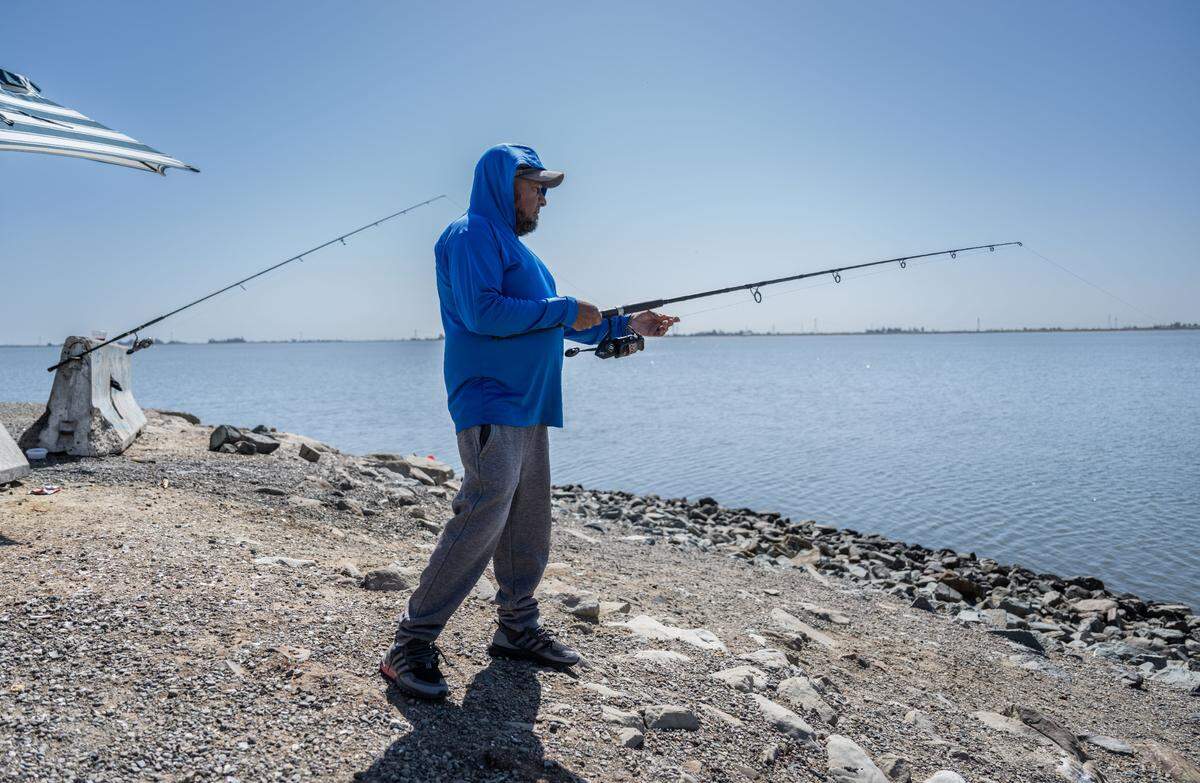
It’s unfair to blame the demise of salmon on fellow fish. This Delta can be a deadly in so many ways.
There are, for example, 1,100 miles of levees built since the 1860s that replaced nearly all the original marshlands. In their place are a static set of 70-some islands. There are pumps upstream to sustain communities like Sacramento that divert roughly twice what is pumped directly from the Delta. Water is habitat. We prefer to drink it and flush it.
And then there is the sun.
Researchers like Carson Jeffres of the University of California Davis are increasingly worried about rising winter temperatures that can warm water to the point of causing young salmon to struggle while swimming. Meanwhile, predator fish react to the warming water by growing even hungrier. When this happens, said Jeffres, the Delta turns into a “killing zone.”
The Delta is salmon’s Hotel California
When California over time turned this marshland into farmland, and then placed the nation’s two largest water projects right into its very heart, all this change was not for salmon.
It was for us.
Now we have created something so wickedly complex, rigid and foreign to its natural form, the Delta is nearly impossible to meaningfully manage. It runs us. And it has paralyzed our politics.
Normally in Sacramento, said Steinberg, “you don’t touch these issues.”
The lethal nature of the Delta to salmon is disguised by its extraordinary beauty. Even in its altered state, it is a uniquely California landscape. Its interface of orchard lands and ribbons of water, its signature winds fueled by Valley heat that constantly shifts the sky, would normally make this a famous resort destination. It is the enormous risk of flood, and regulations preventing such urbanization, that keeps the Delta such a secret.
A salmon’s stay in the Delta is brief, usually a matter of weeks in what is typically a three-year lifespan. But it’s quite a stay. For too many, the Delta is reminiscent of a classic song by a Los Angeles band, the Eagles. Salmon in the Delta check into the equivalent of their own Hotel California.
Salmon can come to the Delta whenever they like.
But they never leave.
This story was originally published November 2, 2025 at 5:30 AM.