
Sacramento congressman voted to praise Charlie Kirk. He says he regrets it | Opinion
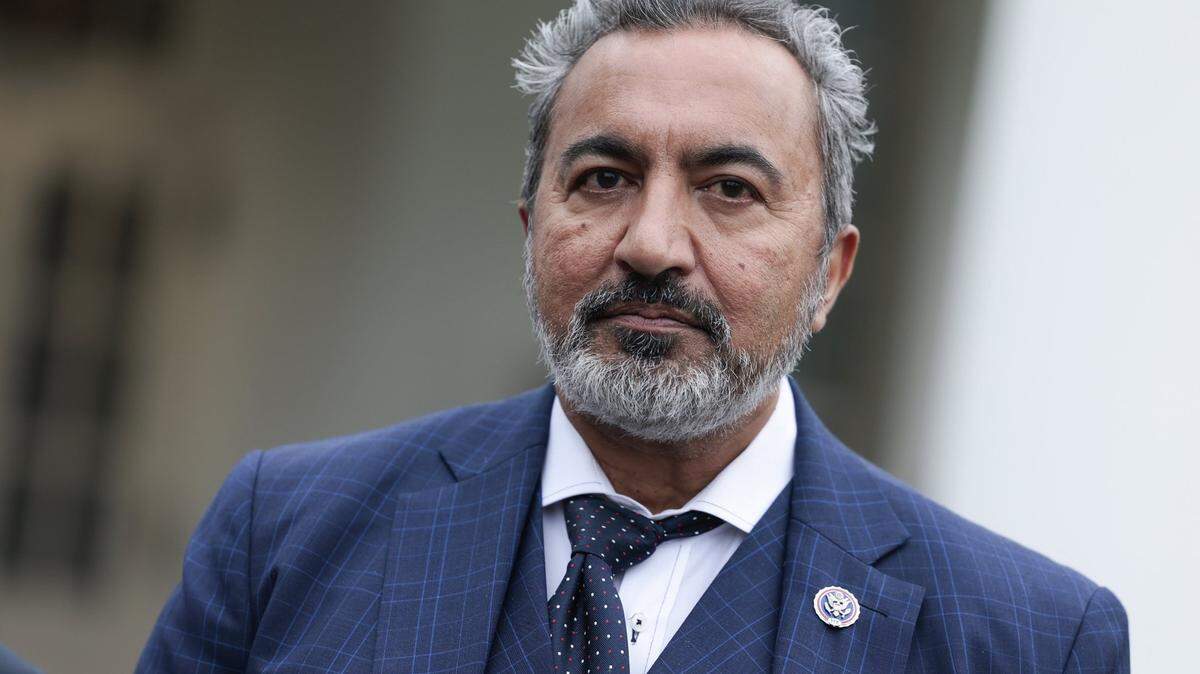
In the aftermath of the killing of right-wing political activist Charlie Kirk, Sacramento Rep. Ami Bera was one of 95 Democrats in the House of Representatives who voted “yes” on a resolution “honoring the life and legacy” of Kirk. Now, as Bera told The Bee, he regrets his vote.
The resolution strongly condemned political violence, political extremism and hatred — clauses which stood out to Bera, and which he said compelled him to vote “yes.” But it also praised the controversial Kirk, calling him a “devoted Christian, who boldly lived out his faith with conviction, courage and compassion.”
After hearing criticism from some of his Sacramento constituents, that narrow description of Kirk is what later caused the congressman to regret voting “yes.”
Of course, condemning violence — political or otherwise — is the right thing to do. Of course, all of us can express compassion for the family and friends of someone whose young life was ended by gun violence, as Kirk’s was. But taking a step further and praising how Kirk was “boldly living out his faith” is where this resolution — and Bera — crossed a line.
Missing from the resolution was how Kirk opposed the U..S. Civil Rights Act, a woman’s right to choose, same sex marriage and the Title IX regulation that puts women’s athletics on college campus on equal footing as men’s sports. Honoring Kirk’s advocacy and his right to do so is one thing, but praising his stated positions that are far outside the American mainstream is decidedly another.
In addition, Bera cast his vote during the time span that comedian Jimmy Kimmel was yanked off his ABC talk show for commenting on the Kirk killing. President Donald Trump and his supporters led a witch hunt against people in various fields who spoke critically of Kirk on social media. Was Bera appeasing the dominant right-wing culture in Washington, D.C with his vote? Was he looking ahead to a possible race against Republican Rep. Kevin Kiley, should California’s congressional districts be redrawn if Proposition 50 passes in November?
I was shocked to see Bera, a man of color and a Democrat who seems to repudiate basically all that Kirk stood for, vote in support of the resolution. The representative, a physician who has served in Congress since 2013, has been a frequent advocate for science, affordable health care and Medicare protections, environmental protections and reproductive care — issues that the Trump administration and right-wing advocates like Kirk have repeatedly undermined.
When asked about his vote, Bera explained that his first inclination was to “just vote ‘present,’” like his colleague, Sacramento Rep. Doris Matsui, did.
“I wanted to condemn political violence, obviously, without really honoring a lot of the things Charlie Kirk stood for — some of the rhetoric and the really divisive and dangerous language that he used,” Bera said.
Ultimately, however, Bera decided not to abstain. “The folks in Sacramento didn’t elect me not to take a stand or a vote,” he explained. “So I chose to vote ‘yes’ as a condemnation of political violence.”
But after casting his vote, Bera said he was contacted by disappointed constituents who were shocked by his vote, betrayed that he would appear to support Kirk and all that he stood for.
“Upon reflection, … I think my first inclination to vote ‘present’ probably would have been the right vote,” he said.
His vote also doesn’t appear to have won him any favor among Kirk supporters.
One day after Kirk was murdered, Bera posted a video on X saying “we’ve got to find a way to live together as Americans … ratchet down the dangerous rhetoric, be civil and be kind to one another.” His comment section exploded with replies from apparent Kirk supporters: The more than 1,800 comments on his post are filled with racist replies, calling him a “scumbag” and un-American, telling him to “buckle up” and overwhelmingly blaming Bera and the Democratic Party for Kirk’s death.
Democrats who voted “no”
Only four California Democrats voted “no” on the Kirk resolution. One of those votes belonged to Rep. Sydney Kamlager-Dove, D-Los Angeles, who serves as whip of the Congressional Black Caucus. She and many other Black Caucus members voted against the resolution.
“I could not support a resolution that endorsed Mr. Kirk’s beliefs, including his view that the Civil Rights Act of 1964 was a mistake,” Kamlager-Dove said via email. “I want to be clear: I unequivocally condemn all acts of political violence, and my deepest sympathies go out to Charlie Kirk’s family and to everyone who was traumatized by his assassination.”
Bera said he was advised by a Democratic leadership caucus to either vote “yes” or “abstain.” But “no” was always an option, and I wish he had shown the same moral clarity Kamlager-Dove did in her rejection of the resolution, as a crystal clear denouncement of Kirk’s fear-mongering beliefs.
Wobbling Dems
I can’t help but think that this kind of wobbling — taking an uncertain vote without a totally clear conscience — is indicative of larger problems within the Democratic Party: On issues like the war in Gaza and transgender rights or health care for undocumented immigrants, Democratic officials too often silence their own sense of right and wrong, preferring to stay quiet until popularity polls tell them how to feel. It happened when Gov. Gavin Newsom shockingly flipped his stance on trans athletes, and it’s especially evident among the California officials who remain silent during the worsening human tragedy in Gaza.
That the Democratic leadership blessed a “yes” vote on the Kirk resolution demonstrates how frightened they are of the current conservative populism that will only grow stronger if Democrats are too timid to stand up to it.
This is why young, progressive Democrats are frustrated with a Democratic leadership divorced from its moral compass. It’s also why Rep. Alexandria Ocasio-Cortez, New York mayoral candidate Zohran Mamdani and Congressional hopeful Kat Abughazaleh are becoming harder for old guard Democrats to ignore. They represent a shift in the party: More outspoken, more human, more attentive to Democratic voters
By voting “yes” to endorse the GOP narrative to deify Kirk, and then walking it back when questioned, Bera inadvertently demonstrated why established Democrats are less popular with voters than Trump, according to polls.
He forgot about the people who elected him — constituents who do not support the far right, Trump or his false narratives.