
A shocking decision by a federal judge leaves Sacramento at risk of flooding | Opinion
An outrageous ruling by a federal judge in Sacramento that favors trees over public safety has stalled a key flood protection project on the lower American River and put Sacramento on a path to play Russian Roulette with Mother Nature.
The project is to shore up erosion that could eat under levees that are the last line of defense for thousands of homes. It cannot move forward because Judge Dena Coggins of the Eastern District of the United States District Court ruled it would do “irreparable harm” to the impacted riparian lands east of Howe Avenue.
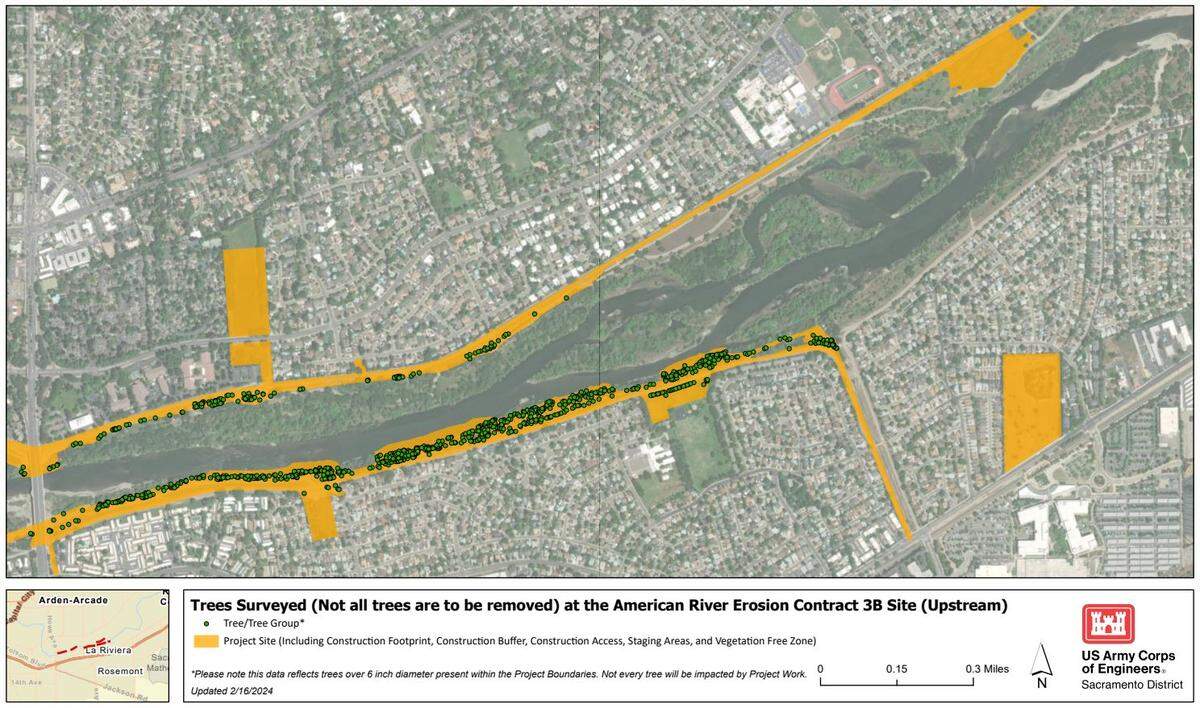
This decision on Nov. 7 demonstrated more concern for 650 trees that need to be removed than to far greater damage from potential floods. Trees would be replanted once the levees were strengthened with boulders and yes, the area would look differently for 20 years, but Sacramento would be safer.
As someone who worked for years in water management before returning to journalism, I was floored by a ruling that so cavalierly second guesses flood management. This project is the final linchpin to keeping so many communities safe, from Tahoe Park to the Pocket to Rosemont.
Sacramento County leaders made a pivotal choice in the late 1990s to better protect this region by strengthening the levees along the lower American and building a new auxiliary spillway at Folsom Dam so that it can release nearly 50% more water down this river than before.
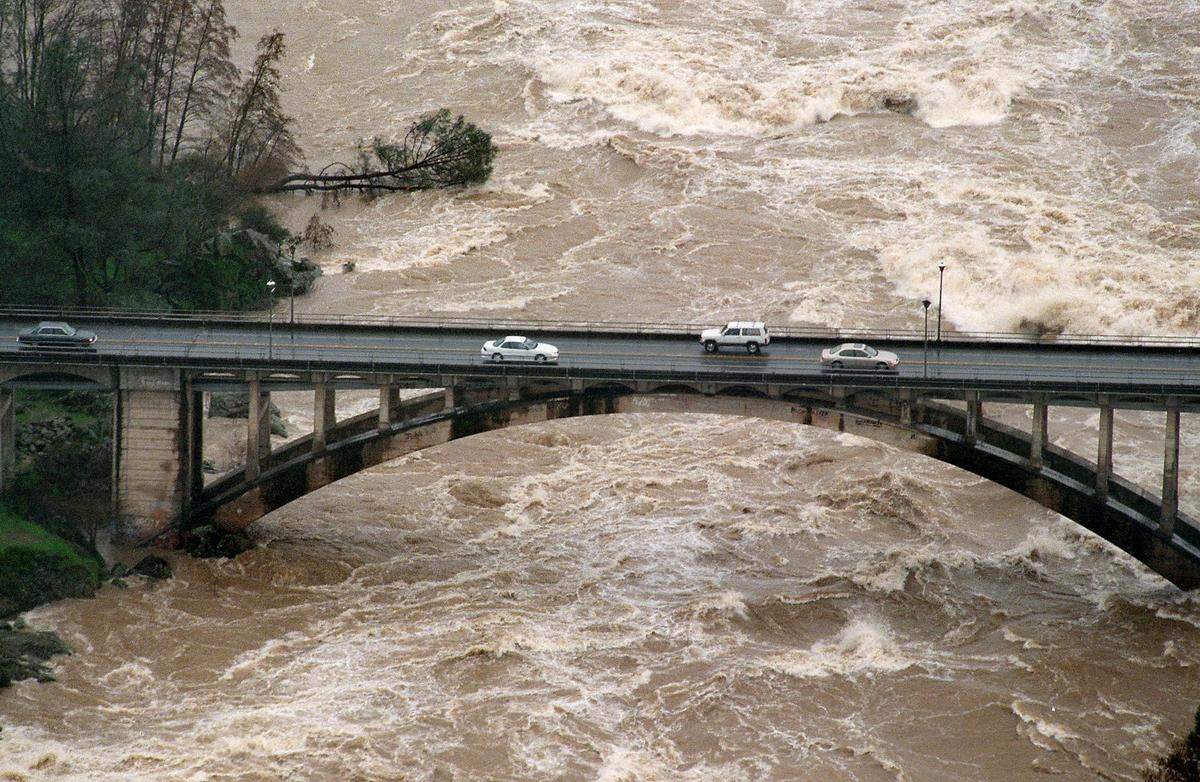
Yet this cannot be safely accomplished without armoring certain stretches of riverbank that are prone to erosion. Imagine the power of more than a million gallons of water passing down this river every second, eating under a levee that is your home’s last line of defense. That is the unimaginable harm that the U.S. Army Corps of Engineers, the designers of this river armoring, is trying to prevent.
Parkway lovers want to save trees, downplay risk
The erosion work in question is on stretches of American River Parkway bordered by American River Drive to the north and La Riviera Drive to the south. It will require the removal of more than 650 trees from the American River Parkway, some neighbors are objecting, convinced there is some less intrusive project. They filed suit in local federal court and asked Coggins to pause the project via a preliminary injunction. And remarkably, she did.
“The public interest in preserving the natural landscape along the Lower American River for recreational purposes is especially strong,” Coggins wrote. “The public would face the irreparable harm due to its lack of access to certain lands in the parkway during the project’s construction.”
In a surreal exchange during a Nov. 7 hearing, the attorneys on both sides debated when the next huge flood will come and whether there was time to somehow redesign the project.
“The defendants are frankly overstating the risk,” said an attorney for the project opponents.
Corps attorney Devon Lehman McCune disagreed. “You just don’t know when that’s going to happen,” he said.
McCune told Coggins that alternatives that the opponents prefer, such as smaller rocks and “nature-based” solutions that rely on trees, were considered early in the process and discarded because they didn’t meet the project’s objectives. This is entirely permissible under environmental law. Yet Coggins apparently thinks they deserve more analysis in the final report.
A judge slows a public safety project
For a judge to delay a vital public safety project is a stunning thing to do. It is a legal but potentially lethal use of the court’s power. Coggins is outright gambling that Sacramento is not about to flood any time soon. Talk about irreparable harm.
Environmentalists such as Ron Stork of Friends of the River support this project because they are aware that the threat of flood is real and that the physical injury to the parkway from this project is only temporary. Once sufficient rock is in place, the Corps plans to cover it with earth and landscape the areas with plants and trees.
A generation from now, nobody will know that the project ever happened. There will be trees yet again. It is this generation’s duty to make Sacramento safer for the next one. We are abdicating that basic civic responsibility because some of us don’t want our moments in the parkway to be altered.
We have forgotten about our floods
The true nature-based solution is for us all to leave, and let the levees degrade so that the river can reclaim its rightful floodplain throughout Sacramento yet again. That scenario basically went out the window when gold was discovered near the American River in 1848 and Sacramento became the capital in 1854, leading to the urbanized landscape that we have today.
We either take the steps necessary to confine this river to its channel or be prepared to suffer some mind-boggling consequences. This choice should be obvious. Apparently it’s not.
Why? It is a very rare moment when bucolic parkway turns into the Sacramento region’s widest freeway. Racing downhill is floodwater, not cars.
That we haven’t seen and sensed this risk for years has brought on a form of civic amnesia. Never mind that climate change experts tell us to prepare for storms we have never seen. Instead, the federal court dithers over the breadth of an environmental analysis. What a spectacularly wrong and potentially dangerous decision.
This story was originally published November 25, 2025 at 5:00 AM.