
California salmon must return to the mountains. It’s time to take a chance | Opinion
Late in the 19th century on the McCloud River below Mount Shasta, California’s first hatchery began creating thousands of salmon embryos for an audacious plan to establish populations of California salmon throughout the Midwest and the Eastern seaboard of the United States. The effort failed miserably.
Some, however, thrived after their embryos were transported all the way to New Zealand. There and only there did this relocation experiment work. For more than 100 years on South Island rivers like the Waitaki, California salmon, believed to be from the McCloud River, have lived a life without dams, free to spawn high in the headwaters and swim unimpeded to their adult life in the Pacific Ocean.
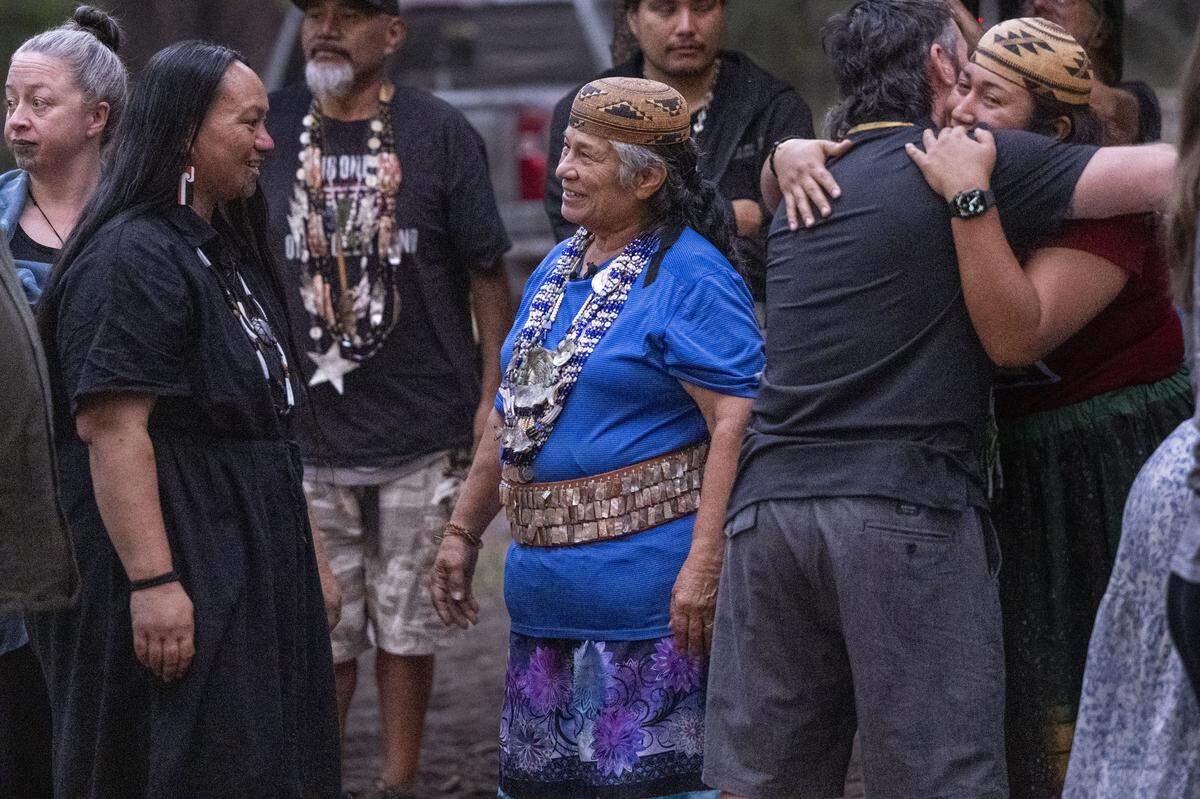
“They’re still mountain climbers,” said Caleen Sisk, chief of the Winnemem Wintu, whose tribal history is anchored in its duty to protect McCloud salmon. Sisk views their return as central to the survival of her people. “That fish,” she said, “gave us our voice.”
To date, California has prevented their return, testing for a potential foreign pathogen that could foul California waters. That’s not unreasonable. Doing nothing new to improve the failing management of California salmon is unreasonable.
For a state that is famous, or infamous, for its preponderance of environmental laws and regulations, none have prevented salmon’s dangerously downward population trajectory over many years. To reverse the decline, something is going to have to change.
Carson Jeffres of UC Davis, one of the state’s leading salmon researchers, has been pushing for the New Zealand salmon to return. “I think of them as a genetic opportunity and a spiritual opportunity,” he said. With most surviving California salmon now born in a hatchery and not in a river, “this is an opportunity to bring back a diverse genome that might make it through the next 50, 100 years.”
Returning California salmon from New Zealand feels like the linchpin of a new management strategy for salmon in California. Bringing them back would inspire other positive changes that should already be happening.
“We believe in the vision,” said Chuck Bonham, the director of the California Department of Fish and Wildlife. “We’re just mid-course in the journey, and we’ve got to get it right.”
The McCloud needs its salmon back. But how?
The McCloud is California’s salmon success story waiting to happen. It could once again be one of our most important fish-producing rivers, yet it now lives in a quiet but majestic obscurity. The McCloud is one of the rivers of the southern Cascades that feeds Shasta Dam, as the Sacramento River downstream is fed by rivers of the Sierra.
No adult salmon has made it back to the McCloud in the more than 80 years since the dam was built. That would undoubtedly end if salmon that originated from this river were to return from New Zealand.
Sisk advocates for “volitional passage,” carving a continuous pathway from the McCloud above Shasta to the Sacramento River below. No design now exists, and such a facility would undoubtedly be expensive. “Passage is the holy grail,” Jeffres said, something that would take years.
In the meantime, returning adults could be captured and transported up to the McCloud, and their offspring collected to be relocated downstream. This is an idea long on the California drawing boards that has yet to happen. It should be, now, on the McCloud.
Would it work? There is reason to hope that the offspring of adult salmon trucked upstream to spawn can be safely captured for transport downstream. For the last two summers, state-funded researchers have introduced winter run salmon embryos high in the McCloud. Downstream, a floating collection system has managed to retrieve as many as 70% of the offspring, Jeffres said.
A salmon haven near Sacramento
Just as dams have deprived adult salmon of their spawning ground, levees have blocked young salmon migrating downstream from valley floodplains. These were once nature’s perfect rest stops and healthy fast food outlets.
The largest remaining floodplain is near the capital, the 60,000-acre Yolo Bypass. And now, thanks to some new infrastructure, we can steer more young salmon onto this floodplain.
For decades salmon have only managed to enter the bypass when the Sacramento River rises and overtops a low point in the levee system known as the Fremont Weir. As of this year, a new gate of sorts has made this weir adjustable so that water and salmon can enter the bypass more frequently.
Long-time bypass researcher Ted Sommer wants to use this notch to extend how long water flows down the bypass so that salmon can take advantage of this floodplain.
“The longer the fish stay out in the floodplain, the bigger they get, the better it survives, and the better it’s equipped for ocean conditions,” Sommer said.
Needed: A California salmon ‘Czar’
There is no shortage of California departments, councils and boards that have some role in managing salmon. But there’s not one person, California government’s version of a czar, that is tasked with looking at the big picture and implementing the most promising next steps.
Advocates such as Jeffrey Mount, a former geology professor at UC Davis who is now a senior fellow at the Public Policy Institute of California, are advancing this idea.
Now, “everybody’s in charge and nobody’s in charge,” said Mount. “There isn’t anybody in the system who has the decision-making authority on the environment.”
He’s right. Someone whose sole task is to get good things done for salmon may actually get those things to happen.
The unwritten next chapter
If the United States kept a list of endangered tribes, “we would be on that list,” said Chief Sisk. The country never formally recognized her people as the federal government converted their ancestral homeland into a lake bed behind Shasta Dam.
“The salmon lost their home,” she said. “And so did we.”
It is one of the strangest flukes of history that her native salmon were taken so far away so long ago and survived for all these decades. This tribe deserves every effort to bring them back as part of rethinking every failed way we are now managing this signature fish species of California.
“If the salmon get to come back to the river and get to be healthy again,” said Sisk, “maybe we do, too.”
This story was originally published December 14, 2025 at 5:00 AM.