
‘Tis not the season for higher sales tax on roads in Sacramento County | Opinion
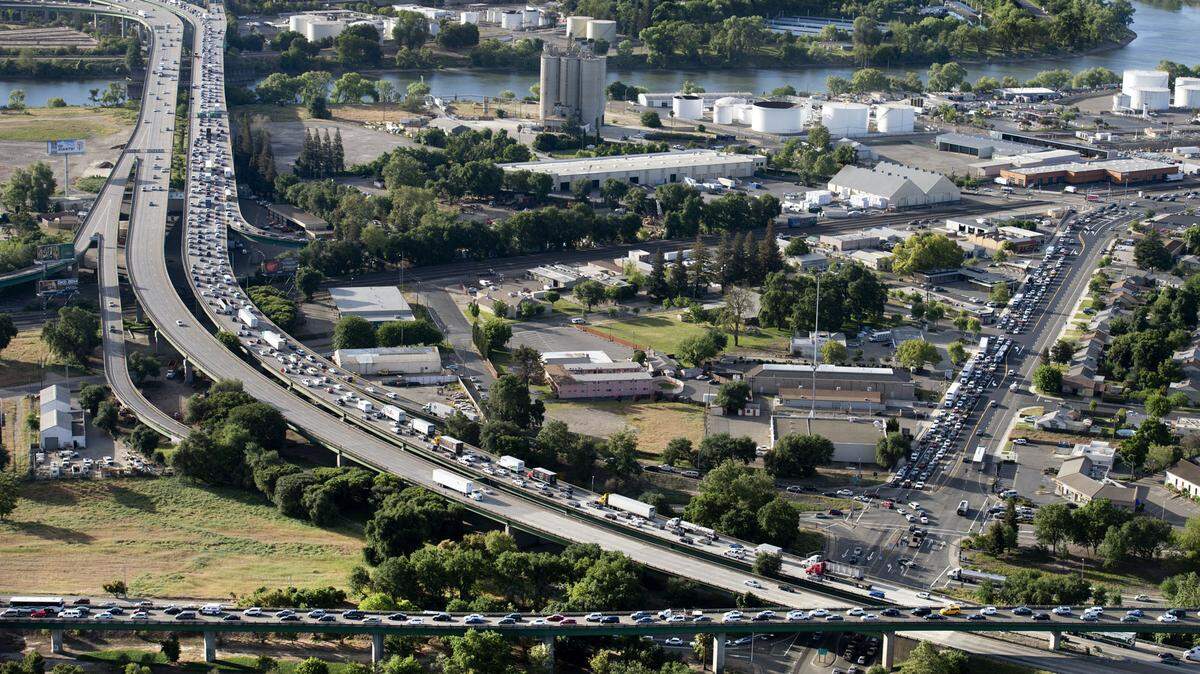
Chances of a sales tax measure in Sacramento County next year to address transportation needs appears about as likely as a smooth ride down a county road.
Four of five county supervisors are on record against the idea, as they detect that the prevailing winds of public opinion are against a new tax. And budget deficits projected in the coming years, the county is facing some bumpy roads both literally and figuratively.
For county residents, road maintenance “is their highest priority, but they still don’t want to pay extra money for it,” Supervisor Pat Hume said at the board’s Dec. 9 meeting.
Our supervisors preside over the shabbiest road network in the county, worse than any city. On a “road pavement index” scale of one to 100, roads in the unincorporated county now are rated at 41, a flunking score. In just eight years, the roads will deteriorate to a score of 28.
Simply put, we are facing the prospect of roads and major arterials in the county’s unincorporated areas — call it The UnCity — resembling an impoverished nation.
“All you need to do is drive down parts of Watt Avenue… and once your teeth are done falling out of your head, you’ll understand clearly that our roads are in miserable condition,” Supervisor Patrick Kennedy said. “That voters are not predisposed to support a tax measure currently doesn’t mean that we are absolutely not in need of it.”
Only Supervisor Rosario Rodriguez seemed interested in pursuing a sales tax measure on the Nov. 26 ballot, but not a tax for all county residents and one strictly for road maintenance. She wanted additional research on a temporary, quarter-cent sales tax measure just for half-million county residents who live in unincorporated communities like Fair Oaks and Carmichael and Arden Arcade and Antelope.
“Voters don’t want a measure that includes transit,” Rodriguez said. “A specific tax and a temporary tax and a very small percent would allow us to be able to fix the problem.”
Supervisors anticipate spending less of their own general fund money to address this problem, despite its high priority with voters. It’s one of those contradictions between what is important inside county government and what is a priority to you.
“With those general fund dollars, we’re not going to have them available (for road maintenance) with what we see on the horizon here,” said Supervisor Rich Desmond of the county’s fiscal challenges. (And this is coming from a supervisor whose district is 90% in unincorporated areas and the board’s strongest champion of fixing the roads.)
In the philosophy of Supervisor Pat Hume of Elk Grove, home of the county’s smoothest local road systems based on a county survey, “government doesn’t have a revenue issue. Government has a prioritization issue, and the money is available if we made the decisions to spend it differently.”
Yet given the county’s chronically anemic funding of road maintenance with the county’s own money, and other pressing needs such as law enforcement and mental health services for the homeless, supervisors have no shortage of worthy priorities. That leaves one, and only one, potential short-term savior: The California Legislature.
At the moment, the Legislature thinks that road expansion projects, such as the never-ending nightmare in Sacramento along Highway 50, is just as important as fixing local roads. These priorities don’t feel in line with the public or with reality. Shouldn’t we fully fix our existing road infrastructure before adding lanes to it?
While the fight over transportation dollars is one of those never-ending battles in the Capitol, more state funds could be steered toward local roads. Given the untold damage to vehicles forced to travel over the deteriorating roads, fixing this problem fits into any sane affordability agenda in Sacramento.
And then there are the growing number of electric vehicle owners in California who aren’t paying gas taxes at all yet are dependent on this same road network. That’s simply not fair or sustainable. While this won’t be easy or popular in some circles, the Legislature has no choice but to assess EV owners tack onto the annual registration fee yet another charge to go toward road maintenance, perhaps based on miles traveled.
This idea is hardly new. It’s just a topic that lawmakers have conveniently avoided for years.
Given how California requires two-thirds of voters to raise a tax to fix a road, and how our electorate is increasingly divided, counting on some future ballot box to fully solve this problem is wishful thinking. Meanwhile, our county road system is going to get a whole lot worse before, if ever, it gets better.