
California needs to step up on clean trucks to counter federal rollbacks | Opinion
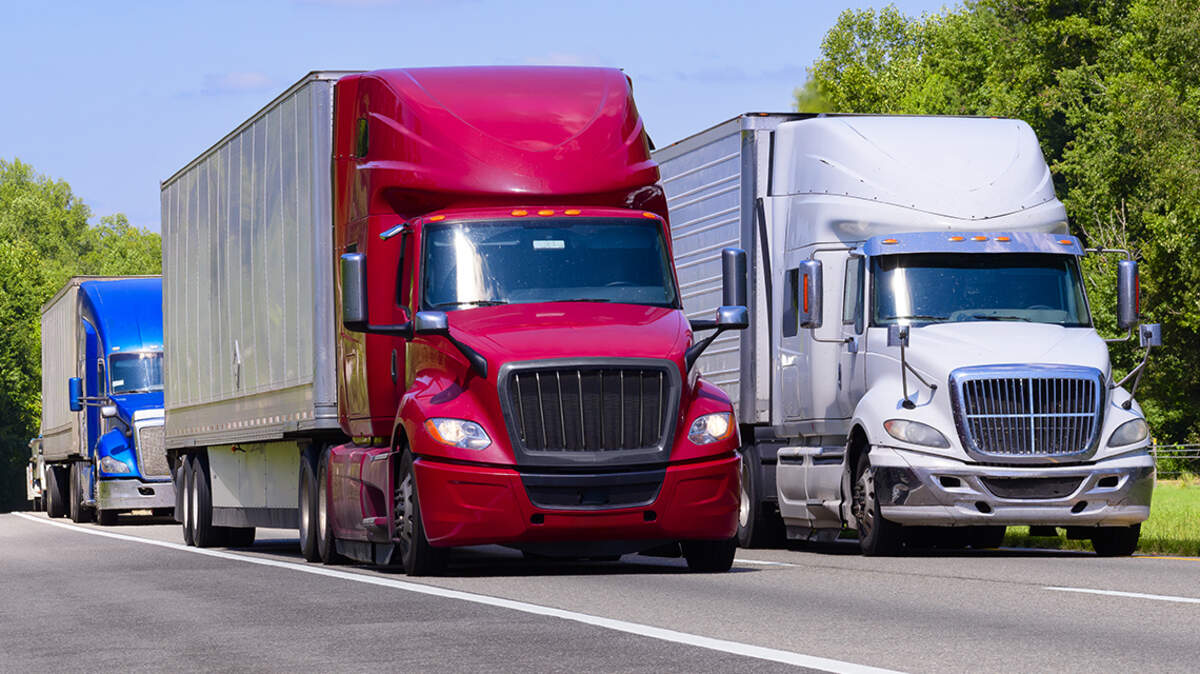
The highly polluting diesel trucks that dominate California’s roads account for 25% of the state’s on-road greenhouse gas emissions and 35% of transportation-caused nitrogen oxide emissions. They also contribute to asthma and other public health harms, particularly in low-income communities near shipping centers and highways.
But the state’s efforts to promote zero-emission trucks took a big hit in 2025. First, Congress voted last June to reject the Biden Administration’s previously granted permission for California’s signature heavy-duty vehicle policy, the Advanced Clean Trucks mandate. The regulation required truckmakers to produce zero-emission models, with most classes scaling to a majority of new sales by 2035. California is now suing to invalidate this vote, but the judicial process could take years.
Then, last, July, Congress passed President Donald Trump’s tax bill and terminated many of the incentives needed to lower zero-emission truck costs.
The good news is that rapidly decreasing battery prices and improved range and charging times have already made zero-emission trucks price competitive with fossil fuel alternatives in some market segments, especially when accounting for lifetime fueling and maintenance costs. In fact, as of 2024, one in six new trucks, buses and vans were zero-emission in California, compared to a few hundred annual sales before 2021.
As battery prices continue to fall, analysts expect even the heaviest classes of clean trucks to reach and eventually exceed price parity with diesel models within a decade.
But for now, zero-emission trucks often remain more expensive for many heavier and longer-distance shipping needs. As a result, not enough shippers are demonstrating sufficient demand to match the pace of the state’s goals. In short, the state will still need ongoing policy support to encourage demand and ultimately hasten a phase out of polluting diesel trucks.
What can California leaders do, given the federal pushback? Even though state-level transportation policy faces federal headwinds, California still retains significant autonomy to make progress.
First, the state legislature could create a “Clean Miles Standard” for freight, which would require shippers to meet a certain percentage of the miles their goods travel via clean technologies, like zero-emission trucks. Modeled after a similar California requirement for ride-share companies like Uber and Lyft, this approach would help guarantee demand for clean trucks (and encourage truckmakers to build more of them).
Second, the California Air Resources Board could create a statewide “Indirect Source Rule” under the Clean Air Act, which would regulate facilities like ports and warehouses that generate pollution indirectly (by attracting truck traffic). The rule would require emission reductions from those facilities. To comply, warehouse, port and other similar facility operators would need to purchase or require a sufficient number of zero-emission trucks to serve their locations.
Finally, state legislators and agency leaders could use fiscal tools to promote clean trucks. The legislature could create revenue neutral, self-funding incentive programs for zero-emission trucks, in which fees on non-zero-emission vehicles fund rebates for zero-emission vehicles. And state leaders could ensure that all truck purchase incentives are long-term, consistent, flexible and stackable to reduce investment risk and uncertainty.
Furthermore, the legislature could exempt zero-emission trucks from the state sales tax or ensure they are taxed no more than their diesel counterparts, and equalize registration fees so that zero-emission trucks do not pay more for registration than diesel trucks.
While the Trump administration and the current Congress remain hostile to zero-emission vehicles, the state can’t afford to wait for a change in federal leadership to advance this transition. The pollution from diesel trucks is too serious a public health challenge, and competitor nations like China are moving forward with ever-cheaper battery electric mobility and goods movement.
Ethan Elkind is director of the Climate Program and Marie Grimm is an environmental policy research fellow at UC Berkeley Law’s Center for Law, Energy & the Environment. They are co-authors of the new UC Berkeley Law/UCLA Law report “Driving Demand: Solutions To Increase The Market for Heavy-Duty Zero-Emission Vehicles.”