Mocking Newsom’s dyslexia reveals a cruelty many of us recognize | Opinion
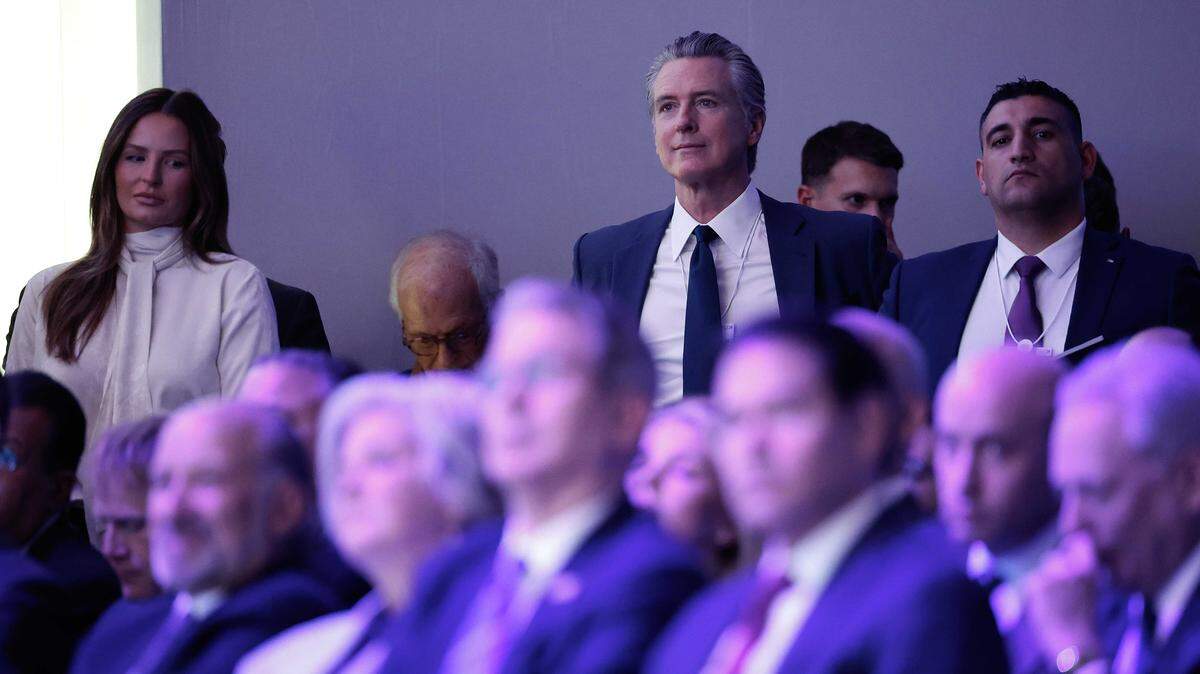
There’s a lot to roll your eyes at in Gov. Gavin Newsom’s new memoir, “Young Man In A Hurry,” which came out Tuesday, but the least of it is Newsom’s open struggle with dyslexia, which some conservative talking heads and online conspiracy theorists are openly mocking and even doubting after Newsom addressed the issue in a public conversation while on tour for his book.
Far be it from me to give Newsom the benefit of the doubt on pretty much anything, but he has said many times that he lives with dyslexia, a learning disability that affects language processing, spelling and reading. Though Newsom was diagnosed with the condition at age 5, he says he didn’t learn of his diagnosis until fifth grade when he came across some papers on his mother’s desk.
As someone who also struggled with learning and speech disabilities, I’m angry that, even now, millions of adults living with learning disorders cannot be open and honest for fear of public ridicule. It feels like we’re right back in the schoolyard with our bullies.
Those claiming that Newsom made up his disability for attention are wrong, by the way: Newsom has been open and public about his diagnosis for decades; the earliest reference seems to be this SFGate article during his 2003 campaign for mayor of San Francisco.
However, by making his diagnosis and disability a topic of conversation, the governor should be prepared to answer questions about it. Since he’s claiming to have an official diagnosis, it’s not obscene that a reporter would ask to see the medical records, but when a reporter from Real Clear Politics did just that on Monday, Newsom’s communications director Izzy Gardon wrote back: “Respectfully, f— off” and called her nothing but a “MAGA blogger.”
Gardon’s poor behavior, apparently condoned by Newsom, removes his boss from some of the moral high ground they occupied on this issue. He could have easily told the reporter instead how the governor still deals with the effects of the neurological disability, such as memorizing facts and lines instead of reading them, utilizing index cards instead of paper scripts, using larger type and spacing in his written notes, and avoiding written speeches altogether, as reported by Politico.
“Year after year, the word ‘dyslexia’ never showed up in my school records,” the governor said in his new book, ghostwritten by Mark Arax. “The actual name of the affliction I suffered from remained a mystery to the school and to me.”
I have no trouble believing the governor, because I too, struggled in school with learning and speech disabilities.
In elementary school in the 1990s, learning disabilities were often underdiagnosed and not openly spoken about. It wasn’t until college that I realized I likely have a learning disability called dyscalculia, sometimes known as numerical dyslexia, though it was never officially diagnosed since I saw little need to seek a doctor’s confirmation so close to graduation.
But that lack of a paperwork trail doesn’t mean I didn’t suffer in school: Years of poor test scores, expensive math tutoring and countless remedial classes led to deep, internalized shame. I was told I was just stubborn and “putting up walls” that stopped me from succeeding in school.
Dyscalculia, like dyslexia, is a lifelong neurodevelopmental condition. Like the governor struggling with his written scripts, I still have difficulty reading analog clocks, doing simple arithmetic or memorizing random numbers in sets larger than three or four, while most adults can remember up to seven or so.
Meanwhile, my childhood speech impediment, ankyloglossia, or a “tied tongue,” was much more apparent as a problem to my family and teachers, and was officially diagnosed when I was in kindergarten. I received 10 years of speech therapy, and had corrective surgery when I was in the 5th grade. Today, my speech impediment is almost entirely unnoticeable.
I often wonder how much more successful I could have been in school and life if I’d received similar accommodation for a learning disability.
But it’s downright silly for anyone to expect Newsom to be a card-carrying dyslexic or me, a card-carrying dyscalculic. If someone asked me to prove my disability right now, how could I? Show you how I have to count on my fingers for simple math problems or struggle to remember a phone number just seconds after I read it?
Newsom is more than 20 years older than me, so I have no problem believing that he struggled in school in the early 1970s, even more than me. I believe him when he says his mother and teachers hid his disability from him, or that he received little assistance from the school to overcome his disability, even if he had an official diagnosis.
.JPG "SAC_20211211newsom03 (1).JPG")
Any adult who has struggled with a learning disability — approximately 5% to 15% of Americans — will recognize themselves in Newsom’s story about the anxiety of performing in a classroom setting:
“My heart (was) just sinking and pounding, hoping that that period would end and we’d get the hell out of there, and then getting up and starting to read and having everybody in the class laugh,” he once told The Yale Center for Dyslexia and Creativity.
This backlash over the governor’s learning disability is, at best, a petty insult meant only to mock the governor and by extension, mock the more than 60 million adults and more than 4 million students in America today who live with a learning disability.
It is a bitter reminder of how little removed American politics truly is from schoolyard bullying.