
California manages water and land separately. It’s time to tie them | Opinion
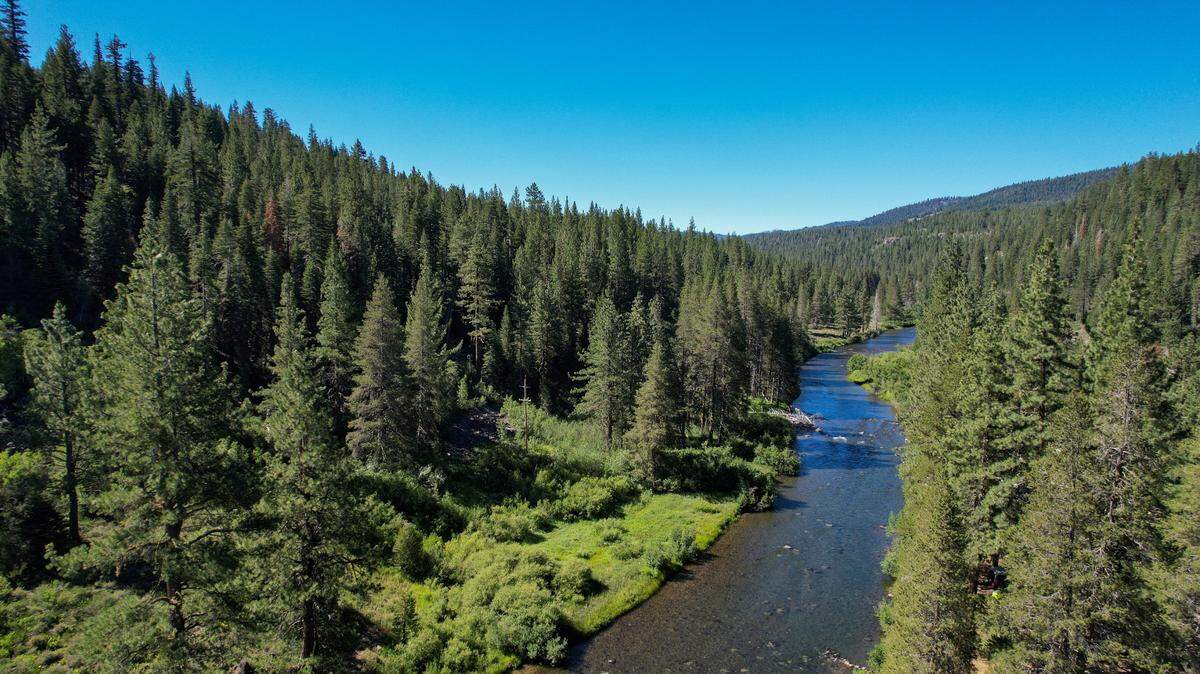
Water touches nearly every aspect of life in California, underpinning healthy communities, economies, farms and ecosystems. Unfortunately, a cascade of growing threats, including severe droughts, depleted groundwater, and outdated water infrastructure puts this vital resource at risk.
Solutions have traditionally focused on water itself—how it is stored, moved, and manage. But water’s true resilience depends on how land and water function together. And we can do better.
From city streets to working farms and mountain meadows, land use determines how water moves across landscapes, whether it runs off quickly, becomes polluted, gets naturally filtered, or is reused.
In the Sierra Nevada, projects such as Sardine Meadow near Truckee and the conserved 101 Ranch and Home Ranch in the Feather River watershed show how land stewardship and water policies reinforce one another.
In the Truckee River headwaters, Sardine Meadow helps regulate how snowmelt moves through the landscape. The Truckee River flows roughly 100 miles from Lake Tahoe through Sierra Nevada canyons and the Truckee Meadows before emptying into Pyramid Lake in Nevada. Protecting and restoring the meadow slows runoff, improves infiltration, and sustains colder late season flows that benefit fish and downstream users. This is more than a local conservation story. It is a practical example of how upstream land decisions support water reliability as warming temperatures reduce snowpack and increase evaporation.
In the Feather River watershed, the 101 Ranch and Home Ranch protect one of California’s largest remaining montane meadow complexes through working lands conservation and long-term stewardship. These landscapes store water, reduce erosion, and sustain summer base flows. That matters because the Feather River, a tributary of the Sacramento River, begins at Lake Oroville, a critical reservoir in the State Water Project system that supplies water to millions of Californians, including communities far beyond the Sierra such as Los Angeles.
Proposition 4, a $10 billion bond approved by voters in November 2024, helps advance land and water policies together. The opportunity now is to scale strategies that strengthen landscapes which naturally store, slow, and filter water while advancing biodiversity, public access, and community resilience.
The Legislature, which appropriates monies from Prop. 4, must continue to fund watershed-based approaches. This money helps partners to work across jurisdictions and rely less on fragmented, program-by-program grants.
Collaborative conservation efforts among landowners, tribes, land trusts, public agencies, and conservation organizations demonstrate how upstream land protection strengthens climate resilience across an interconnected and engineered water system. These efforts help stabilize water supplies not just locally, but for communities and industries hundreds of miles away.
The examples of the emerging successes in the Truckee and Feather river watersheds underscore a simple point: California’s water challenges cannot be solved by water or land policy alone. Aligning the two reduces long-term public costs by lowering treatment needs, managing flood risk upstream, and avoiding expensive infrastructure. In an era of climate volatility and constrained public budgets, investing in landscapes that naturally store and filter water is often more cost-effective than relying solely on built infrastructure.
Water does not conform to political boundaries. Source water protection, groundwater recharge, water quality, and end-use reliability are connected across watersheds. Addressing these dimensions together embraces how water moves across landscapes and supports communities statewide.
Durable water resilience will not come from any single policy or project, but from partnerships. Our organization, Trust for Public Land, plays a role alongside local, regional, and state partners to link land protection with water goals and move implementation forward.
California does not lack policy ambition. The question is whether we will align our expertise, partnerships and policy frameworks with the scale, coordination, and urgency. That is what our water future demands of us.
Juan Altamirano is senior director of California Government Affairs at the Trust for Public Land and Moisés Moreno-Rivera is its senior program manager.