
Sacramento County can’t pass a sales tax for transportation. Can the city? | Opinion
It has been a decades-long tradition for Sacramento to pursue sales tax increases for transportation needs as a united county. But that may be about to change. Some transportation activists in the capital city are looking to go it alone.
It’s a sign of our highly divided times and how hard it is for elected officials representing voters with different perspectives to find common ground, whether on governing homelessness or on which transportation needs have the highest priority.
A clear urban-suburban divide is emerging on transportation, with a layer of politics as well. Sacramento leaders put fixing streets and public transit first. Suburban leaders tend to put potholes and new freeway interchanges or connector roads ahead of transit.
But the decisive difference appears to be in the willingness to tax themselves.
“The polling was just off the charts negative countywide,” said Steve Cohn, a former Sacramento council member who is spearheading the sales tax effort along with union/environmental activist Sam Rice through their group known as SMART, or Sacramento Advocates for Rail and Transit.
As detailed by The Bee’s Ariane Lang, Cohn’s group has filed a proposed initiative with the City Clerk’s office known as the “Safe Streets and Affordable Transit” measure. It would raise the city’s sales tax to 9.25%. It would raise an estimated $70 million a year.
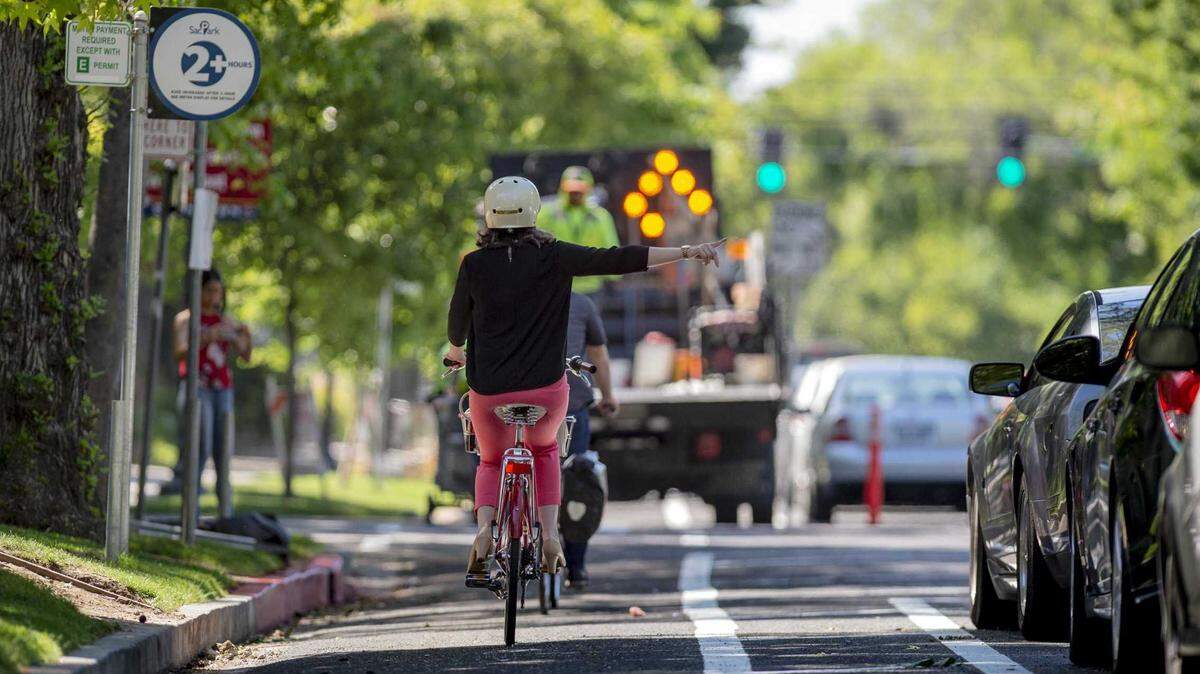
Funds would be evenly split (48% apiece) between roads and transit. Eligible road projects would include maintenance, safety projects and improvements for pedestrians and bicyclists. The transit proceeds would fund operations and expanded service. The remaining 4% would support infrastructure for housing near light rail stops and for administrative overhead. As a city sales tax, the funds would be managed by the City Council.
California has ended up with a screwy set of rules for these sales tax measures. If the City Council were to place the identical measure on the ballot, it would take yes votes from two-thirds of the electorate to pass a measure. Yet because of a court ruling, a citizens initiative needs only a majority of voter support for the measure to pass.
Cohn isn’t the first one to think of going the citizens’ route for a measure. Mayor Darrell Steinberg floated in 2023 the idea of a Sacramento-only sales tax for roads and transit and infill housing, but he never pulled the trigger.
“There was just not enough money with a city-only measure to make a real impact,” Steinberg said in a recent interview. “Focusing on transit exclusively, that I think allows for a larger impact.”
Steinberg said a countywide measure is “far preferable,” but then there’s the reality of how the city in so many ways is different than its neighboring communities. “The politics and the histories and the cultures are different,” he said.
The city-county divide
Suburban communities like Rancho Cordova would like interchange improvements along Highway 50 to accommodate the traffic from growth they have approved. The problem is that these developments were not required to fund the necessary improvements, hence the desire for everyone to pay via some new sales tax.
“I don’t think city voters will support big freeway connectors,” Steinberg said.
Our recent history is littered with failed countywide sales tax measures. A citizens measure backed by development interests that was loaded with improvements for highways and connectors went down to defeat in 2022. Attempts in 2020 and 2016 fell short as well. County supervisors in December all but rejected the idea of another try in 2026.
A Sacramento-only measure is no slam dunk. Cohn says his organization will need to gather more than 31,000 valid city-voter signatures to qualify for the November ballot. SMART has raised more than $100,000 so far. “We’re going to need to raise a lot more money very soon,” he said.
Yet even the attempt is Sacramento history. Steinberg can’t recall another such citizens’ effort resulting in a sales tax increase.
If anybody can do it, it’s Cohn. He served 20 years on the Sacramento City Council and his efforts on transportation led to his name adorning the track underpass at the Sacramento Valley Rail Station.
This is a historic collision between the quest for regionalism and the realities of democracy. If Sacramento has citizens wanting to invest in their transportation future and the rest of the county does not, what’s Sacramento to do? Nothing?
We are at risk of becoming a county in name only.