
California bill requires screening of custom mail-order DNA to prevent misuse | Opinion
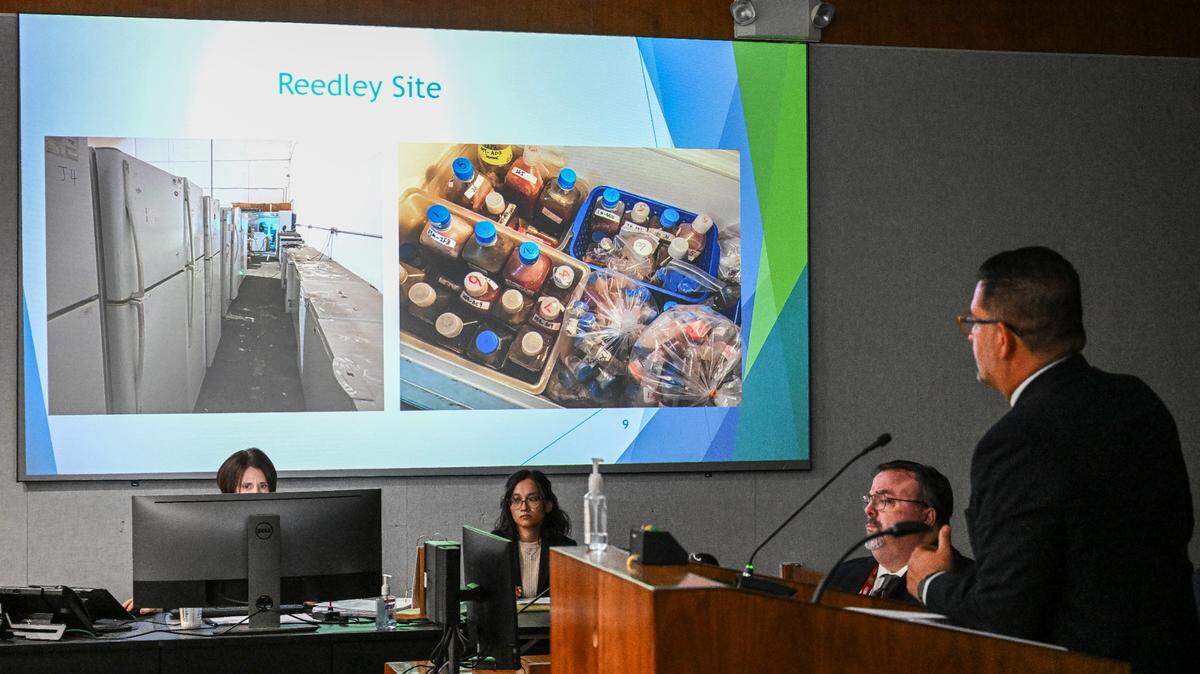
In late 2022, a code enforcement officer in Reedley noticed a garden hose sticking out from an abandoned warehouse. Inside, she found more than 30 refrigerators and freezers containing thousands of fluid-filled vials. Later investigation discovered labels for HIV, malaria, tuberculosis and dengue. Earlier this year, police found a similar setup in a Las Vegas garage with ties to the same man.
There’s a reality behind the story I find even more shocking: Regardless of whether the people running labs like these are malicious, reckless or clueless, there is no law anywhere in the world that would prevent them from ordering the genome of a deadly pathogen through the mail. In fact, the DNA needed to create Ebola is less regulated than the penicillin at your local pharmacy.
Assemblymember Marc Berman, D-Palo Alto, aims to solve that. In February, he introduced Assembly Bill 1864, which would make California the first state to require companies selling custom mail-order DNA — and the machines that make it — to screen orders and make sure only legitimate researchers can access the building blocks of pathogens.
Discovering the issue
I first became concerned about this problem two decades ago while serving on the National Science Advisory Board for Biosecurity, a U.S. government advisory board on biological risks. Scientists had begun publishing methods for reconstructing viruses from strands of DNA, including the 1918 influenza strain responsible for a pandemic that killed an estimated 50 million people. Around the same time, companies had begun offering custom-made DNA through the mail. What was to stop someone from ordering the one to recreate the other? Could a pandemic be launched from a garage?
Our 2006 report concluded that synthetic DNA could be misused to create dangerous pathogens, and we recommended screening to prevent that scenario. The scientific community took the recommendation seriously. Industry formed the International Gene Synthesis Consortium in 2009 to coordinate voluntary screening, and the U.S. government published a series of guidelines culminating in a screening framework released in 2024 that more than 20 firms now publicly attest to following.
Compliance, however, has never been enforced.
Rapid advances in AI and synthetic biology make voluntary screening woefully inadequate. In 2006, perhaps a few hundred people in the world had the expertise to turn a synthesized sequence into a functional pathogen. That number is now growing fast. Frontier AI systems are increasingly capable of walking non-experts through complex biological procedures. Safety evaluations published by leading AI companies show their systems outperforming trained virologists on questions about highly technical laboratory protocols. As a result, the California Report on Frontier AI Policy concluded there is “growing evidence” that AI could enable biological attacks.
While many responsible firms already screen, more than 20% of providers recently contacted by California universities failed to attest to following industry screening practices. AB 1864 would close that gap and protect Californians from catastrophic misuse of gene synthesis technology by requiring companies to follow existing federal guidelines.
Action is vital
California is the right state to act. It’s home to the nation’s largest and most vibrant life sciences enterprise. Gene synthesis technology, routinely used to develop and produce life-saving treatments and vaccines, is a critical part of that ecosystem. Rather than killing innovation, AB 1864 will help create the conditions for it to thrive.
Under a voluntary system, companies that invest in screening can be undercut by firms that don’t. A single prominent case of misuse could jeopardize public trust in the technology and in scientists and lead to a knee-jerk regulatory crackdown.
The scientific community and biotechnology industry have spent two decades building the screening regime that AB 1864 would make binding. We have done this because we believe in taking responsibility for the risks our research creates. But it is past time for governments to help shoulder the burden.
David A. Relman, MD, is the Thomas C. and Joan M. Merigan Professor in Medicine and Microbiology & Immunology at Stanford University, and chief of infectious diseases at the Veterans Affairs Palo Alto Health Care System.