
A Sacramento school’s mascot change honors Indigenous perspectives | Opinion
There are moments when California reminds me of the South. It’s as if I catch glimpses of distant mountains that echo Tennessee’s landscape or spot a product of my hometown on a bottle of whiskey. But just as often, reminders of the South’s troubling legacy appear, even here.
The lingering legacy of cultural stereotypes are present, no matter which state I call home.
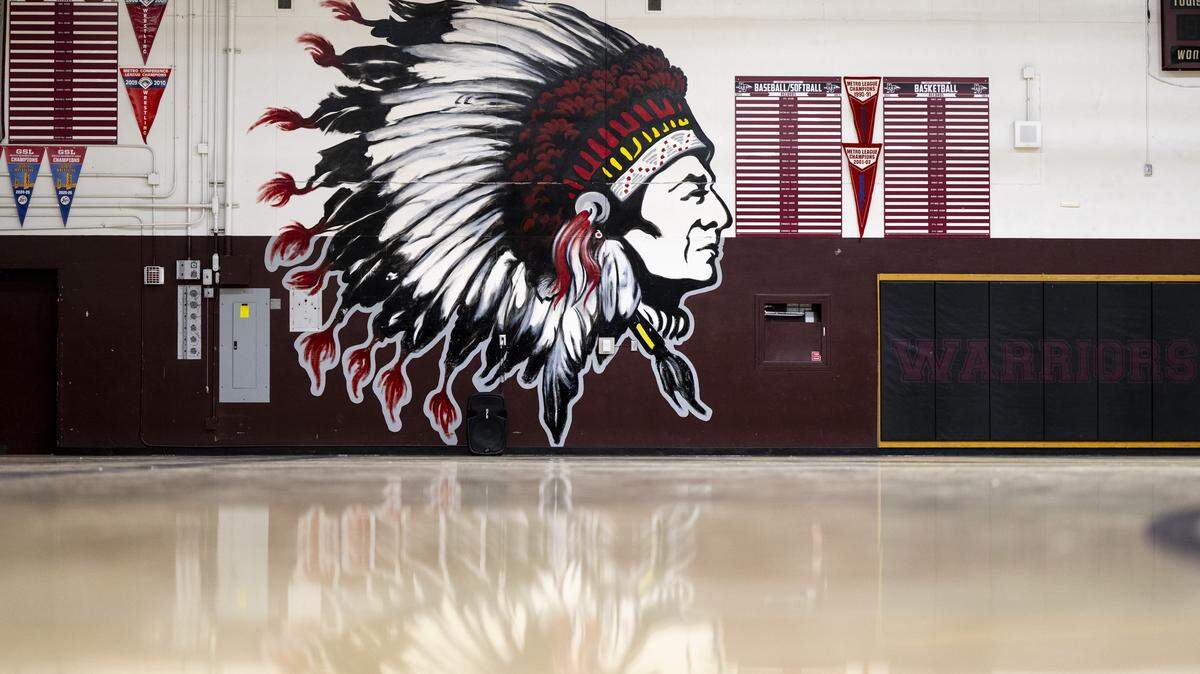
Recently, the Sacramento City Unified School District moved to change the mascot at Hiram Johnson High School, which has long been known as the Warriors. For decades, the school’s logo featured a stereotypical Native American man in a war bonnet — a sacred symbol for Plains Indian Nations. Though the official logo was updated to an arrow, a feather, and the school’s initials, the original imagery lives on in a gymnasium mural, serving as a constant reminder of disrespect to Indigenous communities.
Growing up in Tennessee, I turned to the Atlanta Braves for my baseball fix. As a kid, I idolized players like Andruw and Chipper Jones. At games, I joined thousands in the crowd as we chopped our arms in the so-called “Tomahawk Chop,” imitating a Native American chant without understanding the harm it caused or the fact that there’s no connection to Native Americans and the baseball team.
Even now, the Braves logo still features a tomahawk, and the chant continues as a beloved fan tradition.
People cite tradition when supporting these images that depicting an entire groups people inaccurately.
But the question remains: Is there a right way for schools or teams to use Indigenous figures in sports?
The controversy at Hiram Johnson isn’t isolated—across the country, institutions are grappling with how to reconcile tradition and respect. To understand this complexity, it helps to look at another example: Florida State University.
The right way?
As a college football fan in the South, I’ve long been familiar with the Florida State Seminoles, the originators of the war chant and chop.
The FSU football tradition features prominent Seminole leader Osceola and his horse Renegade, symbols that represent the tribe’s heritage and are central to pregame rituals.
What makes this use of Native American imagery different is FSU’s partnership with the Seminole Tribe of Florida. The university works closely with the Tribe, ensuring every aspect of the tradition—from the regalia to the portrayal of Osceola—is respectful. Osceola and Renegade are not mascots, but symbols used only at football games.
The Tribe’s approval and involvement set FSU apart from schools that use Native American imagery without consent or sensitivity.
But even with tribal approval, controversy remains. The student portraying Osceola does not need to be of Seminole or Native ancestry.
They prompt important questions: Who gets to decide how a culture is depicted? Can tradition justify imagery that would otherwise be insensitive? At Hiram Johnson High, the answer has been clear — when Native people say a mascot is harmful, it’s time for change. In the case of FSU, ongoing dialogue and authentic partnership have made their tradition a living example of respect, rather than caricature.
The contrasting stories of Hiram Johnson and Florida State show that context, consultation, and respect matter. Institutions must listen to those whose cultures are represented and ensure all traditions reflect dignity and inclusion.
Removing the harmful logos at Hiram Johnson is the obvious, necessary step. Our society is finally questioning old ideas of what’s “brave” or “honorable” and confronting racial stereotypes in all corners of public life—even when it means letting go of long-standing traditions.