
As young Democrats rise in California, their party works to undermine them | Opinion
By 2028, Baby Boomers and Generation X will be old news. Influential cohorts born between the end of World War II and the early 1980s, they have dominated American culture but will soon be in the minority of voters in the next presidential election. Whether the Democratic Party nationally or in California acknowledge this, and right now they don’t, it’s still true.
According to the Brookings Institute, and other studies, people under the age of 45 will be the majority of voters in 2028. That means Millenials and Generation Z, cohorts born from the early 1980s to roughly 2010, can no longer be ignored by political parties who view them as “wacky” kids.
These kids are grown up, they think differently, and they don’t see why they need to wait for needed change.
Zohran Mamdani, a 34-year-old openly socialist New York City Mayor, is sending a powerful signal to millions of Americans that they are not crazy for wanting bold actions and policies to better our nation and state.
The numbers tell the story: 73% of Americans now say the affordability of health care is a very big problem, according to Pew Research. Inflation is battering two-thirds of the country, and concern over the deficit is at a new high. These aren’t abstract debates—they’re the realities shaping our daily lives.
On Israel and Palestine, what was once unspeakable in mainstream politics — questioning unwavering support for Israel — is now common. According to Pew, 60% of U.S. adults now view Israel unfavorably, and the majority of Americans under 50 in both parties rate both Israel and Netanyahu negatively. The old taboos are falling, and progressives led the way.
The old ways are failing. Universal healthcare, student debt cancellation, real action on inequality—has evolved from “wacky” to common sense. It’s not that the mainstream caught up with the left; it’s that the nation’s crises will force everyone else to catch up.
But in California, the most progressive of states, the Democratic Party hasn’t gotten the memo.
In February, the California Democratic Party closed ranks and endorsed tired establishment candidates over the next generation of leaders. This despite the fact that California is home to three congressional leaders over the age of 80 who are seeking re-election this year: Doris Matsui of Sacramento, Maxine Waters of Los Angeles and John Garamendi of Solano County.
Rep. Mike Thompson, D-St. Helena, is 74, and seeking his 15th term, and Rep. Brad Sherman of the San Fernando Valley, 71, is running for his 16th term.
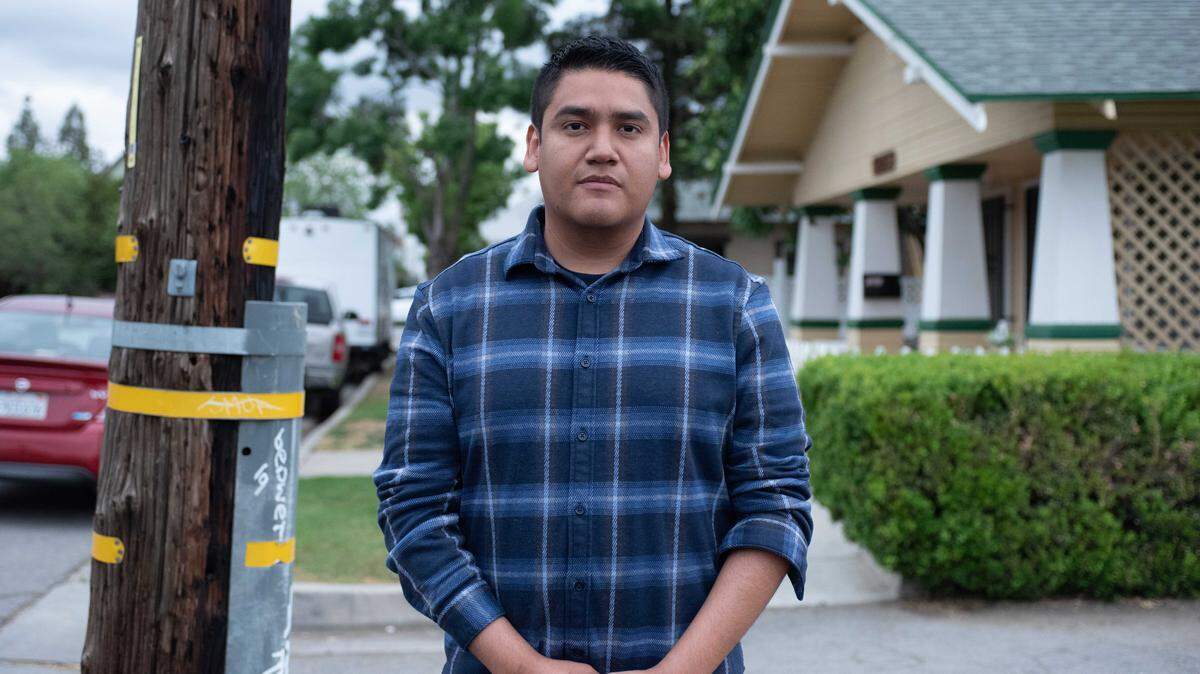
Shut out for endorsements were Jake Levine, 41, who is challenging Sherman. Mai Vang, a Sacramento city councilmber, who is also 41 and is challenging Matsui. And Randy Villegas, a 30-year-old college professor, running for California’s 22n Congressional District south of Fresno has also been treated like an uninvited intruder wthin the Democratic Party tent.
Fighting for a better way
When Villegas decided to run, he was warned not to appear too one-sided.
“I had political consultants and some political insiders who were talking to me about things like, ‘hey, you shouldn’t say Medicare for all, because you don’t want to commit yourself to any policy positions, you might get attacked for that.’ And in my head, I was thinking to myself what are you talking about? How are people going to know what I stand for if I don’t say what I stand for, right?
Villegas hasn’t shied away from progressive stances, including his unapologetic stance on Gaza. For him, the normalization of progressive politics is a direct result of economic turmoil and widespread frustration.
“People are recognizing across the political spectrum,” Villegas said,” it is the billionaires, it is the corporate interest who are rigging the economy, making life hell for everybody on the ground, regardless of their partisan preferences.”
At some point, progressives will lead
Villegas describes the essence that drives younger progressive like him.
“In the words of Dr. Martin Luther King, call it democracy, call it democratic socialism, call it whatever you want to call it, but there must be a better distribution of wealth for all of God’s children in this country.”
Slowly but surely, and certainly not willingly, the American political stage has given space to progressive views because the people are largely fed up with how this country is being run. Too much focus on
Whether Villegas and others win in November is beside the point. The real victory is that Americans are finally confronting the rot in our politics and demanding a government that works for them.
Villegas and other progressives like Mai Vang are proving that Democrats can’t ignore their platforms, nor the people that support them.
Progressives are no longer knocking — they’re inside, and they are demanding change.
This story was originally published May 21, 2026 at 11:00 AM.