California lawmaker stops bill blurring lines between minor and major sex offenses | Opinion
Urinating in public should perhaps prompt you to rethink your drinking habits — but it shouldn’t stop you from having a career in public office years later.
That’s because in America, voters, not legislators, should get to decide when someone deserves another chance.
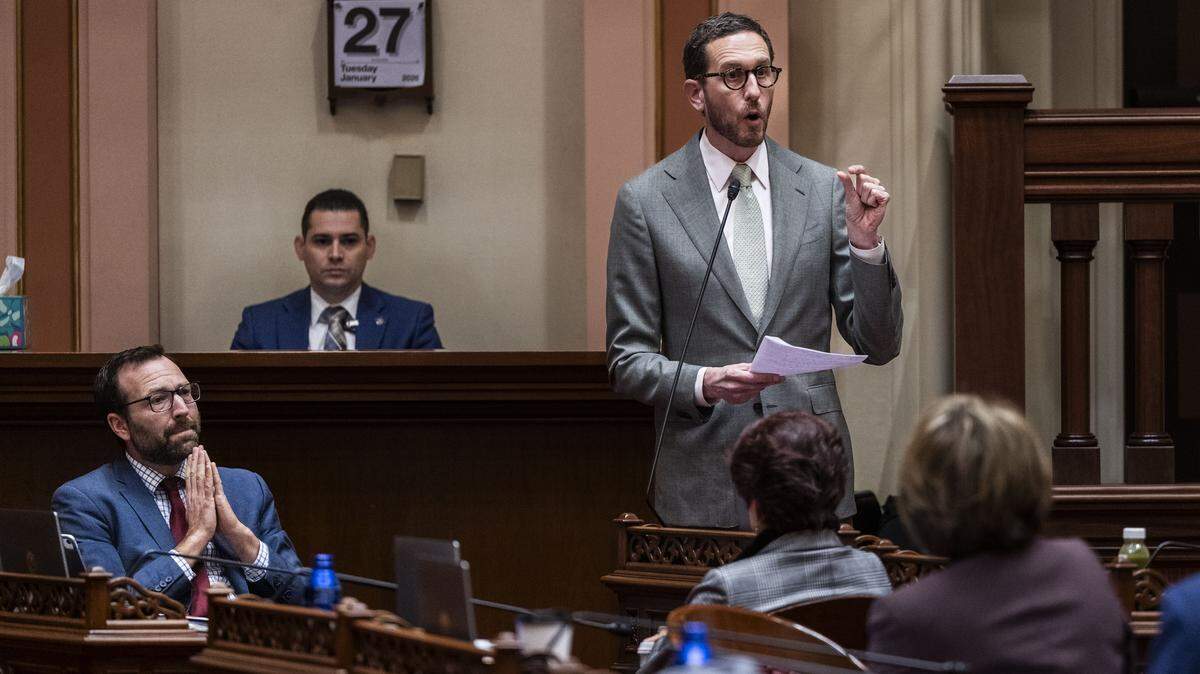
A proposed law had sought to prevent anyone who has been on the California Sex Offender Registry from running for public office. Yet again, one Democrat held the line preventing government overreach: State Sen. Scott Wiener of San Francisco.
On Tuesday, the Senate Elections Committee was considering Assembly Bill 2753 when it was shelved because its author — Sen. Esmeralda Soria, D-Fresno — refused to accept an amendment that would have restricted the ban only to the worst offenders on the registry.
Wiener, chair of the committee, recommended a ‘no’ vote and the bill died.
The committee then advanced Assembly Bill 2691, by Assemblymember Dawn Addis, D-Morro Bay, prohibiting people convicted of certain felony convictions, including sexual assault and human trafficking, from running for office.
Predictably, the decision caused a ruckus, both inside the Capitol and out.
But to understand the issue, you need to first understand the nuance of California’s three-tier sex offender registry. You also need to know that the entire system is woefully broken.
In California, the lowest tier of the state’s sex offender list is too often abused by prosecutors who tack on misdemeanors and nonviolent, low-level charges as part of plea deals that make it easier for law enforcement to track people and pile on punitive requirements.
Painting low-level offenses with the brush of “sex offender” is a damaging misnomer that seriously and permanently upends lives.
Of the three tiers that require public registration with the state, a Tier 1 offender could have been placed on the list offenses such as inappropriate contact in cases that didn’t involve violence or coercion. Other Tier 1 offenses incluce indecent exposure and urinating in public.
Tier 2 crimes are more serious and include (but are not limited to) charges of incest, oral copulation or penetration with a foreign object.
Tier 3 offenders, whose names everyone can agree should never see the ink of a ballot, are people whose crimes are so serious they are required to register as a sex offender for life. They can never petition to have their names removed. Offenders in this tier have been found guilty of crimes such as felony possession of child pornography, pimping a minor and many cases of rape.
Again, people on the Tier 1 offender list are not rapists or pedophiles. Yes — they deserved to be punished, but not for life. Lumping them in with the likes of Tier 3, or even Tier 2, would ruin their lives forever.
These two lower tiers are already given the opportunity to clear their criminal history, as they are eligible to petition the court for removal from the sex offender registry, though that process is long, costly and overly complicated.
Americans who have completed their punishment should not be permanently barred from civic participation, and any bill that attempts to remove that right deserves to die in committee. Permanent civic exclusion must be reserved for the worst crimes.
Wiener’s request to amend the bill was a common-sense stance that his fellow Democratic legislators should have rallied behind. And yet, I fear the only narrative anyone will hear will be “exemptions for sex offenders,” a rallying cry too often pushed by the Republican caucus and Democrats in law enforcement. It is also pushed by those who find it less mentally taxing to debate feelings rather than facts.
Thank God California still has some legislators willing to defend unpopular constitutional rights — not just what makes for an easy soundbite.