
The World Cup was the staycation that North America desperately needed | Opinion

It doesn’t matter who wins. The World Cup has been the staycation that North America has desperately needed from its own drama.
Gone for a few glorious weeks was the sense that Canadians are increasingly loathing the United States, as our president sees our sovereign neighbor as his 51st state to be taxed with high tariffs in the meantime.
Gone were the tensions with Mexico, long a vital source of immigrants who do jobs many of us simply won’t do.
In their place, game after game, stadium after stadium, city after magnificent city, we have seen unity. The three big countries of North America remain as connected, deep down, as ever, despite our short-term, self-manufactured differences.
Geography forever connects us. And when we find common purpose, we can still be good neighbors.
Our cultures have been reflected in our stadiums and have seamlessly complemented one another as the three countries have co-hosted these games.
North America’s greatest soccer cathedral resides in the giant mountain valley that is Mexico City. There, a perfect oval stadium known as the Azteca hosted the first game, Mexico winning and igniting dreams of a first national championship. Estadio Azteca is 60 years old and will never qualify for Medicare. Even on a television screen, the stadium appears ageless, sacred ground. It exudes Mexico’s pride. There’s nothing like it on this side of the border.
Here, the U.S. was no slouch as a co-host. Despite our global tensions, particularly with Europe, tens of thousands chose to cross the Atlantic. A massive contingent from Scotland, for example, descended upon Boston and began drinking taverns dry, exposing a glaring weakness in the U.S. economy’s supply chain. The Scots then relocated from a depleted Boston to Miami, where the wilting heat finally got the best of the country’s spirited team.
To the rest of the world, the U.S. brought to the games a seemingly endless array of modern stadiums. The crown jewel without question was California’s Sofi Stadium in Inglewood, the most expensive stadium ever built anywhere at $5 billion. There, with its seemingly endless tiers of stands and a video screen that circles the structure, the United States soccer team played arguably its best game in history. On June 12, we stunned Paraguay 4-1 with a speed and dominance that foreshadowed a march into the Cup’s knockout stage.
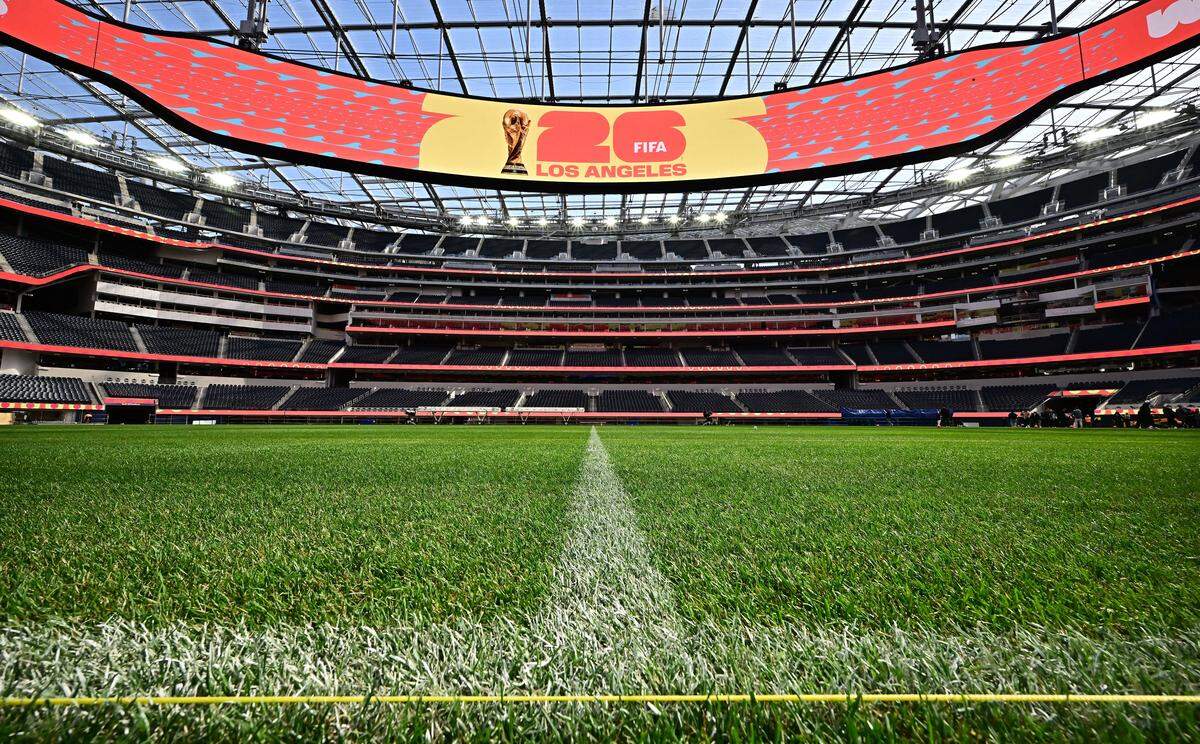
Who could tell these stadiums weren’t built primarily for soccer? In Seattle’s Pioneer Square, Lumen Field — an open-air stadium with partial roofs that magnify the noise — was designed for American football and gridiron intimidation. Yet Lumen never seemed more magical, more intense, than on June 19, when the U.S. shut out the Australians 2-0, a drubbing that caught the soccer world’s attention.
Canada proved to be the gracious grown-up of the continent, particularly the games in Vancouver. They were played the multipurpose stadium known as BC Place at a site that showcased the city’s beauty and urban dimensions, right at the edge of a Pacific Ocean inlet known as False Creek and between Chinatown and downtown.
Soccer in this setting left no doubt how this Canadian city is a gateway to Asia like no other. It is also where the Canadian team notched its first win in World Cup history, trouncing Qatar 6-0.
All the host teams were gracious to a fault, ultimately losing on what soccer calls the pitch — the field of play. But along the way, the teams captured the hearts and hopes of their respective countries, all salivating with initial tastes of victory, a vulnerable human condition that can lead to a lifelong addiction to the game.
The World Cup can’t return to North America soon enough.
Who knows? Maybe the hangover from this wildly successful collaboration will linger for a while. It will be hard to ignore how we are so much stronger together than apart.
Each country has flaws. Mexico, its drug lords. The U.S., racism and income inequality. Canada, its winter weather and funny English accent. Politics have manufactured our conflicts. Imagine if the teamwork our countries showed in soccer were applied in real life.