
Sacramento’s appeals court must be reformed. Some cases go undecided for as long as 7 years
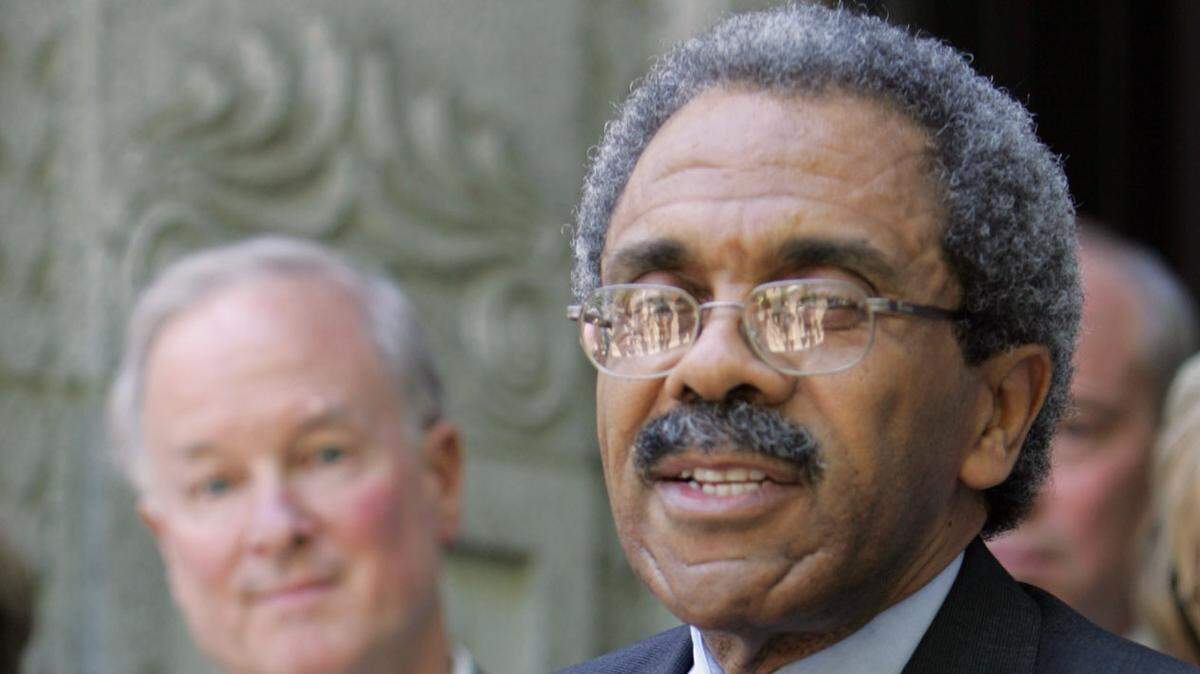
The 3rd District Court of Appeal in Sacramento is one of the busiest courthouses in California. Yet even with a track record for filing a high volume of decisions, some of the court’s justices allow cases to languish for as long as seven years — an extraordinary failure that causes untold harm to the people trapped in the backlog.
The court is notorious within California’s legal circles, according to Bay Area attorney Jon Eisenberg, a well-known appellate lawyer confronting the Sacramento court in the twilight of his career. In numerous criminal cases, the court’s delays denied people their freedom when prison sentences were later reduced or enhancements for additional prison time were struck down. One man was forced to pay over $600,000 in monthly child and spousal support and legal fees before a justice reversed the requirement over three years later. In one injury case, a widow appeared in court because her elderly husband died before Sacramento’s appellate justices reversed a lower court ruling more than two years later.
Eisenberg has identified hundreds of cases since 2018 where three Sacramento justices in particular — Vance Raye, Cole Blease and William Murray, Jr. — allowed inexcusable delays on their decisions. He took an unusual step in January and filed a complaint with the independent watchdog for California’s courts, the Commission on Judicial Performance. Eisenberg accused the three appellate justices of systematically delaying opinions for years, long after they have been fully briefed on the arguments of a case.
Over the last three years, the justices had been fully briefed on at least 150 cases and issuing a ruling was all that remained. Instead, they took anywhere from two to seven years to submit their opinion and complete the appellate court process. Under national standards created by judges, court administrators, clerks and attorneys, 95% of appellate cases should be resolved within one year. In California, the average appellate decision can take as long as 18 months.
For litigants to wait four or five years for a decision after a justice was fully briefed is a “terrible thing,” retired California appellate justice Gary Strankman told the Daily Journal in February.
“It’s obscene, actually,” Strankman said.
Gregory Dresser, director and chief counsel of the Commission on Judicial Performance, declined to comment or confirm that an investigation was launched. Complaints are confidential, he said, as are some forms of disciplinary action if the commission decides it’s warranted.
State court spokesman Cathal Conneely said the three justices could not comment because of confidentiality rules for complaints filed with the commission.
Still, it’s clear that Sacramento’s appellate court is overburdened. It covers 23 Northern California county courts, which account for over 39% of the state’s trial court system. Each of its 11 authorized justices have 36% more cases than the statewide average.
But over the last decade, productivity has sharply declined. According to Judicial Council of California data, the average number of Sacramento’s majority opinions per justice dropped by more than 35% since 2009-10 — compared to 19% statewide.
One justice, Murray, has been the most scrutinized in legal newspapers and journals since Eisenberg filed his complaint. Murray recorded an annual average of just 37 opinions since 2018. State averages ranged from 84 to 90 in recent years. Murray, apparently responding to pressure, has written 40 opinions since late January. One case was an appeal of a probation sentence filed in December 2011.
The 3rd District court is in desperate need of reform. Gov. Gavin Newsom could start by tending to one of his core duties as California’s chief executive and fill the long-vacant 11th seat on the bench.
It’s also been 21 years since the Legislature expanded the bench to 11 justices. Given Sacramento’s massive workload, California’s lawmakers should consider adding a 12th.
In the meantime, California’s Chief Justice Tani Cantil-Sakauye could help by lightening the 3rd District’s caseload. Last month, Eisenberg and Strankman asked her to transfer cases to a less busy district, but the state Supreme Court declined. Moving cases is a routine request from presiding justices where there is a significant backlog in their respective court.
Raye, Sacramento’s presiding justice, has clearly grown comfortable with the long pending delays in his court since he has never asked the Supreme Court to transfer cases. Cantil-Sakauye must intervene and ensure the Sacramento court is fulfilling its constitutional mandate to deliver equal justice to California.
This story was originally published May 3, 2021 at 5:00 AM.