
If droughts continue, California can’t rely on hydroelectricity. But there’s another solution
California’s energy stock is in a uniquely California conundrum. Intense drought conditions are exhausting the state’s supply of hydroelectricity, which begs the question of whether we can rely on water-generated power long-term in a hotter and drier California.
In 2019, during a non-drought year, water provided 17% of the state’s power, according to the California Energy Commission. In 2015, during the throes of the last drought, it generated 6%.
This year’s outlook for hydroelectric power is already grim. Hydro supplies are down 40%, according to Bloomberg researchers. The Bee’s Dale Kasler reported last week that historically-low water levels at Lake Oroville, one of California’s largest reservoirs, could trigger the first closure of the Edward Hyatt Power Plant since it was built in the 1960s.
A reliable power supply is critical to help Californians avoid the health dangers posed by extreme temperatures. The past week drove that reality home. A record-setting heat wave prompted the state’s grid manager, the California Independent System Operator, to issue Flex Alerts over consecutive days. For the second time in less than a year, Californians were asked to conserve electricity.
Thankfully there weren’t any rolling blackouts this time. But even with greater preparation and more storage, nothing is guaranteed.
High temperatures are returning again this week — with the hottest months still ahead — and that means the demand on electricity will keep spiking.
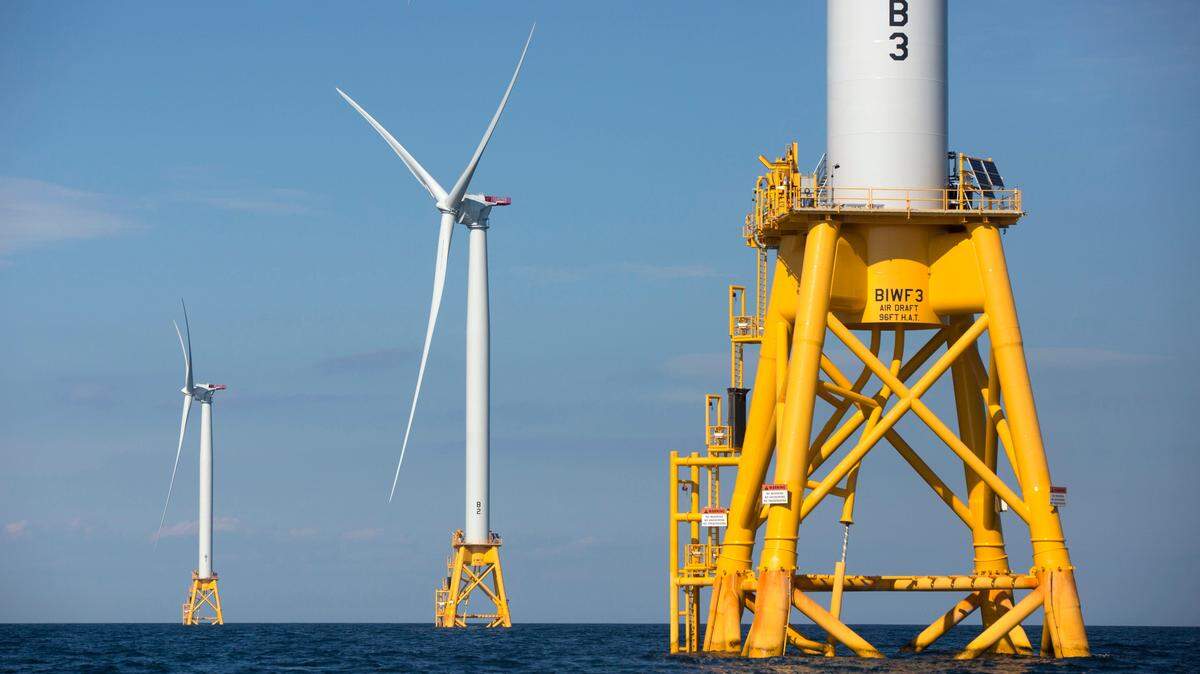
The answer to our problems is not in rivers or lakes but in the ocean. Last month, the Biden administration announced plans to build roughly 380 wind turbines in federal waters off the California coast. Eventually, the turbines will generate 4,600 megawatts — enough to power 1.6 million homes. This was a breakthrough for California, where progress has been slow on offshore wind development, and nonrenewable sources like natural gas still provide most of our power.
Under the federal plan, wind power projects would be allowed north of Morro Bay and west of Humboldt Bay. The developments would be part of a larger goal by the White House to create 30,000 megawatts of offshore wind by the end of the decade.
The benefits of ocean wind energy are irrefutable: Wind turbines do not emit greenhouse gases; they have nearly no environmental footprint; and they harness one of California’s most abundant natural resources. Earlier this year, a report from several state agencies concluded that the cheapest path to 100% clean energy would involve building capacity for 10,000 megawatts of offshore wind.
This is California’s energy future. But getting there will not be easy.
As the San Luis Obispo Tribune reported this week, offshore wind developments could imperil the livelihoods of California fishermen. The Pacific coastline drops off quickly along the continental shelf, which means the only viable option for California is floating turbines tethered to the ocean floor. Gov. Gavin Newsom said they would build at least 20 miles offshore, but that could vastly diminish fishing grounds.
Federal lawmakers, including Rep. Salud Carbajal, D-Santa Barbara, and Rep. Jared Huffman, D-San Rafael, must ensure that fishermen within their districts are included in this process. California needs local supporters, not adversaries.
State leaders also have a role to play. Newsom proposed $20 million this year to fund research, public outreach and port upgrades that could support the development of offshore wind farms. It’s imperative that California lawmakers include his proposal in the final budget. Since most offshore wind studies have been focused on the East Coast and Europe — where conditions are drastically different — researchers need adequate support so this undertaking can stave off potential lawsuits and opposition campaigns.
California’s pursuit of renewable energy must prioritize reliable sources. As climate change worsens drought conditions and dries up our hydro supply, it’s critical that we embrace what we can rely on. Harnessing wind power is one of the smartest and most sustainable methods we have.
This story was originally published June 23, 2021 at 5:00 AM.