
Cal Fire chief has not minced words during wildfire season. We must heed his grim warnings
As the Caldor Fire made its terrifying advance through the timber-heavy canyons toward South Lake Tahoe on Monday, the head of California’s firefighting agency issued a grim warning.
“You’ve heard me say this before: Every acre can and will burn someday in this state,” said Cal Fire Director Thom Porter, the state’s fire chief. “Be ready now.”
Porter has been saying this for months but too many people are ignoring him even amid evacuation warnings and as the worst fires in state history approach them.
In early May Porter made headlines during wildfire preparedness week, pleading with property owners to be more proactive, to evacuate sooner, and to stop defying evacuation orders.
That was over two months before the monstrous Dixie Fire ignited above the Cresta Dam in Feather River Canyon and spread across five different counties. It’s now the second-largest wildfire in state history and has devastated communities in the Warner and Indian valleys.
Porter’s comments also came over three months before the Caldor Fire broke out near Grizzly Flats. Within two weeks the blaze tore into the Tahoe Basin. This week, we witnessed large-scale evacuations of South Lake Tahoe, the gateway community to one of California’s most iconic landscapes. The nearly 192,000-acre fire now threatens over 33,000 structures.
Porter’s warning is starting to feel more like an ominous premonition.
Last year was the most destructive wildfire season in state history, with 4.1 million acres burned. We’re on pace to shatter that record this year.
California has never experienced this type of fire activity. Twice in a single month, these two wildfires have burned from one side of Sierra to the other. That had never happened until the Dixie and Caldor fires erupted.
The contentious debate over prevention and forest management practices will rage on after this fire season ends. What is important now is heeding the message Porter has been sending all summer: Every Californian needs to be ready for fire.
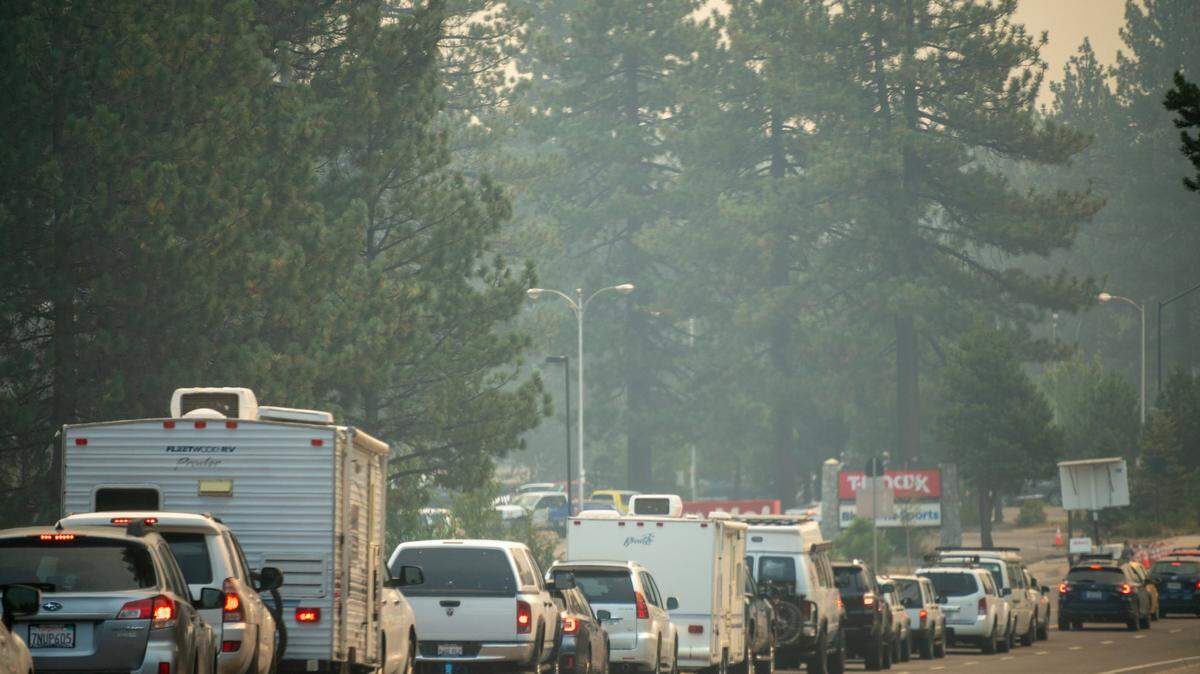
This week, we saw the crush of residents leaving South Lake Tahoe as thousands of cars packed the mountain roads headed east toward the Nevada stateline because the westward route on Highway 50 was unsafe. Many drivers didn’t move for hours.
It’s critical that residents in fire-prone areas don’t wait for the evacuation order to gather their belongings and leave. Porter stressed this on Monday.
“‘Warning’ doesn’t mean you have to stick around waiting for the order,” he said. “You can go during the warning. You can go if you’re sucking smoke … and you’re in the smoke for days.”
Hours after evacuations were ordered, Bee reporters were easily able to find some South Lake Tahoe residents creating perimeters around their homes at the last second, or hosing down their property. Some likely remain there even today, ignoring the order under the reckless assumption that they can defend their home if the fire attacks.
It’s usually under-reported, but firefighters face this misguided mentality during every major incident. That’s why officials frequently stress the importance of following orders. Having to save a life unexpectedly can prevent crews from the important work of battling back the fire itself.
There is no shortage of resources and information on how to harden homes and prepare to-go bags, whether it’s from an official agency or a community organization. Panels are convened across the state and throughout the year, and attending has become even easier during the pandemic with virtual presentations now the norm.
But preparing for wildfires when a fast-moving fire is already on the doorstep is reckless and dangerous, and undermines what firefighters are trying to accomplish. This should have been done months ago.
Every California resident needs to listen to our state fire chief. Every acre in this state could burn, and we need to be prepare and act under that assumption so we’re ready when that day arrives.
BEHIND THE STORY
MOREWhat are editorials, and who writes them?
Editorials represent the collective opinion of The Sacramento Bee Editorial Board.
They do not reflect the individual opinions of board members or the views of Bee reporters in the news section. Bee reporters do not participate in editorial board deliberations or weigh in on board decisions. The same rules apply to our sister publications, The Modesto Bee, Fresno Bee, Merced Sun-Star and San Luis Obispo Tribune.
In Sacramento, our board includes Bee Executive Editor Colleen McCain Nelson, McClatchy California Opinion Editor Marcos Breton, opinion writers Robin Epley, Tom Philp, LeBron Antonio Hill and op-ed editor Hannah Holzer.
In Fresno and Merced, the board includes Central Valley Executive Editor Don Blount, Senior Editor Christopher Kirkpatrick, Opinion Editor Juan Esparza Loera, and opinion writer Tad Weber.
In Modesto, the board includes Senior Editor Carlos Virgen and in San Luis Obispo, it includes Opinion Editor Stephanie Finucane.
We base our opinions on reporting by our colleagues in the news section, and our own reporting and interviews. Our members attend public meetings, call people and follow-up on story ideas from readers just as news reporters do. Unlike objective reporters, we share our judgments and state clearly what we think should happen based on our knowledge.
Read more by clicking the arrow in the upper right.
Tell us what you think
You may or may not agree with our perspective. We believe disagreement is healthy and necessary for a functioning democracy. If you would like to share your own views on events important to the Sacramento region, you may write a letter to the editor (150 words or less) using this form, or email an op-ed (650-750 words) to opinion@sacbee.com. Due to a high volume of submissions, we are not able to publish everything we receive.
Support The Sacramento Bee
These conversations are important for our community. Keep the conversation going by supporting The Sacramento Bee. Subscribe here.
This story was originally published September 1, 2021 at 5:00 AM.