
Why it’s time for California to require COVID vaccination of eligible schoolchildren
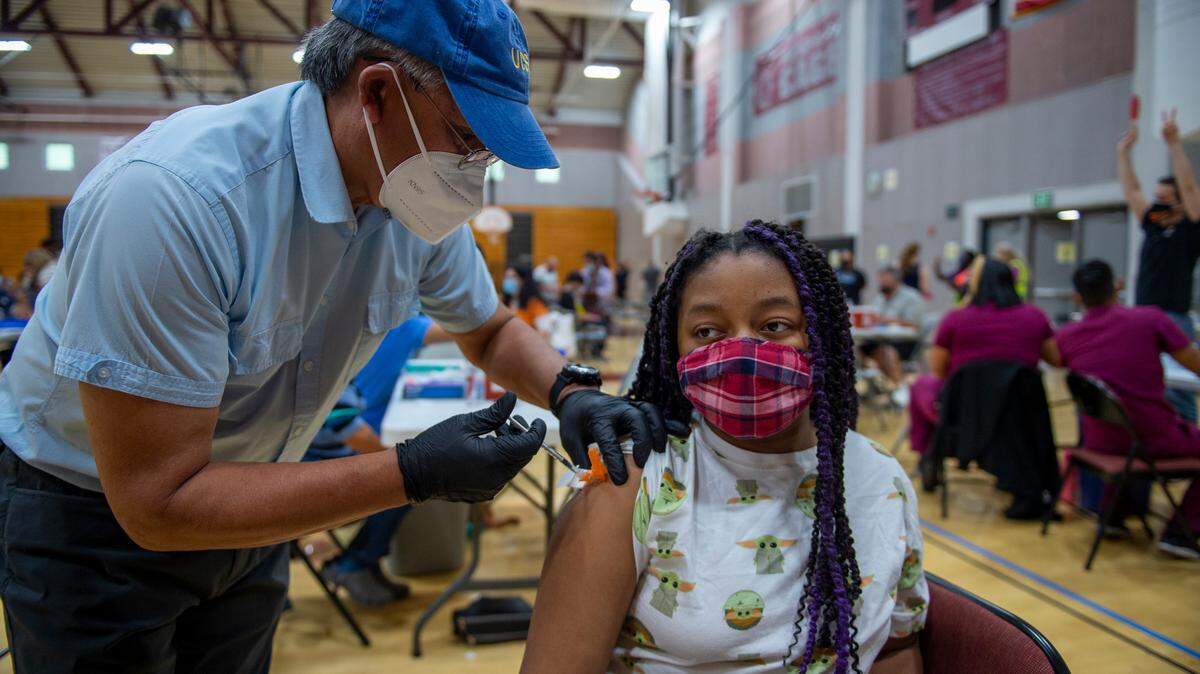
More than a year ago, city and county officials led California in imposing the first precautionary shutdowns to stem the spread of the novel coronavirus. Now a few school districts are showing the way toward protecting more of the state’s children and families.
Public schools in Oakland and one of its suburbs last week became the first in Northern California to require vaccination against COVID-19 for eligible students, joining the state’s largest district, Los Angeles Unified. Sacramento City Unified’s school board debated such a mandate the week before, and the city teachers’ union has thrown its support behind the idea.
Dr. Mark Ghaly, Gov. Gavin Newsom’s secretary of health and human services, told reporters last week that the administration is “watching the experience in Los Angeles” and “understanding what it means for students and families alike, staff as well, and watching as other counties consider the same.” But while he said a “conversation is happening” regarding a statewide mandate, he added that “no definitive action or decision is being made at the moment.”
The moment for definitive action has arrived. While school boards’ power to make educational policy for their communities is a cherished one, vaccination shouldn’t be a question of local choice. The state Legislature has taken great pains in recent years to shore up the state’s childhood vaccination requirements and eliminate unjustified exemptions from them. For the safety of students, staff, families and communities, it’s time for California to add COVID to the already extensive list of vaccinations required of the state’s schoolchildren.
While the coronavirus is not typically as dangerous to younger people as it is to older adults, over a fifth of new cases are emerging among children, more of whom have been hospitalized with COVID since the advent of the delta variant. The Bee on Sunday documented the far-reaching repercussions of school outbreaks in a small Fresno County community, some of which unfolded among children who were old enough to have been vaccinated.
The Food and Drug Administration has authorized the Pfizer-BioNTech vaccine for children 12 and older, and the companies recently announced data that could lead the agency to clear the shots for children as young as 5 in the coming weeks or months.
While schools have not been a significant engine of the pandemic so far, we should do everything we can to prevent them from contributing to the spread of the virus, particularly while many students remain ineligible for inoculation. Maximizing the number of protected students can ensure that more schools avoid outbreaks, stay open and keep providing the crucial in-person service that too many of California’s children have already been deprived of for too long.
Imposing a clear, statewide student vaccination mandate also conforms neatly to Newsom’s argument that his decisive victory over the recall attempt reflected his science-based management of the pandemic.
For context on the question of requiring COVID vaccination, it’s useful to review the long list of diseases for which inoculations are already required of children under state law: diphtheria, hepatitis B, influenza, measles, mumps, pertussis (whooping cough), polio, rubella, tetanus and varicella (chickenpox). In most of those cases, multiple shots and boosters are needed to enter kindergarten — or even preschool or day care — and continue through grade school.
Unlike COVID, some of those deadly and dangerous diseases have become rare or even nonexistent in everyday American experience, owing entirely to a program of nearly universal vaccination. The state’s first school vaccination mandate was imposed nearly a century ago for smallpox — and lifted decades later after such measures eradicated the disease. With the right rules and leadership, we might have some hope of relegating COVID to the same status.
BEHIND THE STORY
MOREWhat are editorials, and who writes them?
Editorials represent the collective opinion of The Sacramento Bee Editorial Board.
They do not reflect the individual opinions of board members or the views of Bee reporters in the news section. Bee reporters do not participate in editorial board deliberations or weigh in on board decisions. The same rules apply to our sister publications, The Modesto Bee, Fresno Bee, Merced Sun-Star and San Luis Obispo Tribune.
In Sacramento, our board includes Bee Executive Editor Colleen McCain Nelson, McClatchy California Opinion Editor Marcos Breton, opinion writers Robin Epley, Tom Philp, LeBron Antonio Hill and op-ed editor Hannah Holzer.
In Fresno and Merced, the board includes Central Valley Executive Editor Don Blount, Senior Editor Christopher Kirkpatrick, Opinion Editor Juan Esparza Loera, and opinion writer Tad Weber.
In Modesto, the board includes Senior Editor Carlos Virgen and in San Luis Obispo, it includes Opinion Editor Stephanie Finucane.
We base our opinions on reporting by our colleagues in the news section, and our own reporting and interviews. Our members attend public meetings, call people and follow-up on story ideas from readers just as news reporters do. Unlike objective reporters, we share our judgments and state clearly what we think should happen based on our knowledge.
Read more by clicking the arrow in the upper right.
Tell us what you think
You may or may not agree with our perspective. We believe disagreement is healthy and necessary for a functioning democracy. If you would like to share your own views on events important to the Sacramento region, you may write a letter to the editor (150 words or less) using this form, or email an op-ed (650-750 words) to opinion@sacbee.com. Due to a high volume of submissions, we are not able to publish everything we receive.
Support The Sacramento Bee
These conversations are important for our community. Keep the conversation going by supporting The Sacramento Bee. Subscribe here.
This story was originally published September 28, 2021 at 5:00 AM.