
The darkest consequences of Build Back Better’s failure for California and the country
Just two weeks ago, Senate Majority Leader Chuck Schumer was promising to bring home a landmark spending bill addressing climate change and much more by Christmas. Instead Americans have been rudely awakened to stockings full of bituminous West Virginia coal.
That state’s senior senator, Joe Manchin, may have finally buried the bill in the political equivalent of a mine collapse this week. Manchin, the Senate’s most conservative Democrat, announced — where else? — on Fox News that he would team up with the chamber’s 50 Republicans, who represent over 40 million fewer Americans than its 50 Democrats, to kill the ambitious collection of social and infrastructure spending and tax initiatives known as Build Back Better.
The apparent breakdown after months of negotiations between Manchin and the White House could be a dire omen for a presidency at a political low point; a vindication of progressives who warned that their party was surrendering leverage by approving traditional infrastructure spending in a separate, bipartisan bill; a reminder that the Democratic majority in Congress is, particularly in contrast with its popular support, paper-thin; and another triumph for the anti-majoritarian institutions and distortions that allow the country to be run by a minority that skews right and white.
Above all, however, the defeat of the legislation would be a defeat for Californians and our fellow Americans. In contrast to the bipartisan infrastructure legislation focused on repairing and upgrading roads, bridges, transit and other existing national assets, this bill promised to address some of the most neglected and pressing environmental and social problems of the nation and its largest state. The bill House Democrats passed last month includes:
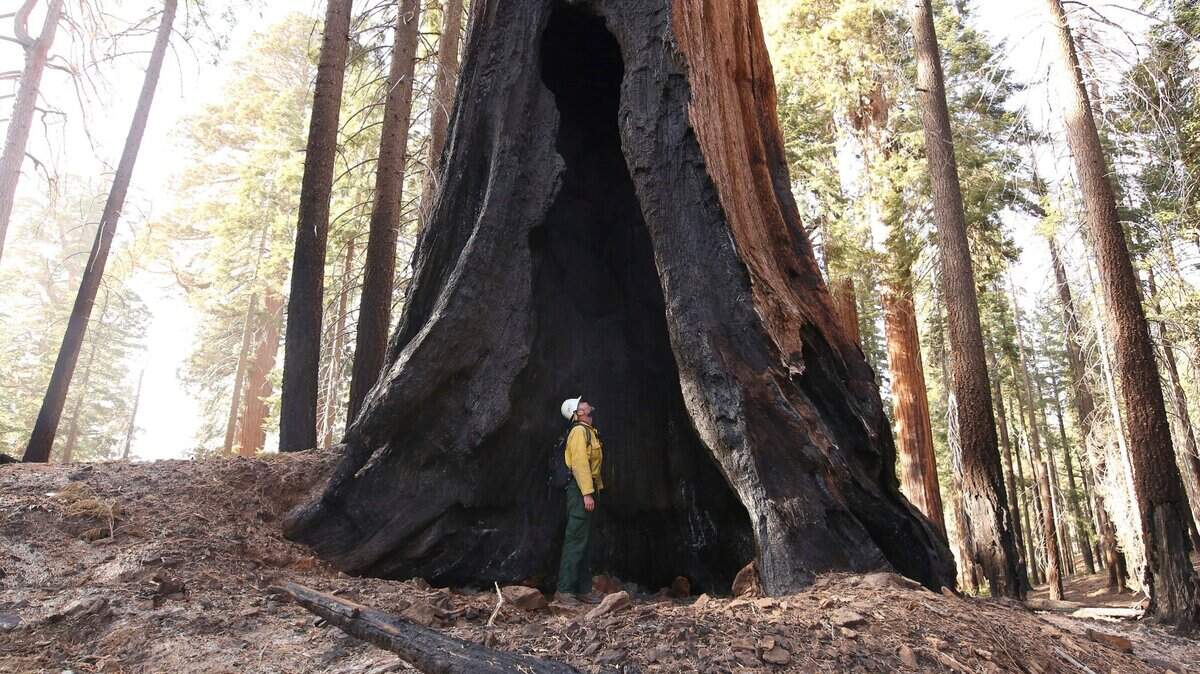
▪ More than half a trillion dollars to address climate change, chiefly through tax breaks for electric vehicles, solar panels and efficient buildings. The importance of such measures hardly needs belaboring in a state where the KNP Complex fire in Sequoia and Kings Canyon national parks — one of a series of climate-worsened wildfires that devastated the state in recent years — wasn’t fully contained until this week, over three months after it started. Gov. Gavin Newsom last year announced a plan last year to require all new vehicles sold in the state to be electric within 15 years, noting that transportation causes more than half California’s climate pollution.
▪ A $200 billion, one-year extension of the child tax credit expansion created by the COVID relief and stimulus measure signed by Biden in March. Researchers at Columbia found that the first distribution of the expanded credit, which will expire without further legislation, reduced the nation’s childhood poverty by 25%. In California, which suffers from the nation’s highest child poverty rate, ending the expansion would mean 1.7 million children are either returned to or plunged deeper into poverty.
▪ An additional $380 billion for universal prekindergarten for 3- and 4-year-olds as well as free and subsidized child care depending on family income. Newsom and the Legislature included $2.7 billion in the current state budget to phase in transitional kindergarten for all the state’s 4-year-olds over the next five years, an initiative championed by Sacramento Assemblyman Kevin McCarty. But that could further destabilize California’s private day care centers and preschools, which stand to lose older children to public schools as a result.
▪ A total of $170 billion for public housing, rent subsidies and affordable housing, the largest such investment in decades. That spending would be particularly important to a state with about a quarter of the nation’s homeless people and one of the lowest supplies of housing per capita.
This is far from an exhaustive account of a bill that also encompasses funding for health coverage, elder care, family leave and immigrant legalization, funded partly by increased taxation of corporations and the wealthy.
But the darkest potential consequence of the bill’s failure would be to help return Congress to the Republicans who, unlike Manchin, feel no apparent responsibility even to pretend to address these problems — or, for that matter, adhere to the principles of democracy.
BEHIND THE STORY
MOREWhat are editorials, and who writes them?
Editorials represent the collective opinion of The Sacramento Bee Editorial Board.
They do not reflect the individual opinions of board members or the views of Bee reporters in the news section. Bee reporters do not participate in editorial board deliberations or weigh in on board decisions. The same rules apply to our sister publications, The Modesto Bee, Fresno Bee, Merced Sun-Star and San Luis Obispo Tribune.
In Sacramento, our board includes Bee Executive Editor Colleen McCain Nelson, McClatchy California Opinion Editor Marcos Breton, opinion writers Robin Epley, Tom Philp, LeBron Antonio Hill and op-ed editor Hannah Holzer.
In Fresno and Merced, the board includes Central Valley Executive Editor Don Blount, Senior Editor Christopher Kirkpatrick, Opinion Editor Juan Esparza Loera, and opinion writer Tad Weber.
In Modesto, the board includes Senior Editor Carlos Virgen and in San Luis Obispo, it includes Opinion Editor Stephanie Finucane.
We base our opinions on reporting by our colleagues in the news section, and our own reporting and interviews. Our members attend public meetings, call people and follow-up on story ideas from readers just as news reporters do. Unlike objective reporters, we share our judgments and state clearly what we think should happen based on our knowledge.
Read more by clicking the arrow in the upper right.
Tell us what you think
You may or may not agree with our perspective. We believe disagreement is healthy and necessary for a functioning democracy. If you would like to share your own views on events important to the Sacramento region, you may write a letter to the editor (150 words or less) using this form, or email an op-ed (650-750 words) to opinion@sacbee.com. Due to a high volume of submissions, we are not able to publish everything we receive.
Support The Sacramento Bee
These conversations are important for our community. Keep the conversation going by supporting The Sacramento Bee. Subscribe here.