
It’s time to finally change the derogatory name of this historic Folsom state park
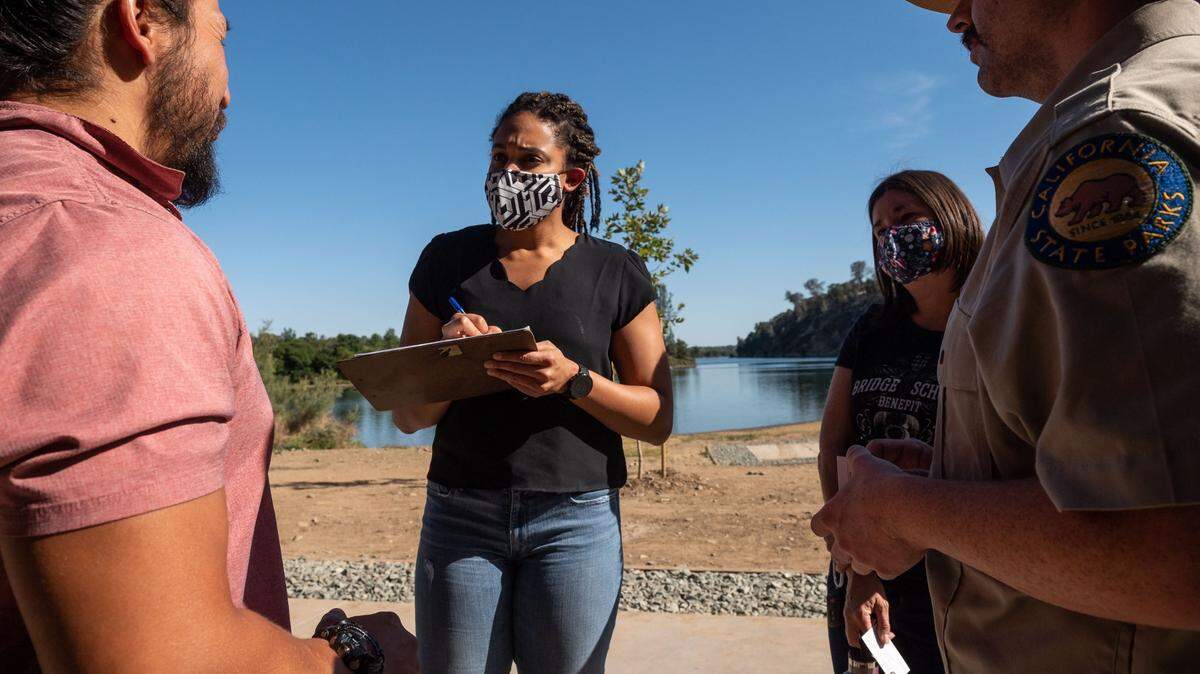
It’s simply unacceptable that a historic site within the Folsom Lake State Recreation Area is still named Negro Bar, an anachronism with roots in a distant past in which racial epithets were not only accepted but also used to christen public places that are supposed to welcome all people.
In 2022, the name Negro Bar no longer makes everyone feel welcome, and, truthfully, that has been the case for years.
On Friday, the California State Park and Recreation Commission will hold a public hearing to consider renaming the day-use area.
We hope it does because it’s long past time to change this name.
In 2018, Phaedra Jones of Stockton happened to drive by a sign for the historic site while working. Shocked and compelled to act, she created an online petition calling for a name change, garnering over 67,800 signatures.
“I couldn’t believe that I had actually seen a sign that read ‘Negro Bar,’ ” Jones wrote. “Maybe because I prefer not to be called a negro in this day and age.”
Jones experienced an emotional and physical reaction to the name. She said she felt uncomfortable every second she was in Folsom, keeping her windows up and checking her car mirrors constantly out of paranoia.
However, some object to renaming the park, claiming it would erase the important history of the area’s Black pioneers. In the early 1800s, the land was owned by Afro-Caribbean businessman William A. Leidesdorff, but it was taken over by Black gold miners after his death. The state park became a successful mining ground for both enslaved and emancipated Black prospectors. It also allowed recently emancipated Black miners to gain wealth and lift themselves out of poverty.
Notably, the Folsom state park initially used the n-word in its title until the federal government ordered that all national parks and sites using the racial slur be changed to “negro” in the 1960s.
Yet “negro” remains an unacceptable epithet in its own rite. As The Bee’s Equity Lab explained last year, “some feel that ‘Negro’ is an offensive word because it’s deemed as a replacement for the n-word” — as evidenced by the federal government’s decision to swap them.
In 2017, the U.S. Board of Geographic Names approved the renaming of Utah’s “Negro Bill Canyon” to “William Grandstaff Canyon,” in honor of the Black man who ran cattle in the area for whom the canyon had previously been pejoratively named. Last year, a federal board approved the renaming of 16 sites in Texas whose names include the word “negro.”
California’s park commission should follow their example.
The commission recommended a temporary renaming until the community can find a new name that “meets both goals of removing the offensive term and recognizing the site’s historical contexts.” The commission also called for additional research to help inform a more long-term naming process as well as expanded programs to improve the site.
The commission should accept these recommendations to better honor the history of the site and ensure that no Folsom resident or visitor feels unwelcome.
BEHIND THE STORY
MOREWhat are editorials, and who writes them?
Editorials represent the collective opinion of The Sacramento Bee Editorial Board.
They do not reflect the individual opinions of board members or the views of Bee reporters in the news section. Bee reporters do not participate in editorial board deliberations or weigh in on board decisions. The same rules apply to our sister publications, The Modesto Bee, Fresno Bee, Merced Sun-Star and San Luis Obispo Tribune.
In Sacramento, our board includes Bee Executive Editor Colleen McCain Nelson, McClatchy California Opinion Editor Marcos Breton, opinion writers Robin Epley, Tom Philp, LeBron Antonio Hill and op-ed editor Hannah Holzer.
In Fresno and Merced, the board includes Central Valley Executive Editor Don Blount, Senior Editor Christopher Kirkpatrick, Opinion Editor Juan Esparza Loera, and opinion writer Tad Weber.
In Modesto, the board includes Senior Editor Carlos Virgen and in San Luis Obispo, it includes Opinion Editor Stephanie Finucane.
We base our opinions on reporting by our colleagues in the news section, and our own reporting and interviews. Our members attend public meetings, call people and follow-up on story ideas from readers just as news reporters do. Unlike objective reporters, we share our judgments and state clearly what we think should happen based on our knowledge.
Read more by clicking the arrow in the upper right.
Tell us what you think
You may or may not agree with our perspective. We believe disagreement is healthy and necessary for a functioning democracy. If you would like to share your own views on events important to the Sacramento region, you may write a letter to the editor (150 words or less) using this form, or email an op-ed (650-750 words) to opinion@sacbee.com. Due to a high volume of submissions, we are not able to publish everything we receive.
Support The Sacramento Bee
These conversations are important for our community. Keep the conversation going by supporting The Sacramento Bee. Subscribe here.
This story was originally published June 16, 2022 at 5:00 AM.