
California’s wildfire smoke season is already here. Are you and your home ready for it?
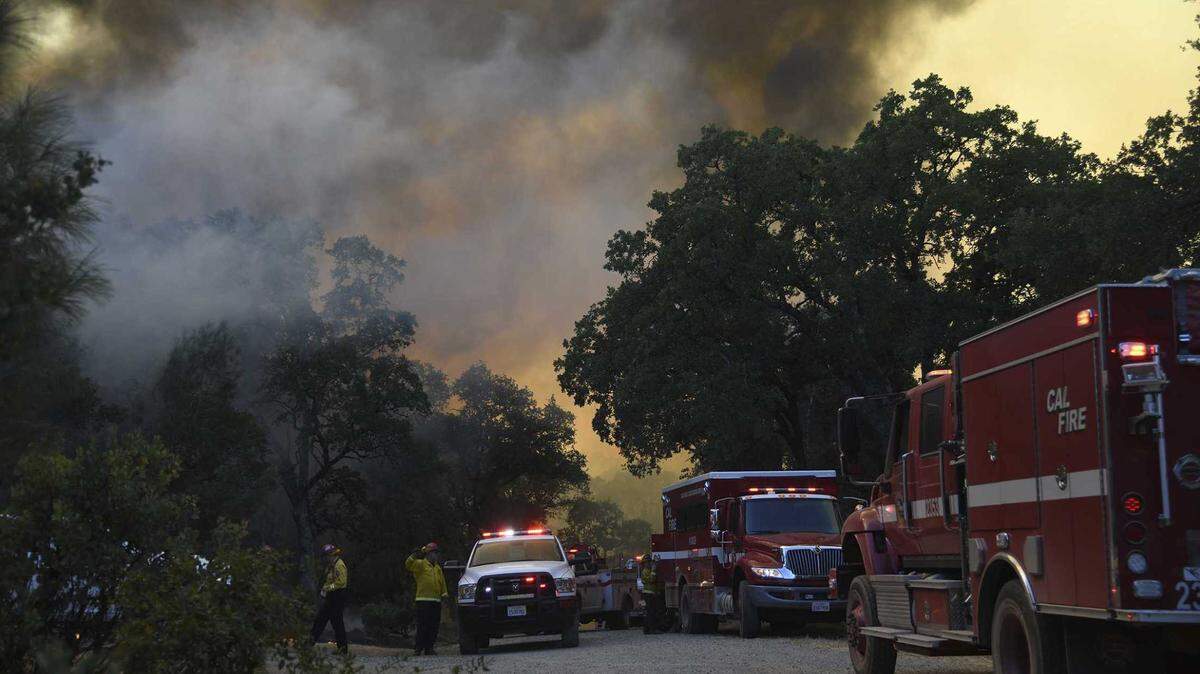
Wildfire season is here, along with its telltale herald: smoke. It darkens the California skies every year, turning our days into orange nights and, ironically, our sunsets into beautiful bursts of color.
The Electra Fire, burning southeast of Sacramento along the Amador-Calaveras county line, has already diminished air quality in the region. The smoke hasn’t yet made its way to Sacramento, but it’s likely one of many more to come this year.
Gone are the days when Californians could afford to be caught off-guard by massive smoke events. Climate change and poorly regulated power monopolies have practically made annual California wildfires a guarantee. It’s up to every Californian to be ready for heavy smoke days.
Even for Californians who have not been particularly susceptible to wildfire smoke, two years of living with COVID has made wildfire smoke’s fine, airborne particulates even more dangerous. A recent study by researchers at Harvard’s School of Public Health found that thousands of COVID cases and deaths in California, Oregon and Washington in 2020 may be attributable to increases in air pollution from wildfire smoke.
Prolonged wildfire smoke exposure can make people more susceptible to respiratory infections such as pneumonia and bronchitis, and recent research suggests this means increased vulnerability to COVID, according to the Washington State Department of Health.
Many of the signs and symptoms of wildfire smoke exposure mimic COVID, including eye, nose and throat irritation, headaches, shortness of breath, tightness in the chest and worsening asthma attacks or respiratory distress.
Californians can mitigate air pollution and respiratory distress by keeping their homes’ indoor air as clean as possible during smoke events, including by using HEPA (“high-efficiency particulate air”) filters or PM2.5 masks (those certified as filtering small particulate matter). Cloth masks won’t block the most harmful smoke particles. The Environmental Protection Agency suggests keeping doors and windows shut, sealing cracks, avoiding burning cigarettes and candles, and refraining from cooking anything that will create smoke indoors.
Homemade filtering devices, such as a HEPA filter (or multiple filters) strapped to the back of a standard box fan, can also help protect a home. Checking air quality during a smoke event can help you prepare accordingly.
Most important, many of us must be prepared for the worst-case scenario, an emergency evacuation. It’s a reality of living in California during climate change.
Many evacuees during the 2018 Camp Fire in Paradise had only minutes to leave their homes. That makes it worthwhile to consider what we would take with us in such an emergency ahead of time.
Preparation for an evacuation is critical. When the 2017 Tubbs Fire swept through a residential neighborhood of Santa Rosa, it destroyed 1,300 homes, or 5% of the city’s housing stock. The chances of something like that happening in the Sacramento area are low but not impossible, according to Cal Fire’s Fire and Resource Assessment Program, thanks to large swaths of the region being in what’s known as the wildland-urban interface, or WUI.
California should take steps to provide PM2.5-filtering masks to the public free of charge during wildfire season. The state could also declare smoke days as other parts of the country have snow days, discouraging unnecessary travel. State leaders should also be more assertive in regulating utility companies like PG&E, whose faulty equipment caused 31 wildfires in five years by one judge’s reckoning, killing 113 Californians and destroying more than 1.5 million acres.
It’s only a matter of time before this year’s wildfire and smoke season gets worse. California must be prepared to protect its citizens, and those citizens must be prepared to protect themselves.
BEHIND THE STORY
MOREWhat are editorials, and who writes them?
Editorials represent the collective opinion of The Sacramento Bee Editorial Board.
They do not reflect the individual opinions of board members or the views of Bee reporters in the news section. Bee reporters do not participate in editorial board deliberations or weigh in on board decisions. The same rules apply to our sister publications, The Modesto Bee, Fresno Bee, Merced Sun-Star and San Luis Obispo Tribune.
In Sacramento, our board includes Bee Executive Editor Colleen McCain Nelson, McClatchy California Opinion Editor Marcos Breton, opinion writers Robin Epley, Tom Philp, LeBron Antonio Hill and op-ed editor Hannah Holzer.
In Fresno and Merced, the board includes Central Valley Executive Editor Don Blount, Senior Editor Christopher Kirkpatrick, Opinion Editor Juan Esparza Loera, and opinion writer Tad Weber.
In Modesto, the board includes Senior Editor Carlos Virgen and in San Luis Obispo, it includes Opinion Editor Stephanie Finucane.
We base our opinions on reporting by our colleagues in the news section, and our own reporting and interviews. Our members attend public meetings, call people and follow-up on story ideas from readers just as news reporters do. Unlike objective reporters, we share our judgments and state clearly what we think should happen based on our knowledge.
Read more by clicking the arrow in the upper right.
Tell us what you think
You may or may not agree with our perspective. We believe disagreement is healthy and necessary for a functioning democracy. If you would like to share your own views on events important to the Sacramento region, you may write a letter to the editor (150 words or less) using this form, or email an op-ed (650-750 words) to opinion@sacbee.com. Due to a high volume of submissions, we are not able to publish everything we receive.
Support The Sacramento Bee
These conversations are important for our community. Keep the conversation going by supporting The Sacramento Bee. Subscribe here.