
Why Sacramento County sheriff’s deputies are needlessly killing mentally ill people
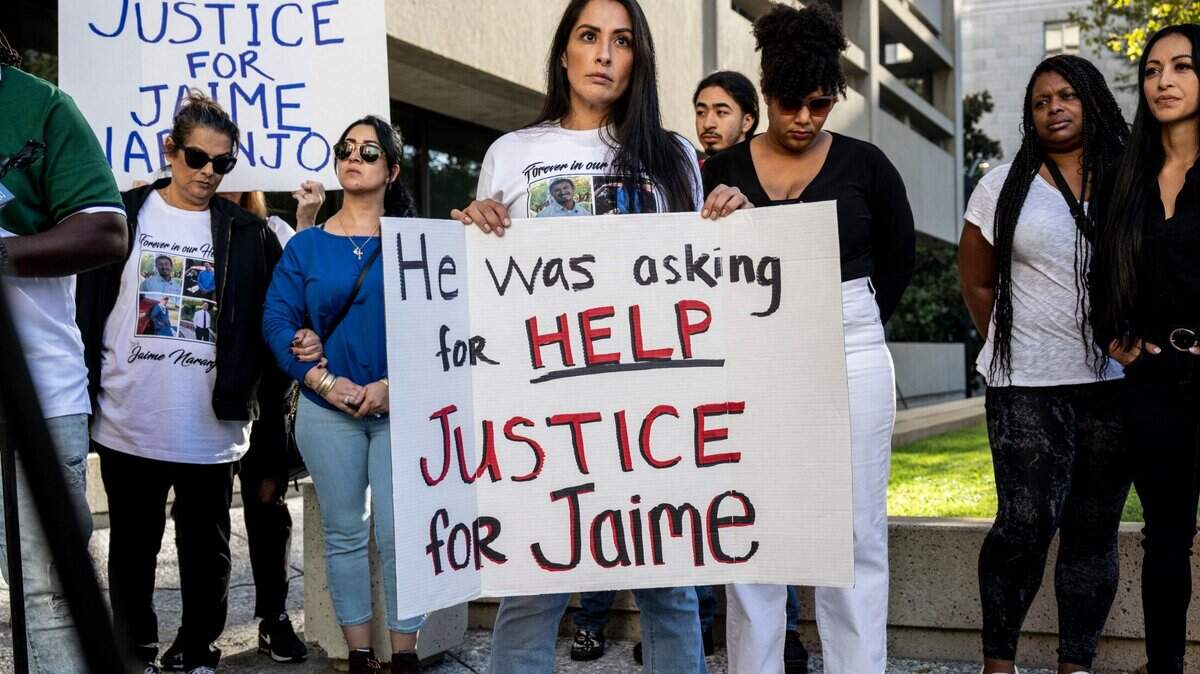
A man is having a mental health crisis. A relative calls 911. The man ends up shot to death, which is the last result anyone expects from seeking professional assistance in an emergency.
Yet it’s an all too common outcome for people suffering from mental illness when the Sacramento County Sheriff’s Office gets involved.
A sheriff’s deputy’s fatal Sept. 28 shooting of Jaime Naranjo at his Fruitridge Pocket home left a shattered family asking what many reasonable citizens have asked after similar incidents: Did this have to happen?
Yes, law enforcement can be terribly dangerous, and according to official accounts, Naranjo was holding a machete and behaving erratically. Federal and state laws give peace officers great latitude to use deadly force in such circumstances. Based on what is publicly known about this tragic case, it’s likely that the as-yet-unnamed deputy will not face criminal charges in the killing.
But this is far from the first case in which Sacramento County deputies have killed a man in crisis. Authorities such as Rick Braziel, a former Sacramento police chief, and Jim Cooper, who will become the Sacramento County sheriff in mere months, have criticized the department for failing to adequately train its deputies to cope with dangerous calls.
Outgoing Sheriff Scott Jones fought and sometimes raged at any sort of oversight of his department’s methods. In 2018, he literally locked Braziel out of his buildings when he was the county inspector general, making it his job to assess deadly shootings.
Braziel questioned whether Jones’ deputies had to kill Mikel McIntyre, a Black man who was suffering a breakdown when he was shot to death on the shoulder of Highway 50 in 2017. Braziel prescribed further training in deescalation to better prepare deputies for such situations. But Jones would have none of it, accusing Braziel of having it in for him.
“People are trying to make it to the inspector general versus the sheriff, but I think it’s really a sheriff who doesn’t like oversight,” Braziel told the Bee in 2018. “If you look at professional sports teams, the best of them look at game film to figure out how better to do it the next time.”
The best departments make sure their officers have gold-standard training for dangerous situations before dispatching them to deal with danger. But that’s not what happened in the case of the killing of Chad Irwin in front of his Citrus Heights home in 2016. During depositions in a wrongful death suit that ultimately cost the county $7 million, the deputy who killed Irwin, James Spurgeon, admitted he had not completed crisis intervention training.
Like Naranjo’s family and McIntyre’s, Irwin’s was worried about their loved one and called deputies to protect themselves and him. And like Naranjo, Irwin had a sharp object and was behaving erratically. Spurgeon fired 11 rounds at him.
Irwin’s widow told The Bee that she wasn’t afraid of her husband but was afraid for him. Irwin’s family was in the house when the fatal shots rang out.
“I looked out the door and he was laying on the ground with the officers standing over him,” Allison Irwin said.
People with untreated mental illness are 16 times more likely to be killed by law enforcement officers, according to the Treatment Advocacy Center. So it’s appropriate that the sheriff’s department is facing questions about insufficiently training its officers to deal with such subjects.
“There’s nothing ever wrong with going back and reviewing your operations and how officers performed,” Cooper told The Bee earlier this year.
Cooper is right. The department he inherits has made us all less safe.
BEHIND THE STORY
MOREWhat are editorials, and who writes them?
Editorials represent the collective opinion of The Sacramento Bee Editorial Board.
They do not reflect the individual opinions of board members or the views of Bee reporters in the news section. Bee reporters do not participate in editorial board deliberations or weigh in on board decisions. The same rules apply to our sister publications, The Modesto Bee, Fresno Bee, Merced Sun-Star and San Luis Obispo Tribune.
In Sacramento, our board includes Bee Executive Editor Colleen McCain Nelson, McClatchy California Opinion Editor Marcos Breton, opinion writers Robin Epley, Tom Philp, LeBron Antonio Hill and op-ed editor Hannah Holzer.
In Fresno and Merced, the board includes Central Valley Executive Editor Don Blount, Senior Editor Christopher Kirkpatrick, Opinion Editor Juan Esparza Loera, and opinion writer Tad Weber.
In Modesto, the board includes Senior Editor Carlos Virgen and in San Luis Obispo, it includes Opinion Editor Stephanie Finucane.
We base our opinions on reporting by our colleagues in the news section, and our own reporting and interviews. Our members attend public meetings, call people and follow-up on story ideas from readers just as news reporters do. Unlike objective reporters, we share our judgments and state clearly what we think should happen based on our knowledge.
Read more by clicking the arrow in the upper right.
Tell us what you think
You may or may not agree with our perspective. We believe disagreement is healthy and necessary for a functioning democracy. If you would like to share your own views on events important to the Sacramento region, you may write a letter to the editor (150 words or less) using this form, or email an op-ed (650-750 words) to opinion@sacbee.com. Due to a high volume of submissions, we are not able to publish everything we receive.
Support The Sacramento Bee
These conversations are important for our community. Keep the conversation going by supporting The Sacramento Bee. Subscribe here.