
Are California’s new anti-theft laws enough to defeat Prop. 36? Don’t bet on it | Opinion

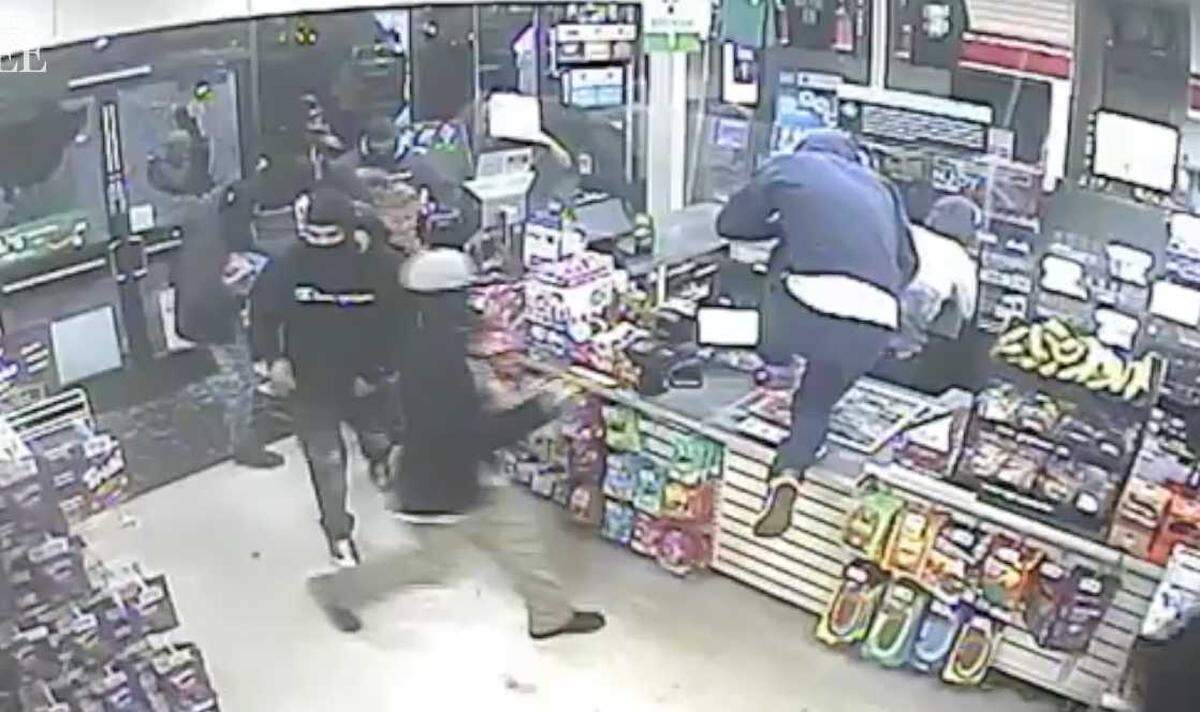
Gov. Gavin Newsom may have placated some big retailers when he signed a package of bills last week that aims to deter retail thefts, including the “smash and grab” robberies that have shocked and disgusted so many Californians.
But that may not be enough to turn the tide against Proposition 36, the contentious measure on the November ballot that Newsom and some other top Democrats oppose.
For that, Newsom and company have no one to blame but themselves.
Had they responded more quickly to the rise in property crimes, the public might have less of an appetite for rolling back some of the elements of Proposition 47, the 2014 voter-approved initiative that downgraded certain drug and property crimes from felonies to misdemeanors.
Prop. 36 — backed by a growing coalition of law enforcement agencies, Republican lawmakers and some Democrats — takes a tougher approach, especially on repeat offenders.
It includes many measures contained in the legislative package signed by Newsom, but it’s much broader in scope. It increases penalties not just for thefts, but also for drug offenses. While the McClatchy California Editorial Board has yet to take a position on Prop. 36, it is hardly premature to comment on Newsom and Democratic leadership in the Legislature and its belated approach to crime reform.
Supporters of Prop. 36 have promoted it as a remedy to the fentanyl crisis that has so many Californians deeply concerned. It creates a new classification for repeat drug crimes — “treatment-mandated felony” — that would apply to people with two or more previous drug convictions.
Rather than being treated as another misdemeanor, a third offense for possession of fentanyl, heroin, cocaine or methamphetamine would trigger a court process that would generally lead to drug and/or mental health treatment. Failure to complete treatment could result in up to three years in state prison.
Prop. 36 also requires courts to warn people convicted of selling or giving drugs to others that they could be charged with murder if they sell drugs that kill someone.
Newsom says the measure’s true purpose is to reinstate the mass incarcerations of the War on Drugs era, and he questions the ability to provide the drug treatment promoted by supporters of the measure.
“I would ask those who support it, particularly mayors, where are the treatment slots? Where at the beds? There are 22 counties in the state of California that don’t have one residential treatment facility,” he said at Friday’s bill signing.
A political ploy?
Newsom’s office described the anti-theft bills he signed as “the most significant legislation to address property crime in modern California history.” Voters should view such hyperbole with some skepticism.
The 10 bills will make it easier to prosecute and punish property crimes. They would allow thefts occurring at multiple locations by the same suspect or suspects to be counted together instead of separately. That’s important because, in California, a felony grand theft charge is triggered by the theft of $950 in property or more. Prop. 36 would make a third petty theft a potential felony, which is disallowed under Prop. 47 (it requires a follow-up proposition, such as 36, to amend any of the specific sentencing reforms contained within it).
Legislation can amend sentencing approaches not contained in the voter-approved measure.
In addition, the bills that Newsom signed added sentencing enhancements for large-scale theft operations. They add penalties when a business is damaged during a theft and allow for the prosecution of property stolen from locked or unlocked vehicles.
Targeting organized retail theft rings rather than shoplifters stealing out of need is the right approach.
Yet if this legislation is so significant, why wasn’t it passed months ago? Instead, Newsom and some Democratic leaders wasted time trying to kill Prop. 36.
First, they stuck a “poison pill” in the anti-theft legislation: If 36 passed in November, the new laws would expire. When that backfired, they briefly tried to rush their own anti-theft measure on the ballot to compete against Prop. 36. That, too, was abandoned.
Poll shows voter support for Prop. 36
Now, voters face a dilemma: Do they wait and see if the bills are effective in stemming what many see as an epidemic of retail theft? Or do they take a belt-and-suspenders approach and support Prop. 36, discounting Newsom’s warning that it’s a “backwards” step that will result in mass incarceration?
As of now, it appears that the Prop. 36 side is winning.
Results of a UC Berkeley/LA Times poll released on Friday show the ballot measure with a lead of 56%, with 23% opposed and 21% undecided.
While it’s too late for the Legislature to stop Prop. 36 with reforms that would satisfy its backers, it’s still possible to starve it.
If big retailers are satisfied with the measures included in the legislative package, they may not be willing to continue donating to the Yes on 36 campaign.
“We’ll see what happens from an individual perspective,” Rachel Michelin, the head of the California Retailers Association, told Politico. “But I think that you might see some of them not necessarily supporting financially.”
Even so, Prop. 36 has momentum going for it, especially with more top Democratic leaders — including the mayors of San Francisco, San Jose and San Diego — coming on board.
Had Democrats moved quickly to pass a slate of anti-theft bills instead of playing political games, this might turned out differently. It could have been a win for Newsom and the Legislature.
Instead, it’s an embarrassment.
This editorial represents the views of the opinion editorial boards at The Sacramento Bee, Fresno Bee, Modesto Bee, Merced Sun-Star and The Tribune in San Luis Obispo.