
On the issues: District 5 Assembly seat candidates Greg Smith and Rebecca Chenoweth
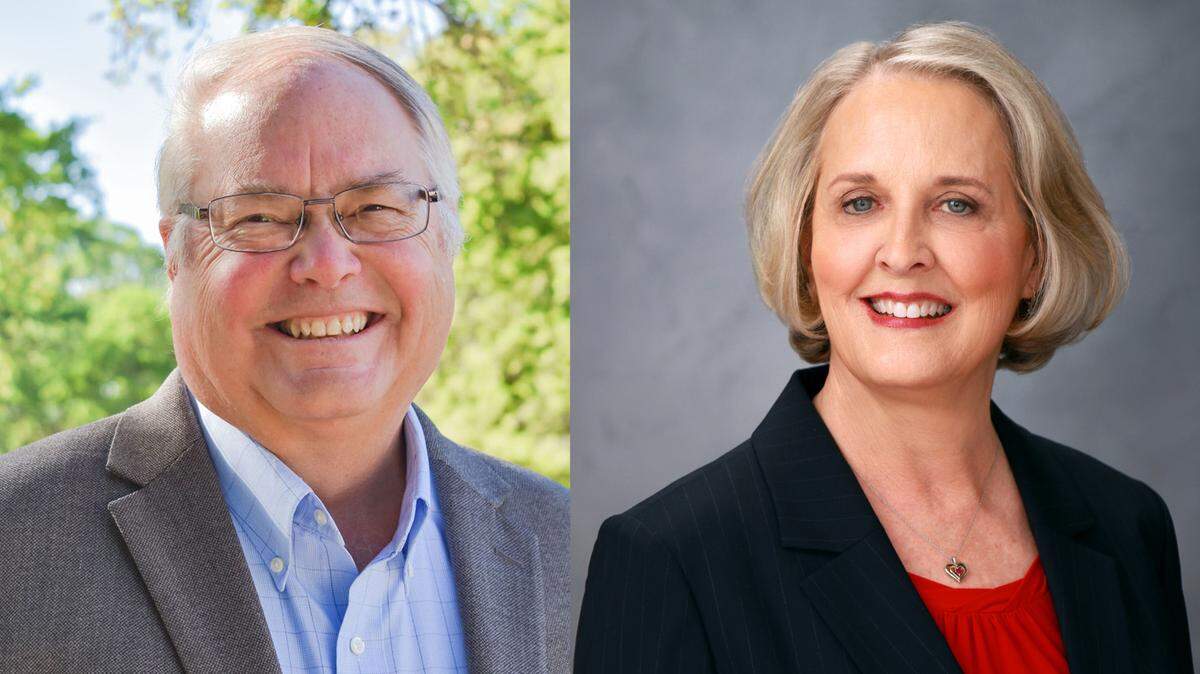
The following interview was conducted by members of The Sacramento Bee Editorial Board and two of the leading candidates for the District 5 Assembly seat, former Air Force pilot Greg Smith and attorney Rebecca Chenoweth. It has been edited for length and clarity.
The Sacramento Bee: Can you introduce yourself and tell us why you’re running for assembly?
Smith: I’m 64 years of age. I was born in Denver, raised in New Orleans and Cocoa Beach, Florida. I say Cocoa Beach because folks remember I Dream of Jeannie, if I said Satellite Beach they wouldn’t have any idea where I was talking about. My dad worked for NASA. I was a child in the ’60s, I grew up with Disney, Cronkite and Martin Luther King. Went to high school in the ’70s, I was really pleased to find out that I probably would not be spending my senior trip in Southeast Asia at that time. I went to high school with Gary Pruitt, formerly of McClatchy and the Associated Press. We had some interesting times as young young men trying to exert some pressure on the man. It was a lot of fun. I don’t think the high school appreciated it but we did. I joined the Air Force very shortly after high school. I traveled in Europe for four years before pursuing a career in aviation for the next 20. That provided me the opportunity to touch every continent with the exception of Antarctica and visit more countries and meet more people of more diverse cultures than I can truly recall. I flew famine relief for the UN World Food Program in Sudan long before George Clooney knew it was there. I participated in Desert Shield, Desert Storm as an Air Force reservist. I don’t know for certain, but one of the things that I thought was a major contribution there was that one day we brought in 350,000 pounds of Hunt’s Snack Pack pudding for the troops. And when you arrive into a situation like that you have to declare your cargo so they know where to put you on the ramp. And for some reason, instead of saying ‘general cargo,’ I mentioned that we had that pudding on board and we moved right to the head of the line. Man, they couldn’t have been happier. So that stands out as a kind of dubious achievement. I started the first drive-through coffee business in Placer County, ultimately grew that to three stores and 35 employees. I’ve lived and worked in what is now District 5 for almost 35 years with my wife. We recently became great grandparents. I am well invested in the area and I was all but retired when I took a job with Parks and Rec in Roseville. I was working on bike trails and talking to people, petting dogs, pulling a few weeds, trimming some bushes, it was great and then we ran headlong into the brick wall that is homelessness and the assorted issues that go along with that.
Rebecca: I’ve been a practicing attorney for over 25 years. Currently I’m the chief operations officer at a nonprofit that provides services to victims of domestic violence, sexual assault and human trafficking. Previously, I was a deputy county council that advised various county departments on transactional matters. I previously litigated on behalf of Child Protective Services and Adult Protective Services and the Public Guardian, so I practiced elder abuse and child abuse law. I have to tell you a little bit about my story. Thirty years ago, on New Year’s Day, my husband, at the time, and my two daughters and I were at a friend’s house. The Rose Parade was on, we had just finished breakfast, we were in front of the TV and the phone rang. It was my oldest stepson. I have two stepsons. He was calling to ask if we could come get him because his stepfather, a former Marine, had just beat him up. Of course, we picked him up, and we brought him back with us. A week later, we were in court and the court in its infinite wisdom granted us custody of only the older son who’d been beaten up, but not the younger son and the younger son stayed in the home with the abusive stepfather. A few months later, I was applying to go to law school. And I went to law school while I was raising four kids. I passed the bar the first time. I started out representing children in court disputes related to child abuse, custody disputes, probate guardianships and adoptions. I did that for three years, then I became the deputy county council and started representing Child Protective Services. I see a problem, I want to understand it and then I try to fix it. Now I’m working with survivors of violent crimes. That’s why I’m running, because I want to support a larger group of people.
The Sacramento Bee: The legislature has struggled to make a dent in California’s vast housing shortage, and some local governments are resisting the recently enacted law legalizing duplexes. What policies would you pursue to make it easier for Californians to live and work in the same community, in a home or apartment they can afford?
Rebecca: I support the duplexes. I support the accessory dwelling units on people’s property. I support anything that helps people get into housing. I support one-time rental assistance, because it’s very difficult to get into a new unit when you don’t have the first and last and down payment. I support all of that. I work with people who can’t afford to live in this district. Even though we work in this district, I have two adult daughters who can’t afford to live in this district. They’re gainfully employed, they should be able to live where they work. I also support one-time rental assistance for people that are one paycheck away from being homeless to keep them from being homeless.
Smith: I agree with Rebecca on many of those points. I’m a firm believer in assisting. I am not particularly happy with the homeless issue in that I don’t think we are addressing the root causes, so as a result that has a tendency to perpetuate the problem. With regard to housing in general, if we keep with the homeless idea, permanent supportive housing seems to be the real answer to a lot of the issues. How we go about obtaining those units and managing them in such a way that it’s really worthwhile for the program, that seems to be a stumbling block because we don’t seem to have a strategic plan that’s throughout the entire state. Every city and county has their own, some coincides with others. Most of it not. Certainly it’s different in our area than it is in San Francisco or Los Angeles. Without permanent supportive housing programs, without things that address the root cause of this, I think we will very shortly find ourselves in that same program.
The Sacramento Bee: Since we’re talking about homelessness, there’s a bill currently in the legislature being backed by a lot of lawmakers in the area that would clear the American River Parkway of homeless encampments even though there’s nowhere really for most of these people to go given the obvious lack of housing and shelter. Do you think this legislation is the right idea or would you propose an alternative?
Smith: The legislation is a good idea. But I’m not familiar with all aspects. Again, I want to go back to one thing that seems to be missing in all of these ideas and plans. Ten percent of the folks that are homeless are there as a result of mental illness. They simply are unable to take care of themselves in any way, shape or form. Another 10% is generally considered to be people fleeing a domestic violence situation or job insecurity, things of that nature. So 80% of the people that are out on the streets are there as a result of drug and alcohol abuse. Without putting programs in place that address that issue first before we start moving toward permanent shelters, permanent housing, supportive housing and things of that nature, we should be looking at things like that. I recently saw an idea that suggests a sobering center, a place where, because of the barriers that are associated with a lot of our current capacity in the homeless area, if you’re drunk or high you can’t go into the shelter. If you’re drunk or high and you can’t make a good decision and you can’t go into the shelter where else are going to go? If we move you along, we’re not really doing anything except moving you from one place to another. Moving folks out of the American River Parkway is just moving folks from one place to another, we’re not helping them get them out of that position. So anything that I would work toward would have to include something that addresses those root causes before we could think about what we’re going to do next. I have a lot of input from people that are working in that area. The Salvation Army comes to mind. I had a good conversation with them a week or so ago. The same problem — if we could address that root issue, then it would be a lot easier to get into the shelters and move toward permanent supportive housing.
Chenoweth: I don’t support clearing the American River Parkway. Unless they have a place to put them, I don’t think that’s a solution. So I don’t support it. I know that in Placer County, they’re working on putting together what is called The Campus of Hope which would be housing for homeless people but also providing services on-site for mental health. for substance abuse, for things of that nature that people also need help with. But I don’t believe there’s anything similar in El Dorado County, at least not that I know of. And I think we need something like that in El Dorado County, which is also part of the district.
The Sacramento Bee: There is quite a bit of evidence that a large portion of the majority of homelessness in California is related to the lack of housing. The state has one of the lowest numbers of homes per capita in the United States, the prices are obviously tied to that and homelessness is tied to the fact that you get to a certain level of income and people can’t afford anywhere to live. The expert consensus is that we just need a massive amount of new housing, and the private market tends to provide most housing, despite the fact that there is subsidized housing and public housing. One reason the private market isn’t producing new homes in California is because of zoning and other measures that prevent building. So I’m wondering whether each of you would support any specific measures to encourage building by overruling local control.
Chenoweth: I do support that in fact. In fact, I know that there’s funding available to build affordable housing, but a lot of cities don’t take advantage of it and their excuse is they don’t have the staff to deal with the paperwork and manage the project. I would propose an incentive for those cities to hire someone who is specifically tasked with doing the paperwork and the necessary work that would allow the cities to build affordable housing.
Smith: I would definitely get behind legislation to reduce rules and regulations to allow business to perform at its peak. I don’t think adding an additional layer of oversight at the local level to comply with regulations that may or may not be necessary is the path that may not be the best path. I think a complete review of current codes and regulations to look at what is valuable and what is not and maybe reduce the restrictions would encourage business to grow on its own and that might be an easier path to follow.
The Sacramento Bee: California was once considered a leader on climate policy, but in recent years a Democratic supermajority in the legislature has routinely stalled or killed sensible policies that would aid the clean energy transition and reduce greenhouse gasses. The Building Trades fossil fuel interests have repeatedly put their thumbs on the scale to kill climate legislation which is supported by most California. Are you willing to stand up to future interests to support climate legislation?
Smith: I would be in favor of working with those groups to try to strike a balance. Certainly, we want to look toward the future so that we have one. But I’m not convinced that we’re in a position with alternative energy sources that we can move as quickly as it would seem we would like to at this time. So I would think that some sort of a negotiated balance would be the way to go here. Case in point: We’re looking at problems with our hydroelectric generation, and we’re down to one nuclear power facility that’s due to close in the next few years. We’re heading for a problem that we should be looking at right now and, in my opinion, let’s move toward a compromise so that we can continue to move forward.
The Sacramento Bee: Do you support keeping the Diablo Canyon nuclear plant open?
Smith: Until such time as we’re certain that we can in fact move over. The drought is unprecedented, for sure, but until we can control things of that nature, then I think we better look toward some sort of a balance.
The Sacramento Bee: Rebecca, would you be able to stand up to Trades organizations and fossil fuel legislation?
Chenoweth: Yes, and I’m not taking any funds from gas and electric companies. I support anything that reduces our reliance on fossil fuels. I live in a house that has solar, I wish I could afford to buy an electric car. I’m hoping we will see incentives to buy electric cars or at least hybrids. I think we need to manage our natural resources better. I support things like forest thinning so that we don’t have the bad fires, making defensible communities as well as dwellings so the firefighters have a tactical advantage to get in and save the community or at least evacuate if necessary. I think we need to limit water intake a lot more than we have. I know it’s a drastic measure, but we’re in a severe drought situation and it’s just going to get worse as summer comes along.
The Sacramento Bee: Over the past year, Capital Public Radio has reported on several ineffective wildfire prevention policies under the Newsom administration that failed to deliver on the sort of scale California needs to alleviate the risk of burning. What policies would you support to make fire prone areas safer?
Chenoweth: I think we need to expand our efforts and accelerate them because it’s just all talk and not enough action. That would be my policy.
Smith: I’m in favor of utilizing the resources that are currently available and increasing the level of those resources, and I’m speaking specifically of the air strike capability for wildfire. Current policies suggest that we can’t begin to use those resources until a fire has reached a particular level. Having actually flown these types of aircraft in this type of service, I can say with certainty that getting in early and hitting it hard brings the situation under control a lot more quickly. That would alleviate the necessity for these tens of thousands of firefighters and the idea that these things grow to such size that they become unmanageable. So get there, use what we have, add to it, use it quicker and that would be my idea for that.
The Sacramento Bee: On a related note, I want to ask both of you about the various proposals to provide relief from gas prices. There’s been a lot of debate between the governor and legislators about how to do that, or if we should do that. From suspending the gas tax for a while, providing cash rebates to everybody in the state or some people who are lower income. What do you think is the right approach?
Smith: It’s a difficult position that we find ourselves in, clearly. We already pay more in taxes and fees in California than any other state. I believe that this is a direct result of the regulations that producers have to comply with in order to have supply. Not knowing a great deal about distribution, but knowing that not only does California produce oil, we refine it. But at what cost? Perhaps looking at regulations that allow producers to do more production would be automatic reduction in price at the pump because we would simply have more available. I’m not certain that additional money in the form of rebate is the answer. I would be in favor of lowering taxes. I would certainly be in favor of doing something now, with regard to the pending increases in taxes. I don’t see any reason that couldn’t have been stopped before it got here. I would look at increasing production and lowering taxes and fees on producers.
Chenoweth: I don’t support repealing the existing taxes. I would like to see the upcoming one suspended. I think we need to go after the oil companies that are raising the rates unnecessarily and just being greedy. That’s my stance and that’s what I would advocate for. I know that Rob Bonta, our attorney general, is looking into that and I support his work in that.
The Sacramento Bee: It’s worth noting that there are two other candidates in this race, including Rocklin Councilman Joe Patterson who declined this interview and who has a lot of support in this race from the political establishment. Have the other candidates been available to debate in other forums?
Chenoweth: No.
The Sacramento Bee: Why did you both show up? What do you think is the importance of forums like this?
Chenoweth: My philosophy is I’ll talk to anyone. There is a very strong Republican preference in the district. But there are quite a few No Party Preferences and I can win this race if I get their votes. I know that in light of what’s going on recently, Roe v. Wade, I think a lot of women Republicans may be voting for women candidates and counting on that as well. But there’s nobody I won’t talk to about my race, including The Sac Bee or engaging with my opponent.
Smith: I think they missed an opportunity for conversation. I’m always in favor of conversation. I spent the better part of 20 years in insurance sales and risk management. Every proposal had to be communication and conversation. You couldn’t go forward unless you talked to folks. You got to know what it is they want. You have to be able to do that in conversation, it doesn’t happen in whatever the heck all that social media stuff is.
The Sacramento Bee: Obviously, COVID is still top of mind. Both the Legislature and Gov. Newsom backed down on requiring COVID vaccinations in California’s schools this fall. For many families and immuno-compromised or vulnerable populations this was a disappointing backslide on public health policy. Do you agree with this decision from California lawmakers?
Smith: I did agree with that and I would continue to suggest that healthcare is a personal issue and something that needs to probably not be as exposed to government input.
Chenoweth: Yeah, I have a problem with forcing people to get immunizations if they don’t want to. I understand it would be better for our health. I think we need more education around why they need to get vaccinated. And I supported the governor’s stance on that. I know that where I work we still wear masks when we’re together. We’re very careful. I personally am vaccinated twice, boosted twice and I still got COVID but thank God I didn’t get a bad case of it because I have that protection.
The Sacramento Bee: We want to offer you both the opportunity to share closing thoughts and statements.
Chenoweth: I was actually planning to talk about health care because most of the people I’ve talked to are concerned about the cost of health care. I know of a woman who fell and injured her elbow but doesn’t want to go to the doctor because they cost too much. I know of a woman who was prescribed an inhaler by her doctor, she was having difficulty breathing, and the pharmacy told her it was going to be $400. She decided not to purchase that medication. I think in a country that’s as wealthy as ours and a state that’s as wealthy as ours that’s just wrong. I support affordable health care, single-payer health care. Affordable is good, free is better, but either one works and would help a lot of people. I’m also running on a platform of expanding broadband. Part of our district is rural and the suburban and rural areas that don’t have access to the Internet, especially during the pandemic, they were isolated. They couldn’t couldn’t work from home, they were cut off from family and friends, and I think we need to expand broadband in the district. And last but not least is education. I support universal pre-K. We have people that can’t afford to send their kids to preschool, so when those kids are starting Kindergarten there’s not a level playing field for them. It was an honor to be here. I wouldn’t have thought about not showing up for this meeting, I was very excited to get the invitation.
Smith: I’ll echo Rebecca. Thank you very much for inviting me. I appreciate it. Anytime I get a chance to speak I enjoy it. Maybe not as much as I once did. I quite often open presentations telling people that I’m an anomaly: I’m an insurance guy that’s tired of his own voice. So couldn’t we please just start with questions? One of the things that I don’t think we touched on is crime. I’m particularly interested in looking at measures that seem to incentivize crime. I would also suggest that that is another piece of the homelessness, the poverty — all of it seems to be linked. If we continue to keep them as separate issues, rather than looking how they act in sync with one another, I think we’re going to keep doing the same thing over and over and expect a different result. I would like to look at that. I’d certainly like to look at fiscal responsibility, as Rebecca pointed out. A state that is this wealthy that can’t provide better health care or better education than we currently do, that’s criminal. Maybe we should look at suing ourselves for additional help there. And public safety — I just don’t recall, in the last 35 years, anything as abhorrent as crime in our streets today. The Sacramento shooting a few weeks ago, when would that have happened 30 years ago, 20 years ago? This is something that is near and dear to my heart and I’d definitely want to get involved with that.
This story was originally published June 1, 2022 at 5:00 AM.