
Our endorsement: California voters could protect gay marriage rights with Prop. 3 | Opinion
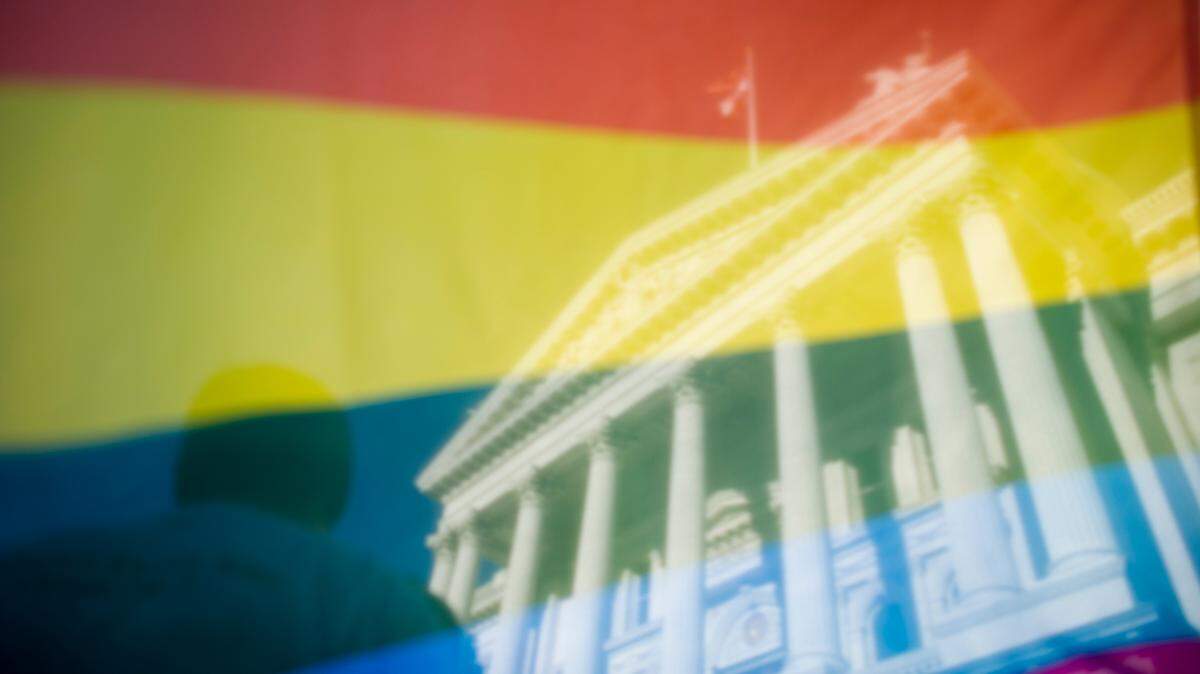
It was only 16 years ago that California voters passed Proposition 8, which banned same-sex marriage and placed thousands of gay marriages into legal limbo. The Prop. 8 campaign was odious and played on homophobic tropes as justification for the unconstitutional proposition that California’s state government should decide who people could love.
There were also legal, financial and social consequences for gay couples before marriage equality became law. While California recognized domestic partnerships before Prop. 8, they paled to the rights conferred on married couples. Gay couples, for example, had unequal access to employer-sponsored dependent coverage, according to a 2010 UCLA study. At the time of Prop. 8, gay couples had no access to federal benefits such as Social Security.
Federal court decisions ultimately struck down Prop. 8 and made marriage equality the law of the land, but as we have learned with the repeal of Roe v. Wade and federal abortion rights, what one court protects can later be stripped by other courts.
That’s why Proposition 3 is so important, and why we endorse it.
By voting yes, California voters will enshrine the right to same-sex and interracial marriage into the state constitution.
Prop. 3 is more than just a value statement. It safeguards the right to marriage for LGBTQ+ couples and interracial couples at a time when conservative Supreme Court justices are eroding civil liberties.
Indeed, in his concurring opinion affirming Dobbs v. Jackson, and thus undoing a decades-old constitutional right to abortion, Justice Clarence Thomas said the court “should reconsider” other past rulings, including Obergefell v. Hodges, which guarantees the fundamental right for same-sex couples to marry.
In other words, same-sex marriage is a right we cannot take for granted — especially if Donald Trump is re-elected.
“Everyone benefits from greater civil rights protections,” said Pelecanos, a Renberg Fellow at Lambda Legal. “Race and ethnicity are interconnected in this progression of rights as well. It doesn’t matter how conservative you are, you never know who you’re going to end up loving.”
Back in 2008, Prop. 8 was championed by various religious groups, including Evangelical Christians, Catholics and the Church of Jesus Christ of Latter-Day Saints. Now, the tide has turned: Prop. 3 is enjoying support from much of the faith community, including an endorsement from the Lutheran Church. (The Church of Latter-Day Saints is officially neutral on Prop. 3.)
Politically, Prop. 3 has enjoyed bipartisan support, including from Gov. Gavin Newsom.
“Some abstained from the vote, but not a single Republican voted no on this measure,” said Asm. Evan Low, D-Cupertino.
Low, who is gay, views the proposition as important for not only himself, but also for his mom and stepfather, who are in an interracial marriage.
“We want to demonstrate to the rest of the country that this can be a blueprint for finding partnership over partisanship,” Low said.
California would not be the first state to enshrine the right to marriage regardless of gender into its state constitution (the first was Nevada, back in 2020). Similar proposals will be considered by voters this November in Colorado and Hawaii.
Prop. 3 is cost-neutral (meaning it won’t cost California taxpayers any money). Still, the campaign has raised over $3.73 million for advertising, field campaigns and getting the word out to voters in every community.
Yes, California is a liberal state. Yes, a large majority of state residents — 72% — support same-sex marriage. But Prop. 3 is a down-ballot measure, and there’s a risk supporters may not cast that crucial “yes” vote.
“We’re not taking anything for granted,” said Nathan Click, spokesperson for Prop. 3. “We saw what happened 20 years ago with Prop. 8. This is a fundamental fight.”
BEHIND THE STORY
MOREWhat are editorials, and who writes them?
Editorials represent the collective opinion of The Sacramento Bee Editorial Board.
They do not reflect the individual opinions of board members or the views of Bee reporters in the news section. Bee reporters do not participate in editorial board deliberations or weigh in on board decisions. The same rules apply to our sister publications, The Modesto Bee, Fresno Bee, Merced Sun-Star and San Luis Obispo Tribune.
In Sacramento, our board includes Bee Executive Editor Colleen McCain Nelson, McClatchy California Opinion Editor Marcos Breton, opinion writers Robin Epley, Tom Philp, LeBron Antonio Hill and op-ed editor Hannah Holzer.
In Fresno and Merced, the board includes Central Valley Executive Editor Don Blount, Senior Editor Christopher Kirkpatrick, Opinion Editor Juan Esparza Loera, and opinion writer Tad Weber.
In Modesto, the board includes Senior Editor Carlos Virgen and in San Luis Obispo, it includes Opinion Editor Stephanie Finucane.
We base our opinions on reporting by our colleagues in the news section, and our own reporting and interviews. Our members attend public meetings, call people and follow-up on story ideas from readers just as news reporters do. Unlike objective reporters, we share our judgments and state clearly what we think should happen based on our knowledge.
Read more by clicking the arrow in the upper right.
Tell us what you think
You may or may not agree with our perspective. We believe disagreement is healthy and necessary for a functioning democracy. If you would like to share your own views on events important to the Sacramento region, you may write a letter to the editor (150 words or less) using this form, or email an op-ed (650-750 words) to opinion@sacbee.com. Due to a high volume of submissions, we are not able to publish everything we receive.
Support The Sacramento Bee
These conversations are important for our community. Keep the conversation going by supporting The Sacramento Bee. Subscribe here.
This story was originally published September 10, 2024 at 5:00 AM.