
Inflation has a massive lead over wages. Could California’s Prop 32 close the gap? | Opinion
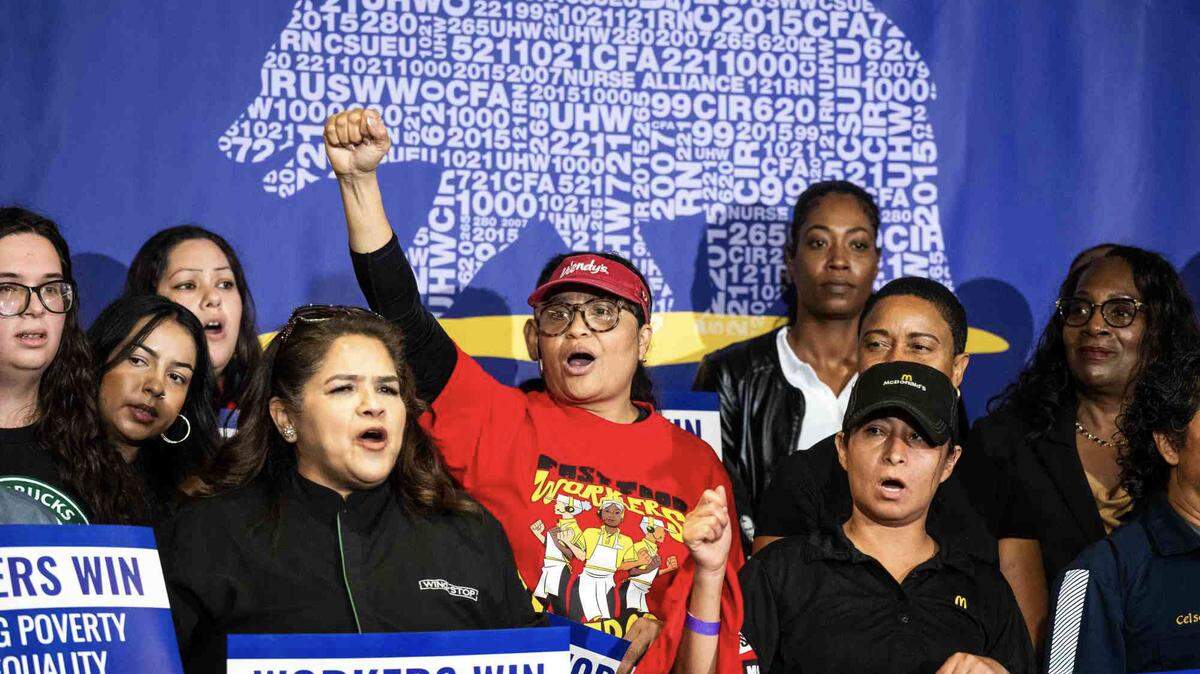
The idea of raising the California minimum wage is both a moral and economic dilemma, but on the November ballot, voters have only one reasonable choice.
It should be our collective obligation to see that hard-working Californians are earning their fair share of wages. Yet, the leaders of California businesses, both large and small, say increases in the minimum wage from today’s $16 an hour would hurt their bottom lines and the workers themselves. because some businesses eliminate some jobs.
We’re not discounting the concerns of business leaders, but too many workers can’t afford to live on their wages. It’s why we support Proposition 32 and urge Californians to vote “yes.”
The current minimum wage for a full-time worker amounts to barely $33,000 a year. Prop. 32 would raise the minimum hourly wage to $18 for workers in large businesses (26 or more employees) starting in 2025. Workers in small businesses would see the minimum wage rise to $ 17 an hour in 2025 and to $18 hourly in 2026.
Quite frankly, working-class Californians are not getting what they need. The wages have fallen woefully behind the cost of living, particularly the state’s skyrocketing rents in recent years.
Starting in 2027, the minimum wage would be adjusted based on inflation, based on the state’s existing formula, with any annual raise capped at 3.5%. The current rate of inflation is 2.5%. In California, the bipartisan Legislative Analyst Office reports that while rates have gone down over the past few years, they remain higher than pre-pandemic numbers.
Businesses warn that the proposition will raise the prices of goods for consumers. The LAO says that prices would go up but the increase will likely be smaller than one-half of 1%. Moreover, there are at least 40 other cities in the state that already have a $18 minimum wage so the proposition isn’t reinventing the wheel. It’s keeping up with the pace.
The road ahead for wages is long, and the challenge depends on our response in November with Prop. 32.
Further, an established baseline for state poverty known as the California Poverty Measure determined that the state poverty line is about $39,900 per year for a family of four. An $18-an-hour wage comes to a little more than $37,000 before taxes.
So the reality is that even with Prop. 32, workers will still struggle to avoid poverty even with a higher minimum wage.
Higher wages in some cases may mean fewer jobs. The grocery, retail and restaurant industries all can take their automation to the next level and create machines in hopes of reducing the need for human workers.
There might be some state legislation that could thwart those efforts. This year, for example, lawmakers considered (but did not pass) a bill to limit the ability of grocery and drug stores to rely on self-service checkout stations. Big retail companies are constantly seeing how they can stay out of the red and it’s only a matter of time before automation has a bigger role in all industries. The California economy has no choice but to adapt to the changing times. And there is no reason to accept substandard wages and suffering as part of that future.
Californians who hold minimum wage jobs are not just high school or college students looking for an entry-level positions. These are adults who choose to make a profession in the customer service sector. Their efforts should never be taken for granted.
When presidential candidates are campaigning on the issue of higher grocery prices, that tells us something about the disparity of wages within our country. In November, California has the opportunity to move not only wages but advance our thinking about supporting one another. Vote Yes on Prop. 32.
BEHIND THE STORY
MOREWhat are editorials, and who writes them?
Editorials represent the collective opinion of The Sacramento Bee Editorial Board.
They do not reflect the individual opinions of board members or the views of Bee reporters in the news section. Bee reporters do not participate in editorial board deliberations or weigh in on board decisions. The same rules apply to our sister publications, The Modesto Bee, Fresno Bee, Merced Sun-Star and San Luis Obispo Tribune.
In Sacramento, our board includes Bee Executive Editor Colleen McCain Nelson, McClatchy California Opinion Editor Marcos Breton, opinion writers Robin Epley, Tom Philp, LeBron Antonio Hill and op-ed editor Hannah Holzer.
In Fresno and Merced, the board includes Central Valley Executive Editor Don Blount, Senior Editor Christopher Kirkpatrick, Opinion Editor Juan Esparza Loera, and opinion writer Tad Weber.
In Modesto, the board includes Senior Editor Carlos Virgen and in San Luis Obispo, it includes Opinion Editor Stephanie Finucane.
We base our opinions on reporting by our colleagues in the news section, and our own reporting and interviews. Our members attend public meetings, call people and follow-up on story ideas from readers just as news reporters do. Unlike objective reporters, we share our judgments and state clearly what we think should happen based on our knowledge.
Read more by clicking the arrow in the upper right.
Tell us what you think
You may or may not agree with our perspective. We believe disagreement is healthy and necessary for a functioning democracy. If you would like to share your own views on events important to the Sacramento region, you may write a letter to the editor (150 words or less) using this form, or email an op-ed (650-750 words) to opinion@sacbee.com. Due to a high volume of submissions, we are not able to publish everything we receive.
Support The Sacramento Bee
These conversations are important for our community. Keep the conversation going by supporting The Sacramento Bee. Subscribe here.
This story was originally published September 26, 2024 at 5:00 AM.