
El Dorado Hills pastor: Congressional proposals threaten religious freedom | Opinion
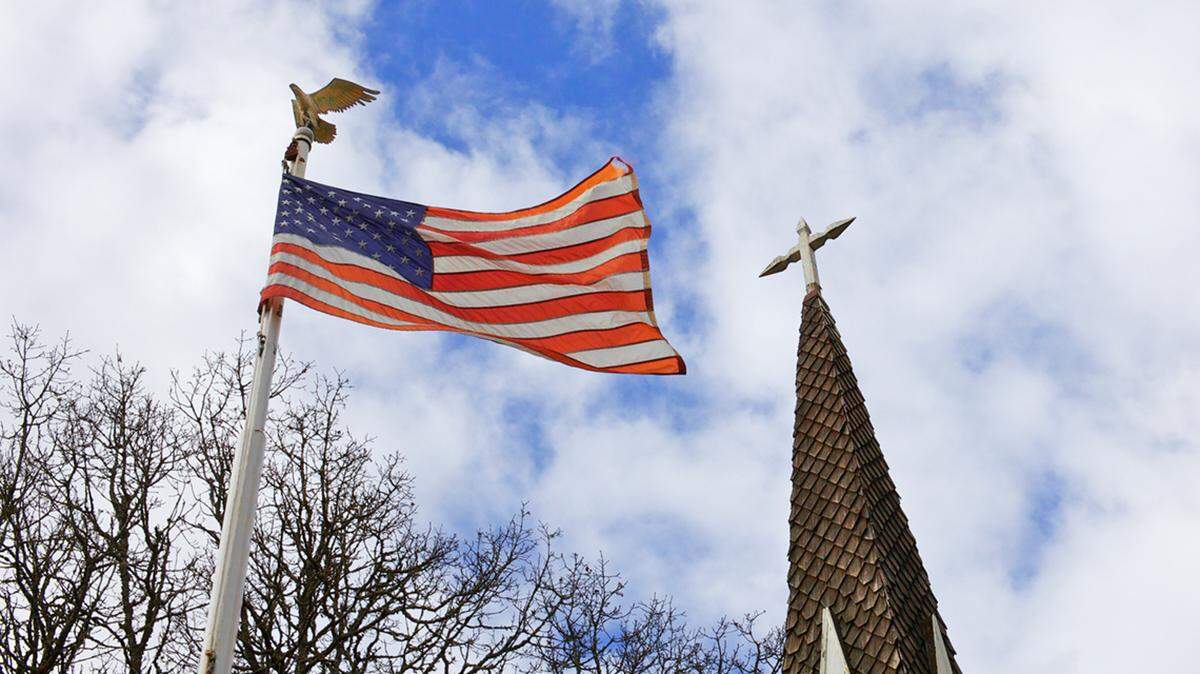
Freedom to worship
“Trump creates Religious Liberty Commission during National Day of Prayer,” (sacbee.com, May 1)
As a pastor and American who values religious freedom, I find recent proposals in Congress to be deeply concerning.
Several bills being debated sound like they’re about keeping our country safe or protecting elections, but if you read the fine print, they give the government the power to silence churches and religious organizations just because their beliefs don’t line up with those in power.
That’s not how America works. The Constitution guarantees our right to worship freely and speak truthfully, even when it’s uncomfortable. These proposals threaten that. They could allow unelected officials to strip churches’ tax-exempt status, block them from public life or freeze donations over vague accusations.
I hope our elected leaders see the danger in giving Washington this kind of authority. Today, it might target churches like mine. Tomorrow, it could be yours.
Robert Phillips
El Dorado Hills
Better than this
“California GOP backs Gulf of America name in Congress vote,” (sacbee.com, May 8)
Can you believe what your representative spent the day debating? Both Reps. Kevin Kiley and Tom McClintock spent their day listening to arguments about President Donald Trump’s decree to change the name of the Gulf of Mexico to the Gulf of America.
What is going on? Is there an important reason for this change? Or is it simply the desire of a man who would like to be king and wishes to make his “empire” larger?
“We’re the United States of America. We’re not Kaiser Wilhelm’s Germany or Napoleon’s France,” Rep. Don Bacon, R-NE, the only House Republican to vote against the bill, told CNN. “We’re better than this.”
Mary Elliott-Klemm
Somerset
Responsible stewards of national parks
“Nature helps Gold Star families heal. That’s why Rep. Kiley must protect our parks | Opinion,” (sacbee.com, May 3)
This thoughtful and moving opinion piece is a passionate defense of our nation’s national parks, national forests and national monuments. The writer describes them as places of solace and essential well-being, in addition to their critical economic, recreation, water-security and wildfire-safety benefits.
We must urge our elected officials to oppose legislation that would transfer these lands to private interests and support legislation that provides adequate resources to responsibly manage these lands.
Roger Bales
El Cerrito
Need for logging
“Trump and Newsom are on the same page about logging. That’s not a good thing | Opinion,” (sacbee.com, May 4)
Recent letters to the editor are based on the false philosophy that any logging is the antithesis of a healthy forest. California’s forests have been allowed to overgrow, eliminating open meadows and promoting the horrific wildfires of the last 25 years.
California’s forests need to be heavily logged based on forest service science to decrease the potential of runaway fires. This will also provide us with the lumber necessary to build the housing we so desperately need.
Joe Dobrowolski
Fair Oaks
RTO mandate to be expected
“Return of state workers spurs hope, blowback in Sacramento,” (sacbee.com, May 8)
As a retired state employee, I am appalled at the actions of some present-day state employees regarding California’s return to office mandate. Those objecting should have known this was coming.
There are many fellow Californians who would love to have paid jobs with vacation time, sick leave, pensions and medical-dental care.
Charles Robert Donaldson, Sr.
Sacramento
Bring back the Fairness Doctrine
“With a free press under siege, propaganda is rising. Bring back the Fairness Doctrine,” (sacbee.com, April 20, 2018)
The 1987 repeal of the Fairness Doctrine transformed our media landscape, leading to a hyper-partisan environment where misinformation spreads unchecked. Once, broadcasters were required to provide contrasting viewpoints on controversial issues, ensuring fairness. Today, balance has been replaced by ideological bubbles and outrage-driven narratives.
Reinstating a modernized Fairness Doctrine wouldn’t dictate content, it would promote transparency. Media outlets could disclose their biases, funding sources and algorithmic influences. Providing fact-checking incentives and overseeing social media algorithms could restore balance and foster informed debate.
Critics argue that such measures infringe on free speech, but is the current media truly “free” if clicks and outrage drive it, rather than facts? Without accountability, misinformation will continue to erode democracy.
Tim Herrera
Adjunct professor, Folsom Lake College