
How an invisible water source will help Sacramento get through the upcoming drought
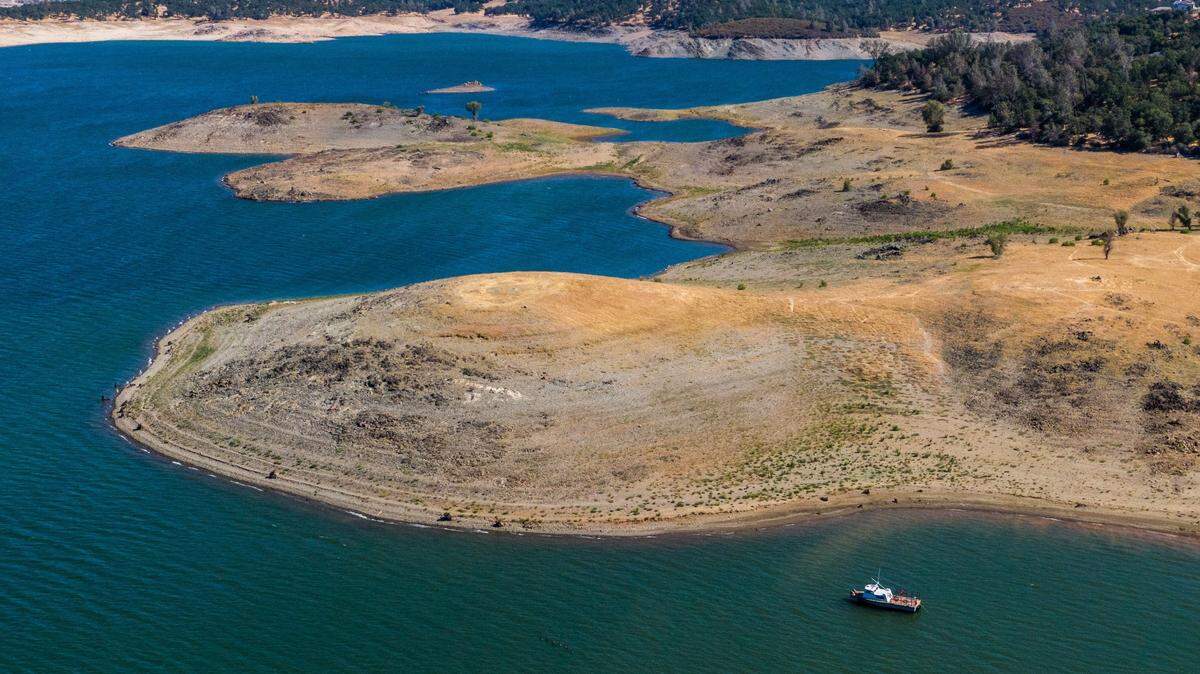
One look at Folsom Lake, the Sacramento region’s primary surface water storage reservoir, says all we need to know about California’s current water situation: We’re in another drought.
Like reservoirs throughout the state, Folsom is shockingly low and won’t be refilled by snowmelt from the Sierra Nevada. Low reservoir levels are a big concern for the Lower American River, a critical habitat for salmon and steelhead.
Local water managers are working closely through the Water Forum, a coalition of water providers, environmentalists, business groups and local governments, to monitor and address the river’s conditions with our federal and state partners. Many will request voluntary conservation, as we all play a role in helping preserve as much water as possible.
One important action water providers will take this year to help the river is relying more on our other major water reservoir which we cannot readily see: groundwater.
Far below the Sacramento metro area are two large groundwater aquifers. These are able to hold 1.8 million acre-feet of water — nearly twice the amount of water as Folsom Reservoir — in the soil and rock crevices 2,000 feet below the surface. Unlike other parts of California, our groundwater aquifer is stable, sustainable and ready to serve as our drought buffer.
This wasn’t always the case. More than two decades ago, groundwater levels were declining dramatically, threatening the long-term viability of some groundwater-dependent communities. The American River was also overtaxed. So, in 2000, leaders across the region came together in the historic Water Forum Agreement to balance the needs of our communities and the environment by jointly managing surface water and groundwater.
Today, thanks to that effort, the Sacramento region’s groundwater aquifers are no longer declining, and mechanisms are in place to ensure they recharge on a regular basis. They are so stable, in fact, that we are able to use them as a Water Bank, storing water during wet years for use during dry years.
We’ve achieved a lot of groundwater recharge naturally, simply by reducing reliance on the river. The less we pump out, the more water is available to seep into the aquifer. This means a significant portion of the Water Bank can be filled up without expensive new infrastructure.
Several hundred million dollars have been invested over the past two-plus decades to actively replenish the Water Bank, allowing us to recharge the aquifer with 60,000 acre-feet of surface water in wet years and pump the same amount out in dry years without any harm. That’s enough to serve up to 150,000 homes in dry years. Additional investments are in the works to boost this banking capacity by 50% in the years to come.
We’re ready for this drought in other ways, too. Since 2014, the Sacramento region cut per-capita water use in half. In the same time period, we leveraged state grant funding to build creative projects worth over $30 million aimed at reducing dependence on Folsom Lake and American River water during dry conditions by increasing water sharing among communities.
Historically, some local water agencies were totally dependent on the American River and had no access to groundwater. One project modified existing pipelines so water can move in both directions, and new inter-tie plumbing now links Sacramento-area water providers together better allowing the region to move water where it’s needed.
Our groundwater banking program doesn’t just help local residents. Shifting urban demand to groundwater allows us to reduce pumping from surface water sources like the Lower American River, leaving more for fish and wildlife — a critical action in a drought year.
Thanks to two decades of foresight and cooperation, our groundwater is there for us this year when we need it.